
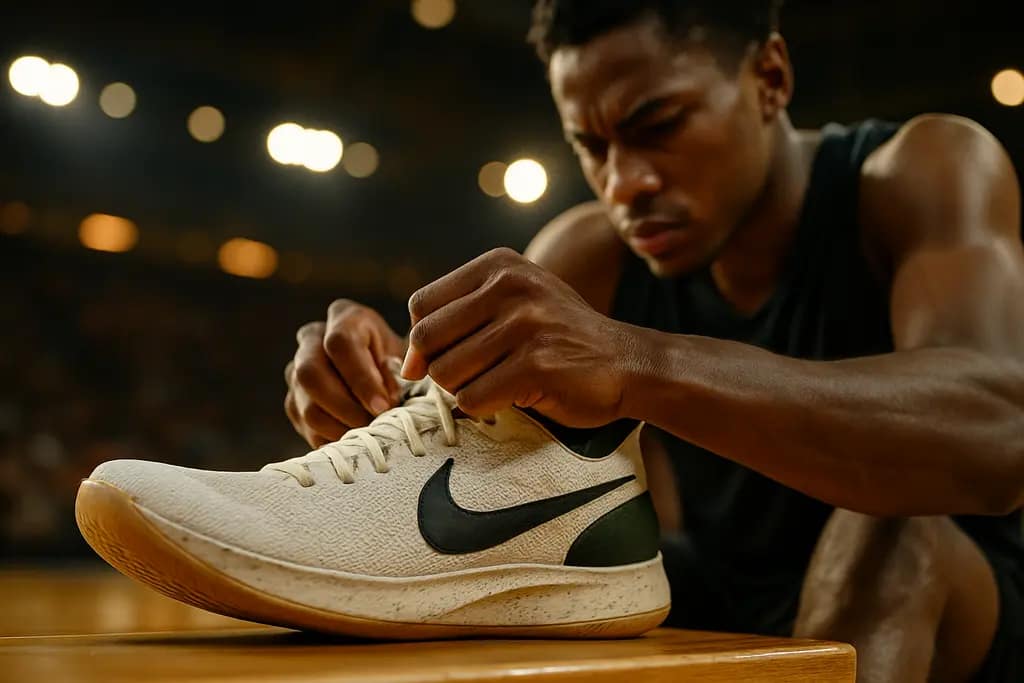
NIL Equipment Deals have moved from a side conversation about athlete endorsements into a practical question for uniforms, apparel, helmets, bats, training gear and sideline inventory. The change is not just about where a logo sits. It affects compliance review, sponsor value, athlete access and, if schools are careful, more sustainable equipment planning.
Julian Crestwood’s view is that the equipment trend should be judged with restraint. A new commercial logo on a sleeve or a piece of equipment does not by itself improve sprint speed, shooting touch or recovery. The performance value is indirect: better-fitting gear, more consistent replacement cycles, and sponsor support can help athletes if those benefits are documented rather than assumed. The sustainability question is just as direct. More branded product can mean more inventory churn unless schools set rules for reuse, repair, ordering discipline and end-of-life handling.
Why NIL Equipment Deals Moved Onto The Gear
The strongest signal came from the scale of NIL review after the House settlement framework reshaped college sports economics. Between June 11, 2025, and August 31, 2026, the College Sports Commission cleared 46,478 NIL deals totaling about $582.49 million, while 2,296 deals worth about $156.93 million were not cleared, according to the NIL Go tracker. That clearance rate, about 95.3%, shows a system approving most deals while still filtering a meaningful number of submissions.
NIL Equipment Deals And The Clearance Surge
The July-August 2026 period showed how quickly deal flow had accelerated. In the two months ending August 31, 2026, the CSC cleared more than $227 million in NIL deals, nearly double the value of all deals cleared during its first full year, as reported by the Associated Press. That matters for equipment because uniform marks, apparel identifiers and equipment placements are easier to activate repeatedly than one-off appearances. A logo worn in practice, during non-championship competition, or in social media content can create recurring sponsor exposure without inventing a separate event.
For NIL Equipment Deals, the operational question is whether schools and athletes can separate real market activity from disguised inducements. The research record supplied here shows that the CSC was processing more than 200 deal submissions per day by August 31, 2026, up from 94 per day in its first year. It also shows that about 68% of submitted NIL deals actioned during July-August had been resolved within seven days, and roughly 78% of deals submitted since July 1 and actioned by August 31 had been resolved. That review speed is useful, but it also puts pressure on compliance staffs to understand equipment categories, brand conflicts and contract activation terms before athletes appear in gear.
Uniform Logos Became Scarcer Assets
The NCAA Division I rule change effective August 1, 2026, gave equipment and apparel more commercial importance. The adopted proposal allowed an athlete’s uniform or apparel in non-championship competition to include two additional commercial or nonprofit logos beyond existing marks, and one additional commercial logo on equipment. Scarcity is the point. A team may have dozens of athletes and many sponsor prospects, but each uniform and each piece of regulated equipment has limited real estate.
That scarcity can reward brands that support athlete performance in practical ways: shoes that fit a player’s movement profile, protective gear that athletes trust, or apparel that remains comfortable during heavy practice blocks. Yet the evidence provided does not quantify whether logo-linked deals improved performance outcomes. Schools should treat that gap honestly. The claim to test is not, “a logo makes an athlete better.” The claim to test is whether the sponsor relationship leads to better gear selection, fewer emergency substitutions, and less waste from poorly planned inventory.
Regulation Is Setting The New Operating Rules
Regulation now shapes the commercial design of NIL contracts before a uniform or equipment placement ever reaches the field. On January 10, 2024, the Division I Council approved rules requiring student-athletes to report NIL agreements worth $600 or more to their schools, with standardized transparency and disclosure across the NCAA. Under a consent judgment effective April 1, 2025, prospective and transferring student-athletes were allowed to negotiate and enter commercial NIL contracts with third parties before enrolling at a Division I institution.
Disclosure, Enrollment And Business Purpose
The proposed rule changes connected to the House v. NCAA settlement, posted on August 19, 2025, also matter for equipment sponsors. They required NIL contracts involving associated entities to have a valid business purpose, for payments to be commensurate with similarly situated individuals, and for activation of rights to be clearly specified in the contract. In equipment terms, that means a contract should identify what the athlete is actually doing: wearing a mark, appearing in gear, posting content, attending a fitting, testing apparel, or participating in a campaign.
These rules bring NIL closer to a procurement and asset-management problem. A school that permits two added logos on non-championship apparel still has to manage brand conflicts, athlete opt-outs, disclosure timing and teamwide consistency. For readers tracking how NIL, transfer movement and roster construction now overlap, the same issue connects with college sports legislation and roster strategy. Roster turnover changes who can activate a sponsor deal, how long the equipment remains useful, and whether a brand receives the exposure it paid for.
The NCAA GOALS Study for 2025, as summarized in the research, found the highest Division I NIL commitment rates in FBS football at 42% and men’s Division I basketball at 33%, with FCS football at 22%, Division II men’s basketball at 17%, and women’s gymnastics at 16%. That distribution is relevant because equipment categories differ by sport. Football involves helmets, pads and large rosters. Basketball centers more on shoes, apparel and visibility. Gymnastics may involve apparel presentation and athlete identity in a different setting. The regulation is broad, but the equipment choices are sport-specific.
Performance Value Needs Evidence

NIL Equipment Deals should be evaluated the same way innovation in sport is evaluated: through use, fit, athlete feedback, durability and verified outcomes. The existence of a deal is not proof of performance value. A shoe contract that forces an athlete into poorly fitting footwear would be a bad performance decision even if the commercial terms cleared review. A protective equipment agreement that improves access to properly fitted gear could have practical value, but the school should document the basis for that decision.
Athlete Fit Before Sponsor Visibility
Equipment staff should keep athlete fit ahead of sponsor display. The research shows the NIL economy has grown quickly, and schools paid athletes around $1.77 billion through revenue sharing during the 2025-26 period, about five times as much as third-party NIL Go cleared deals worth $355.2 million. The revenue-sharing cap for schools was $20.5 million, and the 2026-27 cap was set to rise to $21.58 million. That larger compensation structure can reduce pressure to treat every logo slot as the main source of athlete value.
From an innovation standpoint, the better model is measured sponsorship. A brand can support athletes with fitting sessions, product education and reliable supply without turning every equipment choice into a marketing decision. Schools can compare replacement frequency, athlete complaints, and product failure reports. If a branded item performs worse or creates waste through unused stock, that should weigh against renewal.
- Performance check: Confirm that sponsored gear meets sport rules, athlete fit needs and staff performance standards.
- Compliance check: Record contract value, activation duties, brand conflicts and required disclosures before use.
- Sustainability check: Track excess inventory, reuse options, repair policies and disposal plans for branded gear.
- Equity check: Review whether athletes outside revenue sports have fair access to safe, well-fitting equipment.
Sustainability remains the least quantified part of the current record. The research supplied does not provide lifecycle emissions, waste totals or reuse rates for NIL-linked apparel and equipment. That absence should not be filled with marketing claims. It should prompt schools to ask better questions before approving mass-produced sponsor kits or short-lived uniform variants. For adjacent coverage of sport and community institutions within the same network, AP Levante offers a useful reference point for how local sport systems are discussed beyond major national deals.
What NIL Equipment Deals Mean For Sustainable Sport
The next phase of NIL Equipment Deals will likely be judged by whether the system can balance athlete compensation, sponsor access, sport rules and responsible equipment use. The regulatory facts are already visible: deal reporting thresholds, pre-enrollment contracting rights, added logo permissions, CSC review, and contract standards tied to business purpose and fair market comparison. The unanswered question is whether athletic departments will build equipment policies that keep pace.
A cautious model would treat each logo placement as both a commercial asset and a material decision. If a sponsor patch requires an entirely new apparel run, the school should know how many units are produced, how many are used, and what happens to the surplus. If one commercial mark on equipment can be applied without replacing otherwise functional gear, that may be less wasteful, but it still needs verification. If athletes receive better-fitting products through a sponsor relationship, staff should record the performance rationale rather than relying on promotional language.
College sports has moved past the early NIL phase of isolated endorsement posts. By October 17, 2026, the data showed a high-volume market under formal review, with equipment and apparel gaining new importance through regulated logo space. The schools that manage this well will not be the ones that sell the most visible marks without limits. They will be the ones that connect athlete benefit, compliance evidence and sustainable equipment practice before the gear reaches competition.