
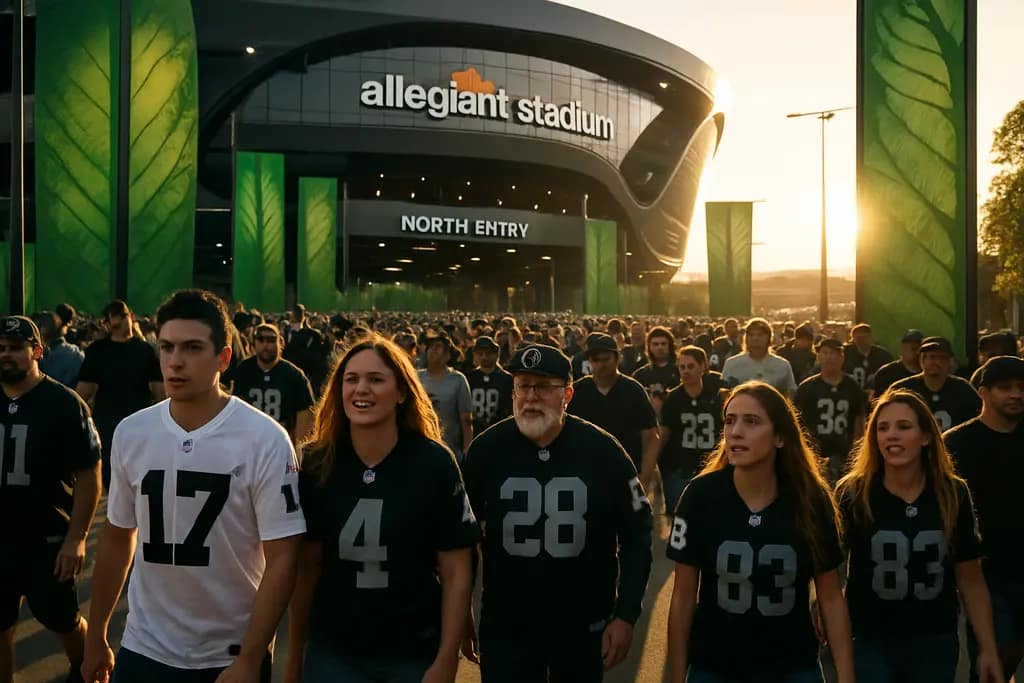
The Allegiant Stadium Renovation approved on September 2, 2026, is best read as a targeted congestion project, not a full cure for event-day traffic in Las Vegas. The Las Vegas Stadium Authority approved $75 million in public funds toward a $158 million north entry project, with the Raiders covering the remaining $83 million, according to NFL.com. From a sustainability lens, the central question is narrow but meaningful: can a better pedestrian gate, an elevated deck, and cleaner vehicle circulation reduce crowding, idling, heat exposure, and friction before major events?
My answer is cautious. The project appears well aimed at one known stress point. It does not, by itself, answer every question about road access, parking distribution, rideshare demand, transit capacity, or multi-venue scheduling on the Strip. A related analysis of Allegiant Stadium north entry traffic made the same distinction: a gate can be improved while the wider event transport system still needs active management.
Why Allegiant Stadium Renovation Targets North Entry
Allegiant Stadium Renovation As A Congestion Measure
The Allegiant Stadium Renovation is not framed as a cosmetic refresh. The north entry has been identified as a pressure point in the guest experience, especially for people walking from the Las Vegas Strip across the Hacienda Bridge. That detail matters because pedestrian congestion is not only about slow lines. It affects heat comfort, safety perception, staffing needs, and the length of time vehicles idle while people and cars compete for space.
Allegiant Stadium opened in July 2020. By September 2026, the venue had hosted 151 major ticketed events, drawn more than 7 million attendees, and generated about $10.6 billion in economic activity. Those numbers show why the entry problem is not marginal. A stadium that regularly absorbs large crowds has to treat approach routes as part of the event infrastructure, not as an afterthought once spectators reach the gate.
What The $75 Million Vote Covered
The approved public contribution covered only part of the larger plan. Construction was slated to begin in Q3 2027, with a target of late 2028 completion before Super Bowl LXIII at Allegiant Stadium in 2029. That schedule gives planners time to test crowd-routing assumptions, but it also leaves little room for a late redesign if operations data shows weak points after work begins.
The most visible design feature is the elevated pedestrian deck from the West Hacienda Avenue overpass directly to the northern gate. The aim is to keep walking traffic above street level for a more direct route into the venue. NFL reporting on the earlier project scope described a north entrance concept that included the elevated deck and a supporting pickup and drop-off zone below it in the proposal details.
The Sustainability Case For A Wider Gate
Pedestrians, Idling And Heat
For Allegiant Stadium Renovation, sustainability should be measured less by the existence of a new structure and more by whether it changes event-day behavior. If the elevated deck shortens pedestrian conflicts at street level, it could reduce the stop-start conditions that make vehicles idle near the stadium. If the shaded plaza reduces heat stress for queuing guests, it also improves resilience in a city where outdoor waiting can be uncomfortable during high-attendance events.
That said, there is a difference between a plausible benefit and a verified outcome. The renovation is projected to improve flow, but public claims should be tested after opening with queue times, rideshare dwell times, shuttle clearance times, and pedestrian density at the bridge and gate. Stadium sustainability is too often discussed through building certifications alone. For access projects, the cleaner test is operational: fewer conflicts, shorter waits, less idling, and safer walking conditions.
Why Mode Separation Matters
The dedicated pickup and drop-off zone beneath the deck is one of the more practical parts of the plan. Cars, rideshares, buses, shuttles, and pedestrians create different movement patterns. When those patterns mix at the same choke point, the slowest movement can govern the whole system. Separating people walking from vehicles loading and unloading is not glamorous, but it is often where emissions and safety gains begin.
Venue access is also a sports-tourism issue. Regional hospitality operators, including Bass Lake Roadhouse, face the same basic planning question at a different scale: how do visitors arrive, wait, depart, and affect the surrounding community? Stadium districts magnify that question because one event can concentrate tens of thousands of trips into a short window.
- Likely gain: fewer pedestrian-vehicle conflicts at the north entry if the deck works as intended.
- Likely gain: better shade and waiting space in the plaza during crowded arrivals.
- Unresolved risk: congestion may shift to nearby roads if regional traffic management is not coordinated.
- Unresolved risk: future transit links remain outside the funded project scope.
What The Upgrade Does Not Solve

Future Transit Links Remain Unfunded Here
The design accounted for a future station tied to The Boring Company’s Vegas Loop, but that element was not part of the funded north entry work. That is a significant caveat. A future tunnel connection could diversify arrival options, yet the sustainability value of that option cannot be credited to the $75 million public approval unless it is built, integrated into event plans, priced in a way spectators use, and coordinated with pedestrian flows at the stadium.
The same caution applies to the venue’s existing sustainability record. The stadium’s renewable-energy operation and LEED Gold certification, reported in the research record, give the venue a stronger base than many older facilities. Still, an entry renovation should be assessed on access outcomes. A greener power supply does not automatically reduce event-day idling outside the building.
Event Coordination Still Decides The Outcome
Allegiant Stadium Renovation should not be judged as a stand-alone object. Its success depends on traffic officers, rideshare staging, bus and shuttle scheduling, real-time wayfinding, pedestrian release patterns, parking allocation, and coordination with other major events in Las Vegas. Prior regional traffic analysis cited in the research record found that large events at Allegiant could sharply increase peak vehicle delay hours on Strip and major roadways under medium and large multi-venue scenarios. That finding does not argue against the north entry project. It argues against expecting one entrance to absorb a metro-scale surge on its own.
The north entry work can improve the first and last few hundred feet of the fan experience. It cannot widen every approach road, rebalance all parking choices, or guarantee that spectators choose lower-impact modes. For a sports venue, that distinction matters. Infrastructure can invite better behavior, but operations have to reinforce it.
Allegiant Stadium North Entry Congestion Test
Evidence To Watch After Opening
The fairest test after the planned late 2028 completion will be comparative data from similar event types: Raiders games, concerts, neutral-site football events, and major one-off events such as Super Bowl LXIII in 2029. Planners should publish or at least review pedestrian throughput at the elevated deck, average time in pickup and drop-off zones, shuttle clearance times, safety incidents near the north gate, and vehicle idling duration on nearby access roads.
If those measures improve, the project will have a credible sustainability case. If crowding simply moves from the gate to the surrounding road network, the public benefit will be more limited. Based on the available facts, the upgrade is likely to ease one of Allegiant Stadium’s most stressed access points. The harder work will be proving that a better north entry also produces cleaner, calmer, and more reliable movement across the broader event district.