
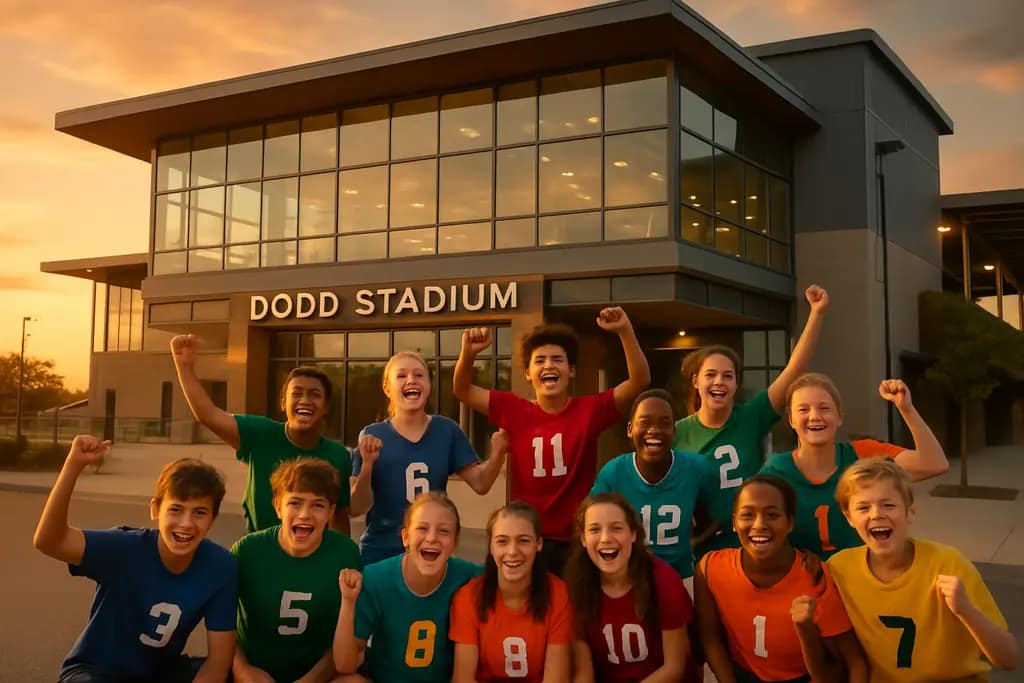
The case for renovated Dodd Stadium in Norwich is not only about adding professional soccer. It is about whether an older baseball-first venue can handle a denser calendar of community sports, youth tournaments, concerts, and civic events without creating new maintenance and environmental liabilities. Norwich City Council approved a multiyear lease with Connecticut Sports Group to operate the stadium from January 1, 2027, through June 30, 2029, with CT United FC set to call the venue home beginning in February 2027, according to Yahoo Sports.
As an equipment and venue performance question, the project sits in a practical middle ground. The stadium does not need glamour as much as it needs reliable surfaces, safe access, functional power, workable concessions, and predictable maintenance. Those are the systems that decide whether a venue can support a Wednesday youth tournament, a weekend soccer match, and a community event without overusing staff, water, energy, or the playing surface.
Why Renovated Dodd Stadium Matters
Renovated Dodd Stadium As A Multisport Test
The renovated Dodd Stadium plan is best viewed as a multisport test for a public asset. Norwich’s Dodd Stadium was built as a baseball venue, but the reported shift toward professional soccer changes how the building must perform. Baseball and soccer ask different things from a field. Baseball concentrates wear around the mound, plate, basepaths, bullpens, and dugout traffic. Soccer spreads wear through repeated sprinting, cutting, and sliding across a larger continuous playing area. If the facility remains active for baseball events while adding soccer, scheduling discipline becomes an operational sustainability issue, not just a calendar issue.
That matters because the most sustainable stadium is often the one that is used well, repaired intelligently, and not forced into premature replacement. Empty buildings waste embedded materials and public investment. Overused buildings create repair backlogs, rushed purchasing, and field failures that can push events elsewhere. The community value of Norwich’s project will depend on how well the operator balances professional dates with amateur access.
Community Access Beyond The First Team
The research record indicates that Dodd Stadium has hosted community and amateur sports activity, including high school baseball, Little League and AAU events, travel tournaments, and opening ceremonies. That existing base is a strength. A new professional tenant can bring attention and routine revenue, but the venue’s public value will be measured by whether youth teams, schools, and local organizers still find usable dates and affordable terms.
For enthusiasts interested in how baseball facilities adapt over time, checking out Books on Baseball offers valuable insights into the cultural importance of ballparks, even as their event usage evolves. The strongest plan for Norwich would not treat baseball history and soccer expansion as rivals. It would treat them as scheduling categories that need transparent rules.
Performance Infrastructure And Event Load
Field, Drainage, And Surface Choices
The planned work at Norwich’s Dodd Stadium includes the roof, HVAC, electrical systems, ADA compliance, field and drainage improvements, and possible upgrades to the scoreboard and concession stands. Artificial turf is also under consideration to support both baseball and soccer, according to WFSB. From a performance gear standpoint, the turf question deserves caution. Artificial turf can support heavier scheduling than a natural surface in many contexts, but the environmental and athlete-performance tradeoffs depend on the product, infill, heat profile, stormwater handling, maintenance plan, and end-of-life pathway.
The available research does not provide those product specifications, so firm claims about carbon savings, water savings, player safety, or recyclability would be premature. The better approach is to ask for evidence before the surface is selected. A credible surface plan would identify expected event load, temperature management, drainage standards, cleaning needs, replacement timeline, and disposal or recovery options. Without those details, “year-round use” can become a slogan rather than a tested operating model.
Equipment Systems That Shape Event Quality
Scoreboards, concessions, HVAC, lighting, and electrical upgrades sound secondary compared with the field, but they have direct effects on community event quality. A youth tournament with poor concession flow can strain volunteers and families. A concert or festival with weak power distribution can require temporary generators. A summer event with inadequate shaded or cooled areas can reduce accessibility for older fans and people with health limitations.
For equipment buyers, the question is not whether a new system is newer. It is whether the system is sized for the actual calendar. A venue hosting baseball, soccer, concerts, and festivals needs modular operations: areas that can open or close depending on crowd size, power systems that do not require wasteful overuse, and maintenance routines that can be repeated by local staff. This is where sustainability and performance overlap. Efficient operations reduce waste because staff are not improvising fixes for every event type.
Access, Comfort, And Sustainable Operations
ADA Compliance As Core Infrastructure
ADA compliance should be treated as core sports infrastructure. Community venues serve children, grandparents, athletes recovering from injury, disabled fans, volunteers, and school groups. If seating paths, restrooms, entrances, and viewing areas do not work for them, the venue is not serving the full community. The research notes identify ADA compliance as part of the planned renovation scope, which is encouraging, but the public value will depend on execution rather than intent.
A good accessibility plan also supports event turnover. Clear paths reduce crowding. Better railings and aisles reduce risk. Accessible concessions and restrooms make long tournament days more workable. These upgrades are not cosmetic. They decide whether a venue can host broader public programming without excluding the people it claims to serve.
What Sustainability Proof Should Include
The current public facts support a cautious argument for improved use, not a finished sustainability case. The research does not confirm energy-efficiency targets, renewable power plans, water-reuse systems, construction-waste goals, turf lifecycle standards, or public reporting metrics. Those omissions do not mean the project lacks environmental value. They mean claims should stay modest until the details are available.
- Surface accountability: publish the field system, maintenance needs, heat strategy, drainage design, and end-of-life plan.
- Energy accountability: disclose whether HVAC, lighting, concessions, and scoreboard upgrades reduce operating loads.
- Water accountability: explain how field drainage and cleaning routines affect runoff and local water use.
- Access accountability: report how ADA upgrades change seating, restrooms, routes, and event-day services.
- Calendar accountability: track community dates, youth events, professional matches, concerts, and cancellations.
These are practical measures, not abstract ideals. They also connect to broader questions raised in sports venue tourism analysis, where public claims about jobs, hotel demand, and civic benefit need careful evidence after a facility opens.
Lessons From Two Dodd Stadium Projects
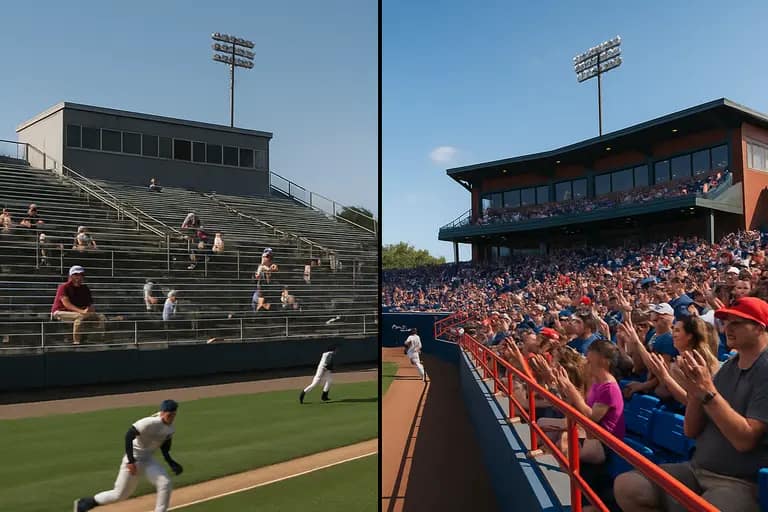
Norwich And Atlanta Face Different Demand Curves
There is another Dodd Stadium renovation story underway: Bobby Dodd Stadium at Hyundai Field in Atlanta. The research notes describe Georgia Tech’s Full Steam Ahead initiative as a $500 million athletics-facilities investment, with major work at Bobby Dodd Stadium beginning in Fall 2026 and expected to finish before the start of the 2027 football season. Planned changes include replacing many bleacher seats with about 12,500 chairback seats, widening selected aisles, adding handrails, upgrading video and sound systems, remodeling suites, and creating new premium spaces. Projected capacity is about 50,000, down from 51,913 after recent seat removals tied to a performance center.
That Atlanta project is not the same civic problem as Norwich. Georgia Tech is managing demand in a major college football setting, with recent attendance growth noted in the research record. Norwich is working from a smaller public venue trying to expand from baseball-centered use into soccer and broader community programming. Still, the comparison is useful. Both cases show that modern venues are being judged less by raw capacity and more by usability: sightlines, comfort, accessibility, sound, digital displays, and revenue areas.
Comfort Can Reduce Waste If It Matches Use
Comfort upgrades can be sustainable if they extend the working life of a venue and reduce the pressure to build elsewhere. They can also create resource-heavy spaces if they are oversized or used only a few days per year. That is why Norwich should be evaluated on event mix, not ribbon-cutting photos. A press box, club space, scoreboard, or concession upgrade is justified when it supports repeated public use and lowers operational friction. It is weaker when it supports only occasional premium demand.
For community sports, the best equipment is often unglamorous: durable seating, clear signage, reliable restrooms, safe handrails, well-drained fields, and lighting that can be maintained without specialized emergency work. These components protect the athlete and fan experience while keeping the building useful across many event types.
Renovated Dodd Stadium Community Event Role
For renovated Dodd Stadium, the credible community role is clear but not guaranteed. The venue can become a stronger regional sports platform if professional soccer helps fund and normalize better operations while leaving space for baseball, school events, youth tournaments, ceremonies, and civic gatherings. It can also fall short if the schedule narrows, access costs rise, or sustainability claims are not backed by public data.
The next evidence points are practical: the final field choice, the drainage plan, ADA details, energy specifications, concession layout, and the event calendar after January 1, 2027. If those pieces align, Norwich’s Dodd Stadium renovation could show how a midsize public venue can carry more events without abandoning local sport. If they do not, the project may still look modern while missing the deeper test: serving more people, more often, with fewer avoidable resource costs.