
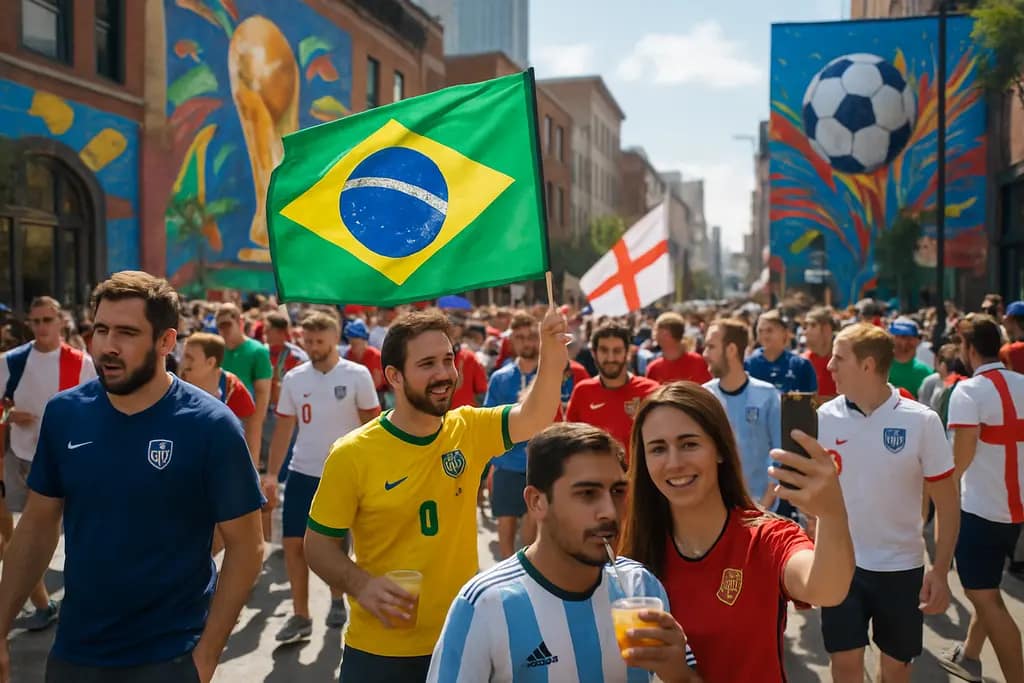
The 2026 Men’s FIFA World Cup left a clear, but uneven, record of sports tourism growth across U.S. host cities. The tournament ran through June and July 2026, and by October 9, 2026, the most useful reading is retrospective: short bursts of visitor demand helped hotels, restaurants, bars, transit systems, and event districts, yet the benefits did not land equally across markets. For city leaders, the safer lesson is not that every major event pays for itself. It is that planning quality, match inventory, venue location, visitor mix, and sustainability controls shape whether a sports mega-event leaves durable value or only a temporary spike.
What Sports Tourism Growth Actually Delivered
Host cities gained the most on match days and the dates surrounding games. Research supplied for this analysis showed that U.S. match-day host markets saw incremental hotel room revenue rise by about 36.3% year over year, driven mainly by higher room rates. June and July revenue per available room in host cities rose by roughly 12.7% year over year, while the projected full-year 2026 gain for those same markets was closer to 3.8%. That difference matters. It suggests the World Cup created high-value peaks, not a uniform tourism lift across the calendar.
Sports Tourism Growth Was Concentrated By Date
The event calendar shaped the business case. A city with a major knockout match, several group-stage fixtures, a downtown fan zone, and strong international air access had a different opportunity than a city where demand stayed near a normal summer baseline. The research notes estimated approximately US$634 million in incremental hotel room revenue in U.S. match hosts from match days and surrounding dates. That is significant, but it is still a concentrated gain. The policy question is whether cities treated those peak days as a one-off windfall or used them to test better mobility, waste, water, and energy systems for future events.
New York City Shows The Scale Of A Large Host Market
New York City reported about US$2.0 billion in economic activity tied to the tournament, including US$1.3 billion in direct visitor and operational spending, and benefits connected to more than 12,100 jobs, according to the NYC Mayor’s Office. Those figures show how a large tourism base can absorb and monetize a global soccer event. They do not prove the same result would apply everywhere. New York already had extensive hotel capacity, public transit, international gateways, food service density, and event operations experience. Those assets reduced the gap between hosting a match and converting visitors into spending.
Why The Gains Were Uneven
The tournament’s economic signal was not the same as a citywide guarantee. The research record showed that non-local visitor spending rose sharply in some host cities, with restaurants and bars among the clearest beneficiaries. Houston, for example, recorded a large downtown visitor count during the group stage period from June 11 to June 30, 2026, and the research notes put the city’s wider economic boost at about US$1.5 billion. Seattle and King County were also reported to have gained from six matches, with local estimates citing hundreds of millions of dollars in activity. Those numbers point to real demand, but they should be read next to the markets where lodging expectations were too optimistic.
In April 2026, many hotel operators in U.S. host cities said World Cup bookings were below earlier projections. The Associated Press reported that in several host markets, including Kansas City, Dallas, Houston, Boston, San Francisco, and Seattle, about 70% to 80% of hotels in a survey reported booking levels lower than projected, with Kansas City near 90% AP News reported. That does not mean the tournament failed. It means pre-event forecasts can overshoot, especially when room blocks, pricing, fan travel behavior, and late bookings do not follow the pattern that consultants or local promoters expected.
Hotel Pricing Helped, Occupancy Was Less Certain
Higher room rates can lift revenue even when occupancy does not fully match early hopes. That distinction matters for public debate. A hotel can have a strong revenue week while a surrounding neighborhood sees modest spillover. A restaurant district near a fan festival can perform well while a hotel cluster farther from transit sees ordinary summer demand. Cities that treat sports tourism growth as a single citywide number risk missing those local differences.
Visitor Spending Favored Dense Event Districts
Restaurants, bars, lodging, transportation, and entertainment venues near match routes had the clearest path to World Cup spending. The sustainability issue sits inside that geography. Dense districts can support walking, rail, bus, and shared mobility more easily than scattered event zones. They can also strain waste collection, restroom access, curb management, and late-night transit if planning is weak. The tournament showed that tourism economics and environmental management are not separate files; the same crowd flows that create revenue also create emissions, waste, and safety pressures.
Sports Tourism Growth And Sustainable Host Planning
For U.S. cities, the sustainability lesson is practical. Sports tourism growth should be judged by what remains after visitors leave: reusable wayfinding, improved transit routines, better heat protocols, lower-waste concessions, accessible fan routes, and venue operations that can serve regular-season teams. A match-day boom that depends on temporary generators, long rideshare queues, single-use materials, and car-heavy access may still produce revenue, but its public value is weaker.
This is where stadium and district design matter. Heat, water, waste, and mobility planning are not side issues for soccer. They affect player safety, fan comfort, worker conditions, and municipal costs. A useful companion analysis on green stadium lessons reviewed how venue retrofits and resource planning shaped the 2026 tournament. The same logic applies to host-city tourism: the more a city can use existing transit, existing rooms, and permanent civic assets, the less it needs to build or buy temporary capacity for a short event window.
Sports leaders should also be cautious about job claims. Event-time labor is real, and the New York City figures show meaningful employment benefits. Yet mega-events often rely on temporary, part-time, or seasonal work. A sound post-event report should separate short-term match operations from durable hospitality, venue, and small-business gains. Without that separation, cities may count activity without knowing whether it strengthened the local sports economy.
City Metrics That Matter After The Cup

The strongest post-World Cup reports will not stop at total economic activity. They should compare forecasts with actual results, show who benefited, and identify costs that were not visible in headline spending. A city that gained hotel tax revenue but absorbed heavy policing, sanitation, overtime, and transit costs needs a net view. A city that filled downtown restaurants but displaced regular visitors also needs to measure substitution effects.
- Match-day hotel performance: Room revenue, rates, occupancy, and the gap between projections and actual bookings.
- Visitor geography: Spending by non-local guests versus local residents who shifted normal activity into tournament zones.
- Public cost exposure: Security, cleaning, transit staffing, street closures, permitting, and emergency services.
- Environmental load: Waste volumes, transit share, energy demand, water use, and heat-response operations.
- Legacy use: Whether upgrades helped regular teams, community events, and future tournaments after July 2026.
Those measures are less flashy than a single billion-dollar number, but they are better for decision-making. They help cities decide whether to bid for future tournaments, how to price public support, and which venue upgrades deserve funding. Related network resources such as Efficient Directory can also help readers track connected sports-business and city-development coverage without treating every event claim as proven.
Sports Tourism Growth Lessons For U.S. Cities
The 2026 World Cup confirmed that soccer can move serious visitor spending in U.S. cities. It also confirmed that sports tourism growth is not automatic, not evenly distributed, and not inherently sustainable. Large markets with strong transit, hotel depth, and established visitor infrastructure were better placed to capture upside. Other markets still gained, but some saw demand come in below the expectations that circulated before the tournament.
The most useful lesson for future host cities is discipline. Forecasts should include low, middle, and high demand cases. Public agencies should publish net costs, not only gross spending. Venue operators should document energy, water, and waste performance alongside attendance and revenue. Tourism boards should study where visitors actually went, not only where officials hoped they would go.
Sports tourism growth can support U.S. cities when it is tied to assets that keep working after the final whistle: transit habits, reusable infrastructure, safer venue operations, and clearer reporting. The 2026 tournament delivered meaningful gains in several markets, but the record also warned against easy claims. The cities that learn the most from June and July 2026 will be the ones that treat the World Cup not as proof of guaranteed payoff, but as a stress test for how sports, tourism, and sustainability can be managed together.