

Think back to your last strategy meeting. The marketing team talked about KPIs, an engineer discussed carbon fiber stress fractures, and a UX designer shared emotional journey maps. It was three people talking, but no one understood each other.
This isn’t just a problem in business. It’s a productivity tax many industries face. But in sports, where winning is all about tiny details, we can’t afford to be stuck in our own worlds.
The real game-changer isn’t a new material or a better algorithm. It’s the mix of different skills and ideas in collaborative design. For years, experts have called for combining psychology, physics, and physiology. Even climate activists see breaking down silos as key to solving big problems.
The message is clear. The future of sports gear and even Olympic stadiums depends on bringing different fields together, not just staying in our own areas.
The Power of Diverse Expertise in Sports Design
True interdisciplinary teams in sports design are like a special heist crew. Each member has a unique skill that’s essential for solving tough problems. It’s not about finding five engineers who are all the same. It’s about gathering a team where everyone’s skills are different.
Studies show that teams with different skills work better together. They don’t just add their knowledge. They create new ways to solve problems. A team with diverse skills can solve complex problems better than one genius alone.
So, who should be on your dream sports design team? Let’s pick the roles:
- The Materials Scientist (The Hacker): They love learning about materials and how they work. They think about the smallest parts of things.
- The Sports Psychologist (The Grifter): They know how athletes think and feel. They understand what goes on in an athlete’s mind.
- The Industrial Designer (The Muscle): They turn ideas into real things. They know how things feel and work.
This approach uses both common and uncommon skills. It’s not about making everyone a physicist. It’s about combining skills in a way that leads to new ideas.
It’s like mixing different ideas together. A scientist’s discovery is useless without a biomechanist’s analysis. A designer’s idea won’t work without a psychologist’s input. This mix of skills is what solves big problems in sports.
This approach improves sports performance and public health. A better shoe isn’t just for athletes. It helps everyone stay safe while playing sports. The real power comes from the connections between different skills. That’s where the next big thing in sports design is waiting.
Case Study: Nike’s Flyknit Development Team
Nike’s Flyknit is a great example of what happens when sports innovation partnerships work well. It’s not just about breaking down barriers. It’s about creating something new from the rubble. This was like a heist movie, where a team of experts had to work together perfectly.
The goal was simple: make a running shoe that felt like a second skin. But achieving this meant tearing down all the usual departmental walls. Unlike traditional methods, where one team would pass on a design to another, Flyknit brought everyone together from the start.
Imagine a war room for the foot. A biomechanist wasn’t just giving feedback. They were defining the problem in real time. Questions like “How does the foot’s pressure change during a marathon?” were answered through science.
This is where sports innovation partnerships truly shine. The industrial designer and manufacturing engineer weren’t waiting for a prototype. They were already thinking about how to make it happen, shaping the solution from the beginning.
Let’s look at the key players in this team effort:
- The Biomechanist: They were the leaders. They used motion capture and pressure data to understand what the foot needs, turning athletic performance into an engineering challenge.
- The Textile Engineer: They were the translators. They took the biomechanical demands and explored different materials and designs.
- The Data Analyst: They were the fact-checkers. They analyzed data from athlete tests, linking material changes to performance gains.
- The Sustainability Expert: They were the conscience. They pushed for a process that reduced waste by up to 60% compared to traditional methods.
This wasn’t a simple checklist. It was a constant, messy conversation. A question from the biomechanist would send the textile engineer back to the lab. A manufacturing challenge would force the designer to think creatively. This back-and-forth is what drives modern sports innovation partnerships.
The outcome? A shoe that changed the game. Flyknit offered precision support, reduced weight, and a new look. It wasn’t just an improvement. It was a revolution, thanks to a team effort.
The takeaway is clear. You can’t plan for innovation. It happens when diverse minds come together daily. Nike didn’t just make a better shoe. They showed us how to create the future through collaboration.
FAQ
Q: What is a design collaboration?
A: A design collaboration is when two or more designers work together to create something new. They share their ideas and skills to make something special.
Q: What are the benefits of design collaboration?
A: Design collaboration brings together different perspectives and skills. It leads to creative ideas and innovative solutions. It also helps designers learn from each other and grow.
Q: How can I find a design collaboration partner?
A: You can find a design collaboration partner by attending design events, joining online communities, or reaching out to other designers. Look for someone with a similar style and goals.
Q: What are some tips for successful design collaboration?
A: To have a successful design collaboration, communicate clearly, set goals, and respect each other’s ideas. Work together as a team and be open to feedback.
Q: How can design collaboration benefit my business?
A: Design collaboration can bring new ideas and perspectives to your business. It can help you create innovative products and services. It can also help you grow and expand your business.
Q: What are some examples of successful design collaborations?
A: There are many examples of successful design collaborations. For example, Apple and Nike collaborated on a special edition sneaker. This collaboration brought together the best of both worlds and created something unique.
Q: How can I start a design collaboration?
A: To start a design collaboration, reach out to other designers or design companies. Discuss your ideas and goals. Work together to create something amazing.
FAQ
Q: What is a collaborative design?
A: Collaborative design is a process where multiple stakeholders work together to create a design. It involves sharing ideas, expertise, and resources to achieve a common goal.
Q: What are the benefits of collaborative design?
A: Collaborative design offers several benefits, including improved communication, increased creativity, and enhanced problem-solving skills. It also fosters a sense of teamwork and promotes a shared vision.
Q: How can I implement collaborative design in my projects?
A: To implement collaborative design, you can use tools like design collaboration software, virtual collaboration platforms, and online design communities. These tools facilitate communication, idea sharing, and project management.
Q: What are some best practices for collaborative design?
A: Some best practices for collaborative design include setting clear goals and objectives, establishing a shared vision, and fostering open communication. It’s also important to respect individual contributions and encourage diverse perspectives.
Q: How can I overcome challenges in collaborative design?
A: To overcome challenges in collaborative design, you can establish clear roles and responsibilities, use effective communication tools, and create a positive and inclusive team environment. It’s also important to address conflicts and disagreements in a constructive manner.
Q: What are some success stories of collaborative design?
A: There are many success stories of collaborative design in various industries. For example, the development of the Apple iPhone involved collaboration between multiple teams, resulting in a groundbreaking product. Another example is the creation of the iconic Coca-Cola logo, which was the result of a collaborative effort between the company and a renowned designer.
Q: How can I integrate collaborative design into my workflow?
A: To integrate collaborative design into your workflow, you can start by identifying opportunities for collaboration in your projects. Then, use design collaboration software and virtual collaboration platforms to facilitate communication and idea sharing. Establish clear goals and objectives, and encourage open communication and diverse perspectives.
Industrial Designers and Ergonomics Specialists
Advanced performance data is useless if the product feels uncomfortable. This is why industrial designers and ergonomists are key. They ask simple yet complex questions. How does it feel against the skin? Where does it chafe on the hundredth repetition? Can an exhausted athlete use it at 5 AM?
These roles are vital in interdisciplinary teams. They turn theoretical insights into real products. These products are designed for you to use and enjoy.
Designers balance what we want with what our bodies can handle. A shoe might need to return energy, but it must also fit our foot. A helmet might look great, but it must not cause headaches. This is where art meets anatomy.
Ergonomics specialists know the human body well. They understand pressure points and motion. Designers add their sense of form and user interaction. Together, they create something amazing.
Their work stops bad engineering. It prevents ‘technological tendinitis’ in interdisciplinary teams. It makes a gadget into a tool, a list of features into a seamless experience.
Take the basketball shoe as an example. Biomechanists might want stability during cuts. Materials scientists might suggest a new material. Designers and ergonomists must combine these ideas into a shoe that feels right.
They are the diplomats of interdisciplinary teams. They translate data into something we can feel. Success is not in numbers, but in how we feel. When they succeed, we forget about the technology and just perform.
Psychology and User Experience Integration
Sports design has a secret: it’s as much about the mind as the body. Even with the perfect design, success can fail if the athlete doesn’t feel it. This is where sports innovation partnerships shine, blending psychology and design.
Think of it like this: biomechanics is the hardware, psychology is the software, and user experience is the interface. When these work together, gear becomes more than just useful—it becomes empowering. A psychologist might adjust a mechanism to help an anxious climber focus.
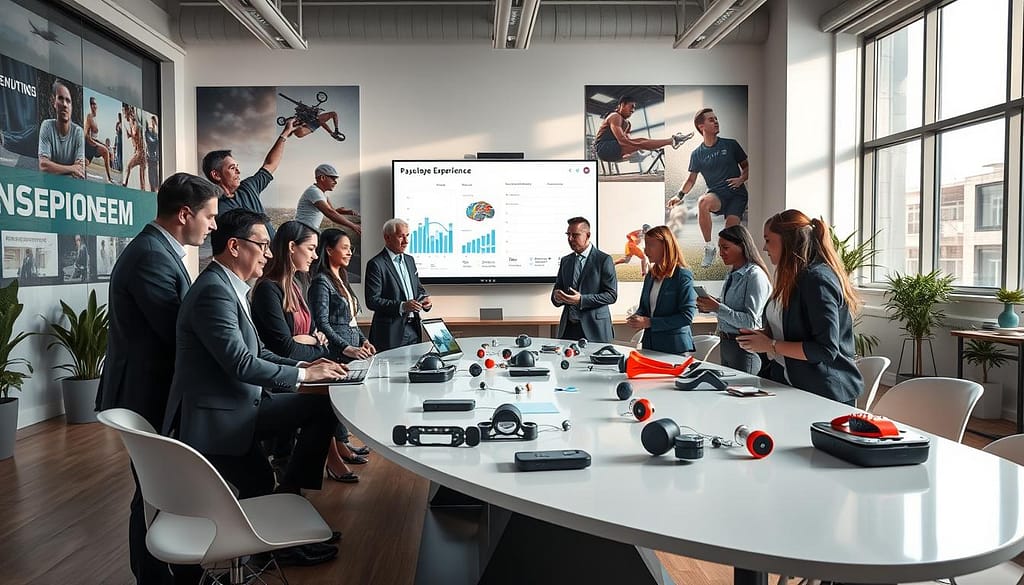
This blend is based on solid theory. Self-Determination Theory shows that motivation comes from feeling in control, competent, and connected. Great sports equipment boosts these feelings, turning it into a tool for motivation.
Creating this requires a special team environment. Psychological safety is key. A team must feel safe to share ideas, like how a color scheme might affect performance. The best sports innovation partnerships foster this safety, ensuring everyone’s voice is heard.
In practice, this means moving from a checklist to a guiding philosophy.
| Design Principle | Traditional Equipment Design | Psychology-Informed Design |
|---|---|---|
| Primary Goal | Optimize measurable physical output (speed, force, efficiency). | Optimize the athlete’s holistic state: belief, focus, and perceived capability. |
| View of the Athlete | A biomechanical system to be analyzed and improved. | A conscious user with emotions, cognitive biases, and a narrative. |
| Success Metric | Lab data: watts saved, grams reduced, milliseconds shaved. | User sentiment: confidence gained, anxiety reduced, “flow” state achieved. |
| Error Handling | Prevent mechanical failure or misalignment. | Design forgiving interactions that mitigate user error without shame. |
| Innovation Driver | Advances in materials science and engineering. | Insights from behavioral science and cognitive psychology. |
This collaboration leads to a remarkable outcome: a scientifically valid placebo effect. The gear works well because of its design and the messages it sends to the mind. It tells the athlete, “You’ve got this.” The real victory is in the mind, long before the stopwatch confirms it.
FAQ
Q: What is a design collaboration?
A: A design collaboration is when two or more designers work together to create something new. They share their ideas and skills to make something special.
Q: What are the benefits of design collaboration?
A: Design collaboration brings together different perspectives and skills. It leads to better ideas and more creative solutions. It also helps designers learn from each other and grow.
Q: How can I find a design collaboration partner?
A: Look for designers who share your vision and values. You can find them through design communities, online platforms, or by attending design events. It’s important to choose someone who complements your skills and style.
Q: What are some tips for successful design collaboration?
A: Good communication is key. Make sure to listen to each other and share your ideas clearly. Set clear goals and expectations. Respect each other’s opinions and work together as a team.
Q: How can I showcase my design collaboration work?
A: Use online platforms like Behance or Dribbble to showcase your work. You can also create a website or blog to share your projects. This helps you get noticed and attract new clients.
Q: What are some examples of successful design collaborations?
A: Look at the work of designers like Apple and Nike. They have collaborated on many projects, creating innovative and successful designs. These collaborations show how different designers can come together to achieve great things.
Marketing and Athlete Feedback Loops
In the final act of the collaborative design play, the audience doesn’t just applaud—they rewrite the script. For too long, marketing and athlete feedback were treated as post-production edits, slapped onto a finished product. That model is broken. Today, they are the integral to the process, the essential circuit that closes the loop between what we make and why it matters.
Think of the marketing team not as hype men, but as cultural ethnographers. Their real job isn’t to sell a story we invented in a lab. It’s to listen to the story being lived on the track, the court, and the trail. They hear how a product is mythologized, where it falls short in the real world, and what features the weekend warrior actually cares about. This raw, unfiltered perception is pure gold—the most valuable R&D data you’ll never generate in a controlled test.
Athlete feedback operates on the same principle, just with more sweat. The superstar’s critique of a custom kit and the amateur’s complaint about a blister are two sides of the same coin: direct user experience. Ignoring this input is like a chef refusing to taste their own food. True collaborative design demands we build a formal, respectful channel for this voice.
So, how do you move from a broken feedback system to a dynamic, integrated one? The contrast is stark, as the table below illustrates. It’s the difference between a monologue and a conversation.
| Aspect | Traditional Feedback Approach | Integrated Collaborative Loop |
|---|---|---|
| Marketing Role | External storyteller; brought in post-production. | Embedded ethnographer; informs design from concept. |
| Athlete Input | Ad-hoc, often limited to star endorsements; seen as validation. | Systematic and inclusive (pro to amateur); treated as foundational R&D. |
| Communication Flow | One-way: Design -> Marketing -> Consumer. Feedback is slow and filtered. | Continuous dialogue. Feedback from market/athletes flows directly back to design teams in real-time. |
| Primary Risk | Marketing claims diverge from product performance, creating consumer distrust. | Designers may over-index on niche feedback, losing sight of the broader market. |
| Outcome | A product with a marketed story. Often disjointed. | A product that is its own authentic story. Deeply aligned. |
This isn’t collaborative design with a few focus groups tacked on. It’s a fundamental rewiring of how a sports brand operates. It turns every athlete into a consultant and every marketing insight into a blueprint. The goal? To build things people don’t just buy, but believe in. For a deeper dive on structuring these critical conversations, our ultimate guide to effective feedback offers a practical framework. Because sustaining a genuine collaborative design engine requires more than good intentions—it needs a well-oiled process.
Managing Cross-Functional Design Teams
The idea of interdisciplinary collaboration sounds perfect, but it’s hard to achieve in real life. We talk about “psychological safety” and “cognitive diversity,” but in offices, people often stick to their own areas. The gap between what we want and what we get in sports innovation is huge.
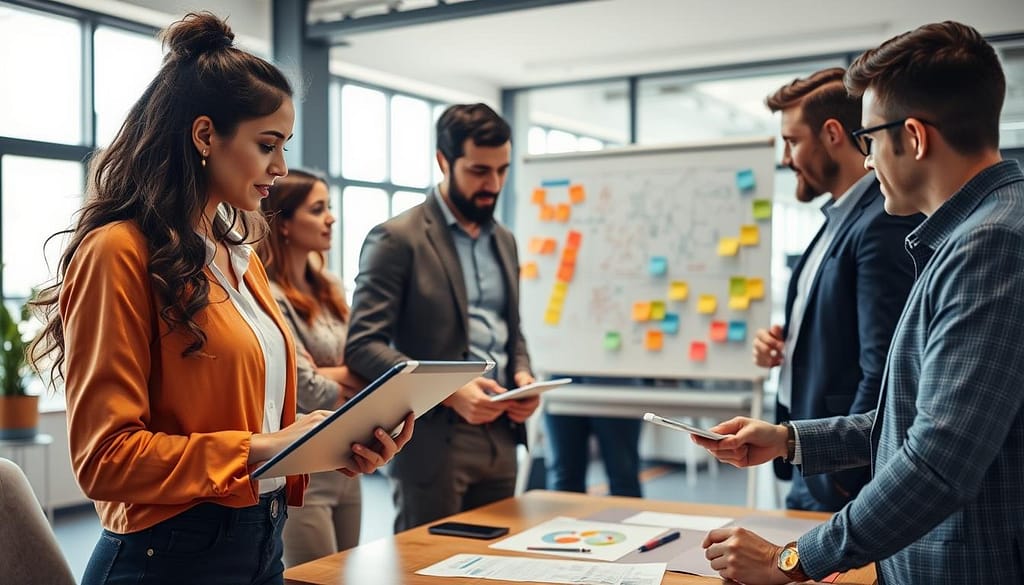
Studies show what many designers and engineers already know. They agree that diverse teams can be more innovative. But, they also worry that adding more people might slow things down. In the fast-paced world of sports innovation, speed often wins over depth.
There are big challenges in managing teams with different skills. For example, a biomechanist might have a great idea, but the team needs to make decisions quickly. This tension is a big part of the problem.
There are a few main issues. First, teams are expected to work together but are often rewarded for focusing on their own areas. If someone from a different field tries to contribute, they might face pushback. Second, teams might say they are open to new ideas but actually punish anyone who challenges the status quo.
Third, teams can be too confident in their own ways of thinking. A data scientist might think their numbers are more important than a designer’s instincts. Without good leadership, these teams can’t really work together.
So, what makes a team work well? It’s about leadership that understands the value of different skills. A good leader knows how to bring people together and manage conflicts. They’re not the smartest person in the room but the best at connecting people.
Here are some ways to improve teamwork:
- Creating deliberate collision spaces: Set up meetings where everyone explains their work in simple terms.
- Rewarding bridge-building: Give recognition and promotions to those who work well across disciplines.
- Prototyping the process: Start with small projects to practice working together.
- Measuring what matters: Track progress in teamwork and communication, not just speed.
The key for leaders is to ask the right questions. “How would your material choice affect the athlete’s mental focus during the fourth quarter?” gets the chemist thinking about psychology. “What data would convince you this design change improves comfort?” helps the engineer understand the designer’s perspective. This way, everyone works together better.
Managing interdisciplinary teams in sports design is about creating harmony. It’s like conducting an orchestra where each musician plays their own part. The conductor ensures everyone is in sync, creating beautiful music together.
This isn’t just a dream. It’s the hard work of building a team that can handle creative chaos. The teams that succeed don’t just make better products. They change what’s possible at the intersection of different disciplines. They turn conflicts into creative opportunities, becoming their biggest strength.
Future Trends in Collaborative Sports Design
The old ways are fading. We’re moving towards something new: transdisciplinary design. It’s not just about having a psychologist at Nike. It’s about making mental health as key as the shoe’s design.
Future sports partnerships will be quite different. Imagine neuroscientists, climate experts, and ethicists working together. They’ll tackle the sustainability crisis by combining human rights with material science. AI will help by simulating how a design works in many areas at once.
The big change is in thinking. Sports design will move from making objects for elite athletes to creating entire ecosystems. It’s not just about better gear. It’s about starting better conversations and a more complete approach to human achievement.
The old silos are disappearing. The future is about connections and teamwork. It’s not just about making shoes faster. It’s about making the world better, one team at a time.