
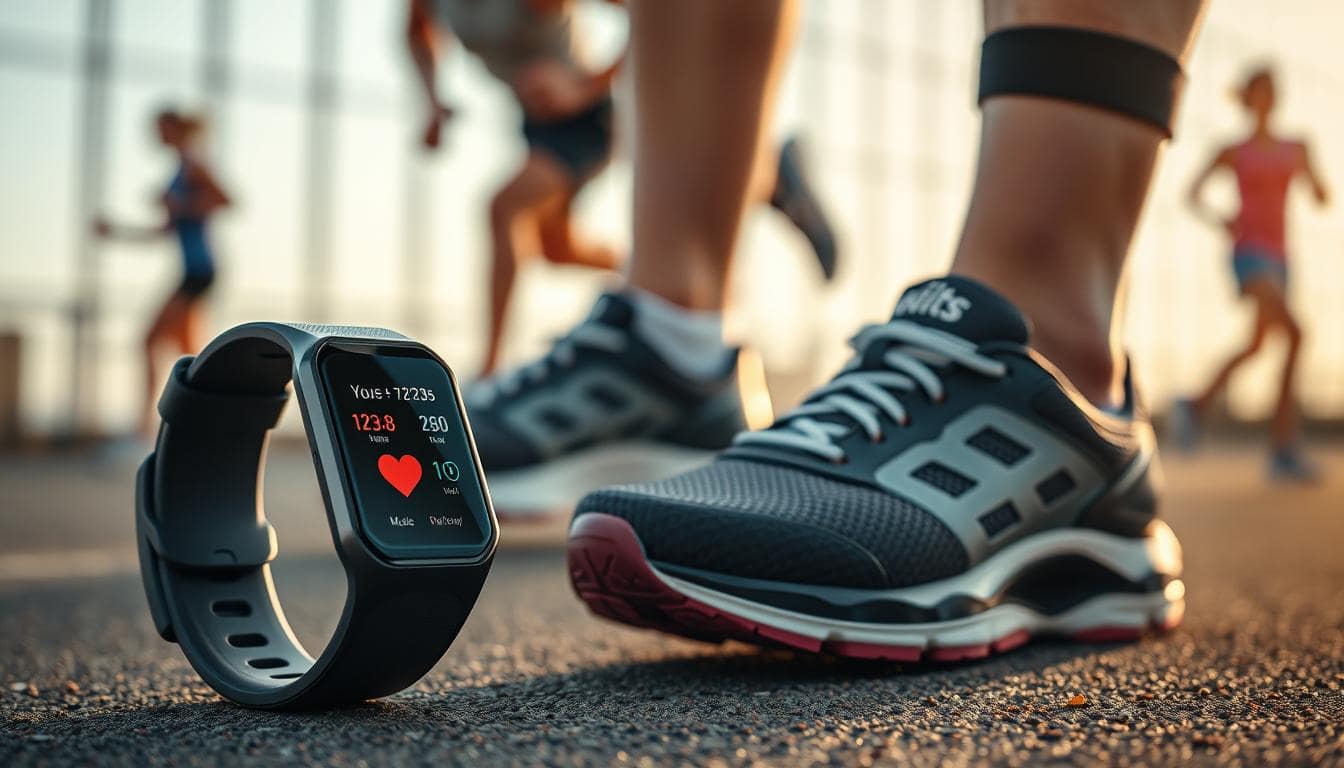
Let’s be honest—strapping a brick to an athlete and calling it a “wearable” is a non-starter. We’ve moved past the days of clunky chest straps that feel like a bad first date. Now, the focus is on athletic wearables design that fits right into an athlete’s life.
The real magic is in making things invisible. If a tool changes a sprinter’s run or a swimmer’s stroke, it’s not just a setback. It’s a betrayal of the sport’s true spirit. For example, the Adidas Road to Records event used sensors on athletes’ feet. They measured contact time and strike angle, showing how gait and fatigue work.
Lehigh University’s football team saw a big win with muscle oxygen sensors. They helped rehab an ACL injury in half the usual time. This shows how athletic wearables design can change recovery for the better.
Imagine a world where athletes don’t even notice they’re wearing anything. The aim is simple: make technology that fades away, leaving only the data. If an athlete is worried about the sensor instead of the finish line, we’ve failed.
Hardware design constraints
Hardware design in sports tech is where dreams meet physics. Imagine making a device that tracks your heart rate, core temperature, and body movements all at once. Sounds easy, right? But, it’s actually a tough challenge in miniaturization.
At the core of this challenge are Microelectromechanical Systems (MEMS). These tiny wonders let us pack sensors like accelerometers and gyroscopes into tiny silicon pieces. But, adding more sensors means dealing with battery life and heat issues. It’s like trying to fit an elephant in a Mini Cooper—very challenging.
Look at the Tokyo 2020 Olympics. They had a small wristband and a smartwatch with a special app. This setup used e-SIMs for data transfer. It was a balancing act, needing seamless e-SIM roaming, no Bluetooth drops, and all under a shot of espresso’s weight.
So, what are the main hardware design challenges? Here’s a quick list:
- Size and Weight: Devices must be light and small for athlete comfort.
- Battery Life: Long battery life is key for use during long events.
- Durability: Devices must handle extreme conditions, like Sapporo’s summer marathon.
- Data Transmission: Reliable data transfer is vital, even in high-pressure situations.
The key lesson? The best design solves a problem without making new ones. By accepting these challenges, you might create the next big thing in sports tech.
Material selection for durability
Choosing materials for athletic wearables is like preparing for a big game. Every choice is critical. For performance monitoring hardware, the stakes are even higher than a last-minute field goal. We’re not just talking about fabrics; we’re exploring a world where materials must withstand sweat that could corrode a battleship.
The classic chest strap heart rate monitor is a good example. It needs electrodes that stick to the skin during intense activities. Yet, the strap must also be flexible to allow for breathing. It’s a challenging balance, like walking a tightrope while juggling flaming torches.
The Zephyr BioPatch tried to innovate with disposable electrodes. But, it had a cumbersome over-the-shoulder strap that was a nightmare under football pads. This shows that innovation can sometimes be a double-edged sword.
The future is in smart textiles and hypoallergenic adhesives. These materials can last through a triathlon’s swim leg without causing a biological experiment. After all, nothing screams “premium performance monitoring” like a rash that lasts longer than the post-race endorphins.
In summary, choosing materials for performance monitoring hardware is a tough task. It needs a balance of durability, comfort, and innovation. For more insights on the evolving landscape of sensor technology, check out this sensor landscape overview.
Waterproofing and environmental protection
Water and electronics don’t mix well, like an awkward first date in the rain. In athletic wearables design, waterproofing is essential. Devices must track performance, whether in water or rain. But keeping water out is just the start.
Inside these devices, managing temperature is key. Body heat and cold water can cause problems. This is where ingestible temperature capsules come in. They stay dry until you drink cold water, then they send a signal. It’s a clever solution with a catch.
At the Tokyo 2020 Olympics, we used a mix of solutions to protect athletes. We combined ingestible pills with Kestrel WBGT monitors. We also used machine learning to adjust weather data for each athlete. It was a way to ensure accurate data, no matter the weather.
The future looks bright with self-healing hydrophobic coatings. Imagine a device that repels water like a duck. This could change how we design athletic wearables, making them work in any environment.
| Feature | Traditional Waterproofing | Self-Healing Coatings |
|---|---|---|
| Durability | Moderate | High |
| Maintenance | Regular checks required | Minimal |
| Cost | Lower initial cost | Higher initial investment |
| Environmental Resistance | Limited | Excellent |
Battery life optimization strategies
Battery life is the silent tyrant in the realm of sports device engineering. Engineers work hard to make sensors as good as NASA’s. But if a device runs out of battery at mile 20 of a marathon, it’s useless. The main reasons for battery drain are GPS, cellular modems, and high-frequency accelerometers.
The Adidas Road to Records event is a great example. We streamed live data from 26 elite athletes. This included flight time, cadence, stride length, and heart rate. How do we keep these devices alive during such demanding tasks? The answer is through smart optimizations.
We can make the GPS sleep when not in use. Compressing data packets also helps save energy. And waking the modem only when needed is like teaching a teenager to text less—it’s all about efficiency.
Energy harvesting could be a game-changer. Imagine piezoelectric fibers in shoe insoles that charge the battery with every step. This could change how we think about battery life. Until then, we rely on lithium-ion batteries.
| Optimization Strategy | Description | Potential Impact |
|---|---|---|
| Duty-Cycling GPS | Allow GPS to enter sleep mode when not actively in use. | Reduces battery drain significantly. |
| Data Compression | Minimize the size of data packets transmitted. | Less energy used during data transmission. |
| Selective Modem Activation | Activate the modem only when necessary. | Conserves battery life by reducing active time. |
| Energy Harvesting | Use piezoelectric materials to generate power from movement. | Potentially unlimited power supply during activity. |
User interface design for athletes
The user interface of performance monitoring hardware is where things get interesting. A well-designed interface can turn complex data into useful insights. But a cluttered and confusing one can be like trying to read ancient symbols in the dark.
At the Tokyo 2020 Olympics, athletes could customize their smartwatch displays. They could choose between real-time data or save it for later. This made it easier for each athlete to focus on what mattered most to them.
Dhruv Seshadri highlights a big problem: wearable data often lacks context. We need AI and machine learning to turn raw data into useful advice. Imagine getting a gentle alert saying, “Your recovery is off; skip the hard session.” That’s a UI that really gets you!
The best UI is one that doesn’t get in the way. It should give insights clearly without overwhelming the user. If a wearable collects a ton of data but the athlete can’t make sense of it, does it really help?
| Feature | Standard UI | Personalized UI |
|---|---|---|
| Data Presentation | Static numbers | Customizable metrics |
| Real-Time Feedback | Generic alerts | Contextual insights |
| User Engagement | One-size-fits-all | Tailored experience |
Manufacturing scalability challenges
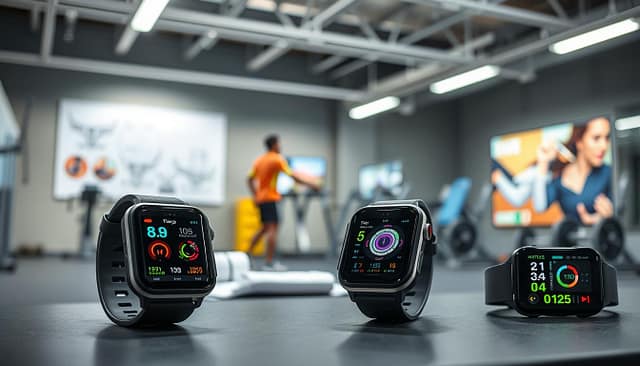
Scaling up production is like moving from a cozy dinner to a chaotic wedding. The excitement of creating a prototype quickly turns into a logistical nightmare when you need to make 100,000 units. This is the real challenge for athletic wearables design.
MEMS devices are a marvel. They can sense movement in many ways, leading to big leaps in athletic tech. But making them in large numbers is incredibly precise. Each device must be checked and validated to ensure accuracy. Without this, the data given to coaches could be as reliable as a fortune cookie.
The Seshadri Lab aims to create one platform for sports medicine and neonatal monitoring. But navigating FDA rules is a huge challenge. It’s like playing chess with someone who keeps changing the rules. Finding a reliable contract manufacturer, like in Shenzhen, can also be tough due to quality issues.
Scalability isn’t just about making more units. It’s about making sure every unit is the same. A single faulty sensor can cause misdiagnoses or ineffective training. Many startups have failed to make this transition from lab to production line.
Quality assurance and testing protocols
Quality assurance in sports device engineering is key to success. It’s not just about adding a sensor to an athlete. You need to make sure the data is accurate.
For example, a race walker at Tokyo 2020 had a big difference in heart rate readings. His smartwatch said 211 bpm, but a chest strap showed 178 bpm. This shows how important it is to have reliable data.
Testing devices thoroughly can solve these problems. Studies have shown that triaxial accelerometers can measure swimming strokes well. But it took years of research to prove it.
So, before using a device to help an athlete recover, it must be tested. This ensures it works as well as a motion-capture lab.
In conclusion, quality assurance is essential in sports device engineering. Without it, you’re just making guesses with expensive gadgets.
Cost optimization techniques
Let’s talk about the money in sports. Sports tech is often seen as only for the top leagues. Men’s sports get twice as much money as women’s, creating a big tech gap. This gap means fewer tools for young athletes to track their performance.
Cost optimization isn’t about cutting corners. It’s about making top tech available to everyone. For example, pedometers have helped millions get moving. But, we need to find ways to make advanced tech affordable for all teams.
Do we really need the highest sampling rates? Can we use less expensive parts without losing quality? The Lehigh women’s soccer team’s work with WHOOP bands and GPS is a good start. They aim to create a device that’s cheaper than high-end shoes but gives vital injury prevention insights.
By finding cost-effective solutions, we can make performance tracking available to all. This way, every athlete can reach their full performance. For more on how to design and save money, check out this resource.