

A live sports platform can deliver a number in milliseconds and still get the most important thing wrong: whether that number deserves to be trusted. Scores, player tracking, injury information, performance models, betting markets and fan-facing statistics increasingly pass through connected systems before reaching the person making a decision. Each connection creates another opportunity for data to arrive late, lose context, become corrupted or be accessed by the wrong party.… Read the rest
Author: Byron Fleming
Engineering High-Performance Wearable Devices for Athletes

Let’s be honest—strapping a brick to an athlete and calling it a “wearable” is a non-starter. We’ve moved past the days of clunky chest straps that feel like a bad first date. Now, the focus is on athletic wearables design that fits right into an athlete’s life.
The real magic is in making things invisible. If a tool changes a sprinter’s run or a swimmer’s stroke, it’s not just a … Read the rest
Stadium Aerodynamics: How CAD Wind Modeling Shifts the Over/Under

The modern sports stadium is a structural marvel, heavily designed by engineers long before a single player steps onto the turf. Teams invest billions into new venues, relying heavily on computer-aided design (CAD) to map out every single detail. A huge part of this process involves mapping the airflow, measuring exactly how wind interacts with the roof structure and grandstands. Oddsmakers and professional bettors watch these architectural plans closely. They … Read the rest
Why Ohio State’s AI-Powered Wi-Fi Upgrade Shows College Football Is Rebuilding Game Day Around Connectivity
Ohio State’s 2026 football season is starting with a technology story that fits far beyond Columbus. On August 14, 2026, Ohio State Athletics announced new Ohio Stadium fan experience upgrades ahead of the Buckeyes’ September 5 home opener against Ball State, including an AI-powered Wi-Fi 7 project, expanded Express Entry with facial authentication, new mobile ticketing protections, and updated game-day themes. For college football programs, this is not only a … Read the rest
How Sports Brands Build Successful Equipment Take-Back and Remanufacturing Programs

Most take back programs in sports are just fancy recycling bins. Brands boast about collecting old tennis rackets and deflated footballs. But what happens next? They shred these items, saying they care about the environment.
Is this really a strategy or just a PR stunt? A real take back remanufacturing effort asks tough questions. How many items are really saved from landfills? What profit do refurbished goods make?
Does the … Read the rest
Recycled Fibers & Advanced Composites: Building Next-Gen Eco Sports Equipment

Carbon fiber has been a superstar in sports equipment. It helps us conquer mountains and glide over waves. But, it has a dark side—it mostly ends up in landfills.
Change is coming, though. Laws are getting stricter, and people want more eco-friendly options. Now, we’re seeing a mix of recycled materials and new composite tech. This mix is changing the game.
By 2030, World Sailing will make sure boats … Read the rest
Microplastics in Performance Clothing: Risks, Research and Better Material Choicess

Ever notice how your favorite athletic wear sheds more than just sweat? Microfibre shedding is a silent crisis in your laundry basket. Fast fashion is a major culprit, releasing a lot of plastic fibers into our waterways. Just one load of polyester clothing can unleash up to 700,000 microfibers!
These synthetic fibers make up 35% of ocean microplastics. It’s almost poetic, isn’t it? We’re living in an era called the … Read the rest
Why Smart Stadium Connectivity Is Becoming The Backbone Of U.S. Sports Venues
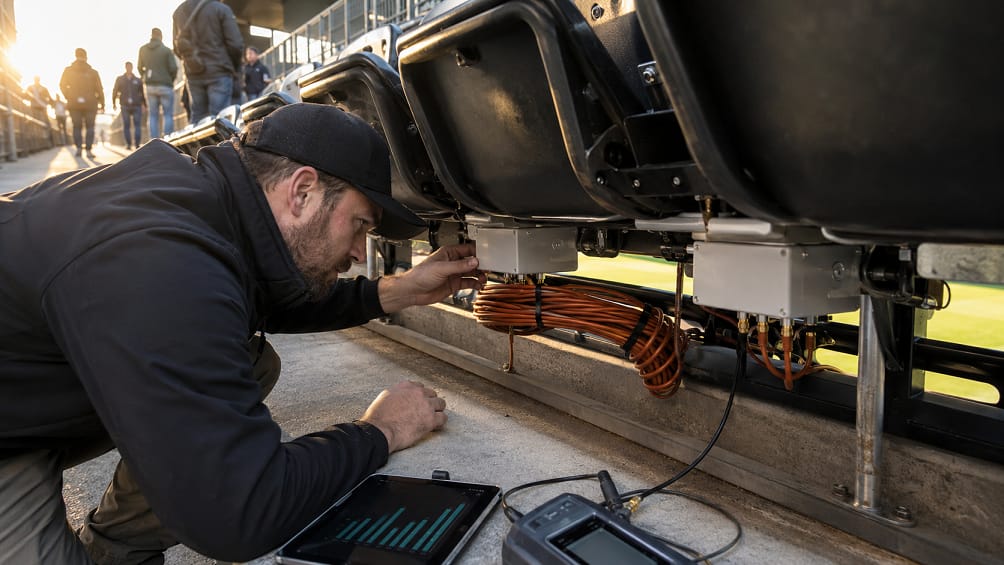
Smart stadium connectivity is no longer a luxury feature added after seats, scoreboards, suites, and concessions are already finished. In 2026, it has become part of the operating system for U.S. sports venues. The FIFA World Cup across the United States, Canada, and Mexico showed how high-capacity Wi-Fi, 5G, fiber, private networks, broadcast routing, security systems, and real-time data flows now shape the way a stadium performs under match-day pressure. … Read the rest
How World Cup Heat Data Is Turning Stadium Design Into A Player Safety Story

The 2026 FIFA World Cup is making stadium design feel less like a background issue and more like a player safety system. Across the United States, Canada, and Mexico, the tournament’s June 11 to July 19 calendar has placed elite soccer inside peak-summer conditions, forcing organizers, architects, venue operators, medical teams, and broadcasters to think about heat as part of match infrastructure, not just match weather. FIFA’s official World Cup … Read the rest
How Real-Time Data Infrastructure Shapes World Cup Fan Engagement Technology

The FIFA World Cup has always been a global media event, but the 2026 edition will test digital infrastructure at a scale the tournament has never seen before. With 48 teams, 104 matches, and host cities spread across Canada, Mexico, and the United States, the fan experience will depend on more than stadium seating, broadcast feeds, and matchday atmosphere. It will rely on real-time data systems that can process millions … Read the rest