
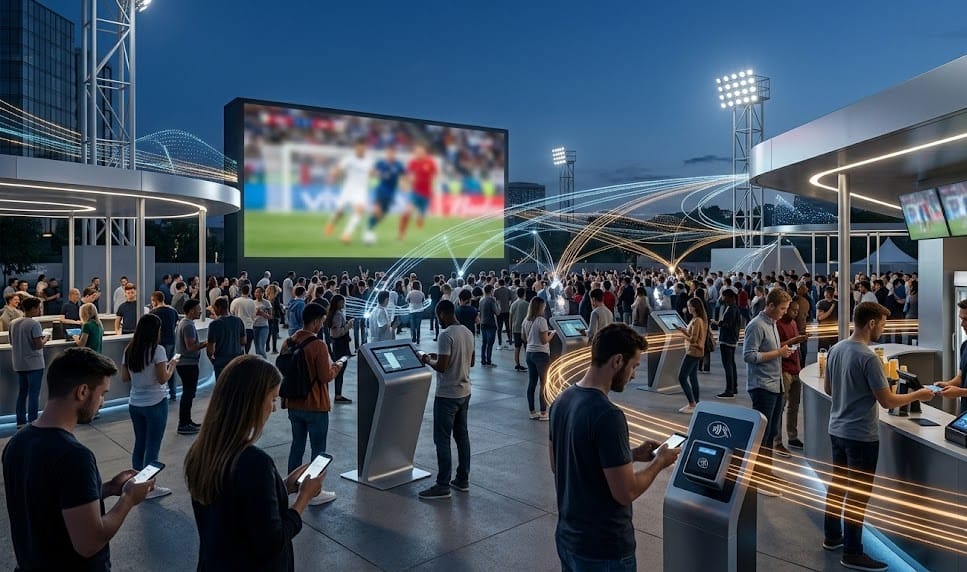
The FIFA World Cup has always been a global media event, but the 2026 edition will test digital infrastructure at a scale the tournament has never seen before. With 48 teams, 104 matches, and host cities spread across Canada, Mexico, and the United States, the fan experience will depend on more than stadium seating, broadcast feeds, and matchday atmosphere. It will rely on real-time data systems that can process millions of user actions while matches, travel patterns, mobile interactions, and live content streams all move at once.
That shift matters because modern supporters no longer experience major tournaments through one channel. They follow live match statistics, mobile alerts, venue maps, ticketing updates, social clips, fantasy games, live odds, public viewing schedules, and streaming companion content in the same window of time. For engineers, platform architects, and digital product teams, the World Cup is a case study in high-pressure fan engagement technology where latency, uptime, personalization, and data accuracy directly affect user trust.
The same principles used in CAD, simulation, testing, and connected product development apply here: collect accurate data, process it quickly, distribute it reliably, and design systems that hold up under real-world stress. That is why real-time data infrastructure is becoming one of the most important unseen layers behind the next generation of sports technology.
Why World Cup Fan Engagement Is Now A Data Infrastructure Challenge
A World Cup match no longer begins at kickoff. For fans, the digital experience starts when they check transportation routes, open a ticketing app, monitor team news, scan stadium-entry instructions, or follow pre-match tactical analysis. Each action generates a data request, and each request has to be served quickly enough to feel invisible.

During a tournament spread across three countries and multiple time zones, this becomes more complicated. A fan in Toronto may be checking mobile ticket access while another in Mexico City is following lineup updates and a third in Los Angeles is watching match clips from a public event. These interactions rely on distributed cloud systems, edge computing, content delivery networks, APIs, and mobile connectivity working together in real time.
The infrastructure challenge is not only scale. It is synchronization. A lineup change, VAR decision, traffic advisory, stadium gate update, or push notification can lose value if it arrives late or inconsistently across platforms. In the World Cup environment, fan engagement depends on data freshness as much as design quality.
That is why the technology behind fan platforms is moving closer to the logic used in industrial monitoring systems. Data must be captured, validated, transmitted, visualized, and acted on with minimal delay. Whether the end user is a stadium operator, broadcast partner, mobile app developer, or supporter, the core engineering problem is the same: reduce friction between event data and user action.
The Technical Layers Behind Real-Time Sports Experiences
Real-time fan engagement is often presented as a simple app feature, but the underlying architecture is far more complex. A modern World Cup digital ecosystem may include live match data providers, stadium connectivity systems, geolocation tools, ticketing databases, video platforms, payment systems, personalization engines, and customer support workflows.
Each layer has to communicate without creating bottlenecks. If a mobile app can display match statistics instantly but fails during ticket scanning, the experience still breaks. If public Wi-Fi performs well but push notifications are delayed, the platform still feels unreliable. If a streaming companion tool updates faster than the official match center, fans may begin to distrust the official source.
| Infrastructure Layer | Role In Fan Engagement | Technical Risk If It Fails |
|---|---|---|
| Match Data APIs | Deliver scores, events, lineups, substitutions, and statistics | Delayed or inconsistent live updates |
| Connectivity Systems | Support mobile access, venue apps, ticketing, and media sharing | Congestion, app failures, poor stadium UX |
| Payment Infrastructure | Handles merchandise, food, transport, premium content, and platform transactions | Abandoned purchases and user frustration |
| Content Delivery Networks | Distribute video, highlights, images, and real-time pages | Slow loading and regional performance gaps |
| Personalization Engines | Tailor notifications, recommendations, and fan journeys | Irrelevant alerts and lower engagement |
The best fan engagement systems do not treat these components as isolated tools. They operate as an integrated data environment where accuracy, speed, and resilience determine whether the user experience can survive peak demand.
How AI And Edge Systems Improve Matchday Responsiveness
FIFA’s technology direction for 2026 reflects a broader industry movement toward AI-supported analysis, connected infrastructure, and real-time decision systems. AI can help organize match data, classify fan behavior, prioritize alerts, assist content recommendations, and support operational planning around crowd movement or digital demand.
However, AI only performs well when the data pipeline around it is stable. A recommendation engine cannot personalize content effectively if user activity arrives late. A stadium operations dashboard cannot support crowd-flow decisions if sensor or access-control data is incomplete. A mobile platform cannot build trust if the system pushes stale information during a decisive match moment.
This is where edge systems matter. Instead of sending every request to distant centralized servers, edge computing allows certain workloads to be processed closer to the user or venue. For a World Cup host city, that can improve response times for local content, ticket validation, venue alerts, navigation updates, and high-demand media delivery.
In technical terms, the goal is not simply to make apps faster. The goal is to build resilient real-time environments where digital experiences continue working when usage spikes suddenly. A goal, red card, penalty shootout, controversial offside call, or weather delay can create instant demand across millions of devices. Infrastructure has to absorb that behavior without collapsing into lag.
Why Payment Speed Is Part Of Fan Engagement Technology
Payment processing is often treated as a separate financial function, but in live sports technology it is part of the engagement system. Fans may use payment tools for mobile ordering, merchandise, ticket upgrades, parking, transport, streaming subscriptions, prediction games, or other live-event products. When transactions slow down, the fan journey becomes fragmented.
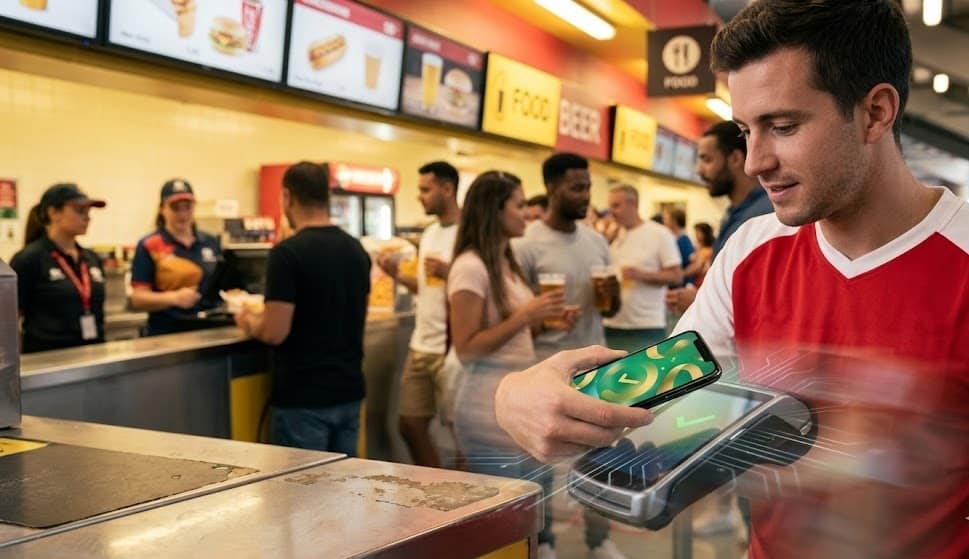
World Cup betting behavior is one example of how payment speed and live-event interaction now overlap. Fans following live markets expect fast deposits, withdrawals, and account updates because match conditions change quickly. Coverage of World Cup betting technology trends shows how bitcoin sportsbooks are part of a wider shift toward faster transaction expectations during major tournaments.
For a site like CadCamNet, the key point is not gambling promotion. It is the engineering lesson behind the behavior: live digital platforms are increasingly judged by how quickly they can process user intent. Whether that intent is placing an order, unlocking content, scanning a ticket, or interacting with a real-time market, payment latency becomes a design constraint.
That makes payment infrastructure part of the same technical conversation as APIs, edge computing, authentication, and mobile UX. A platform that cannot complete transactions during peak tournament moments may lose engagement even if the rest of the interface looks polished.
What CAD And Engineering Teams Can Learn From Sports Data Systems
The connection between World Cup fan engagement and engineering technology may not seem obvious at first. Yet both fields depend on data reliability under pressure. CAD/CAM workflows rely on accurate model data, version control, simulation feedback, file compatibility, and process validation. Sports engagement platforms rely on live data feeds, user identity, event timing, location context, and system availability.
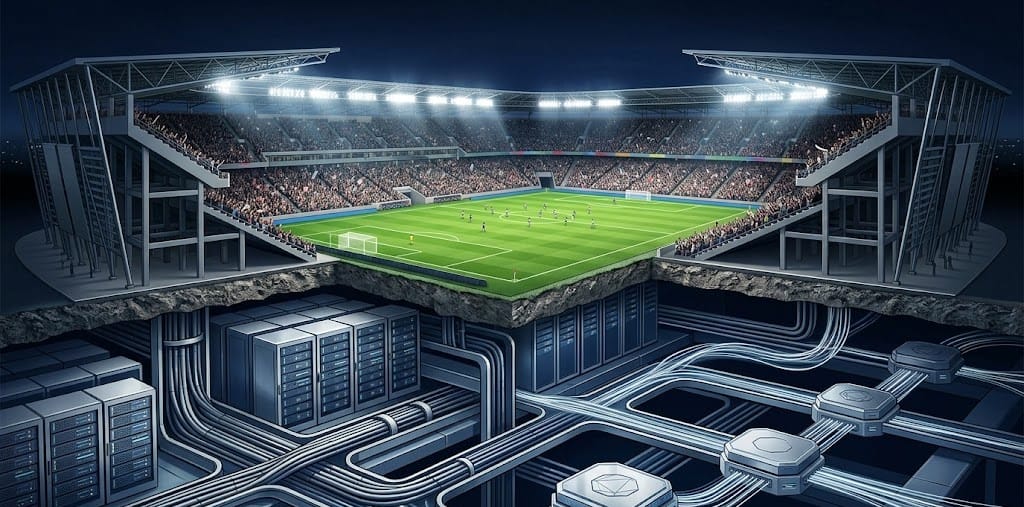
In both cases, poor data infrastructure creates downstream problems. A corrupted model file can affect manufacturing output. A delayed match update can affect fan trust. A weak validation workflow can create expensive rework. A weak real-time platform can create failed interactions across millions of users.
This is why the testing mindset used in athletic equipment safety testing also applies to digital infrastructure. Systems should be tested under realistic conditions, not ideal lab assumptions. Load testing, failover planning, API monitoring, latency measurement, and user-flow validation are the digital equivalents of stress testing a physical product before it reaches the field.
The World Cup makes this especially visible because failure is public. A manufacturing defect may be discovered inside a controlled supply chain, but a digital failure during a global match can be noticed instantly by fans, media partners, sponsors, and platform operators. That pressure forces technical teams to think beyond feature launches and focus on operational durability.
Key Metrics That Define A Strong Real-Time Fan Platform
The strongest fan engagement platforms are not measured only by downloads or page views. They are measured by how well they perform during the most demanding moments of the tournament.
| Performance Metric | Why It Matters During The World Cup |
| Latency | Determines how quickly fans receive live updates and app responses |
| Uptime | Protects access during peak match windows and major traffic spikes |
| Data Accuracy | Prevents conflicting scores, alerts, ticket data, or venue instructions |
| Transaction Speed | Supports smooth purchases, upgrades, and payment-based interactions |
| Scalability | Allows platforms to handle sudden global surges in demand |
| Localization | Helps serve fans across languages, regions, venues, and time zones |
These metrics are technical, but their impact is emotional. Fans may not know when a CDN, API gateway, or edge node performs correctly. They only know the app works. They may not understand the difference between authentication latency and payment settlement delay. They only know whether the experience feels smooth or broken.
That is the real standard for World Cup technology. Infrastructure succeeds when it disappears into the experience.
The Future Of Fan Engagement Is Built On Invisible Engineering
The 2026 World Cup will be remembered for its expanded format, North American host cities, and global football storylines. Yet behind the visible spectacle will be an enormous technical system built around real-time data movement. Stadium connectivity, AI-assisted engagement, mobile ticketing, payment speed, broadcast support, content delivery, and operational dashboards will shape how fans experience the tournament before, during, and after each match.
For technology teams, the lesson is clear: fan engagement is no longer just a media strategy. It is an infrastructure discipline. The best platforms will combine fast data pipelines, resilient architecture, thoughtful UX, and rigorous testing into systems that can withstand global attention.
As sports events become more connected, the boundary between physical venue design and digital platform engineering will continue to shrink. The future fan experience will not be defined only by what happens on the field. It will be shaped by the invisible systems that make every alert, scan, stream, transaction, and interaction feel immediate.