
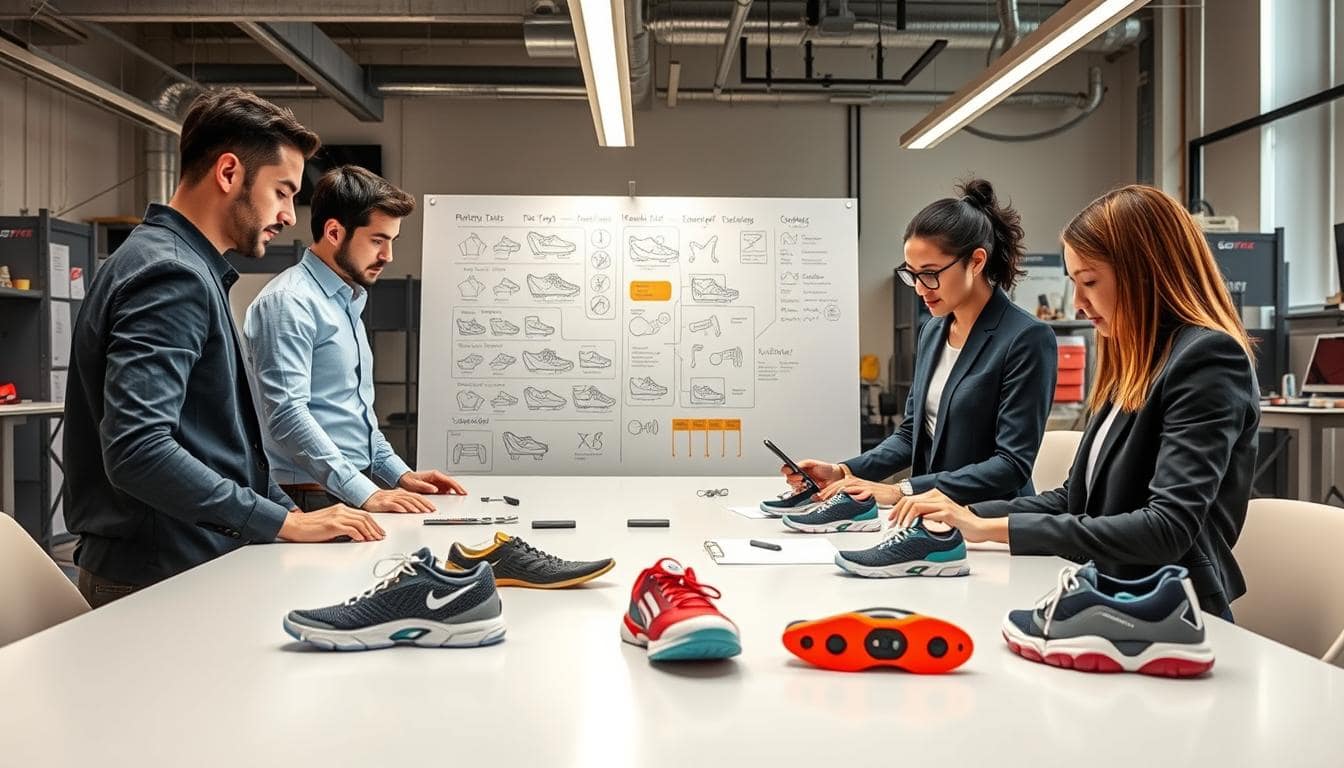
Remember when gear felt like it was designed by aliens? For decades, engineers made specs, athletes tested, and we bought what was left. The results were impressive but felt off on our bodies.
The real secret is not new materials. It’s a shift in how we think. We’re now making tools, not monuments.
This is what user-centered design is all about. Companies now work with athletes, not just test on them. Nike’s A.I.R. project shows this by using athlete experiences to guide design.
The biggest change isn’t the product itself. It’s the way it’s made. We’re designing with people, not just for them. This leads to ergonomic sports products that really work because they’re made for us.
Ethnographic Research in Sports Environments
Forget the sanitized focus group; the future of sports gear is being written in the dust of a Kenyan trail. This isn’t about surveys or star ratings. It’s about anthropology. Ethnographic research in sports means trading the lab coat for cleats and seeking truth where athletes actually live, train, and break.
Why? Because context is king. A runner’s biomechanics in a sterile lab tell one story. Their relationship with a pebble-strewn path at dawn tells another, far richer one. This boots-on-the-ground observation is the engine of truly inclusive design.
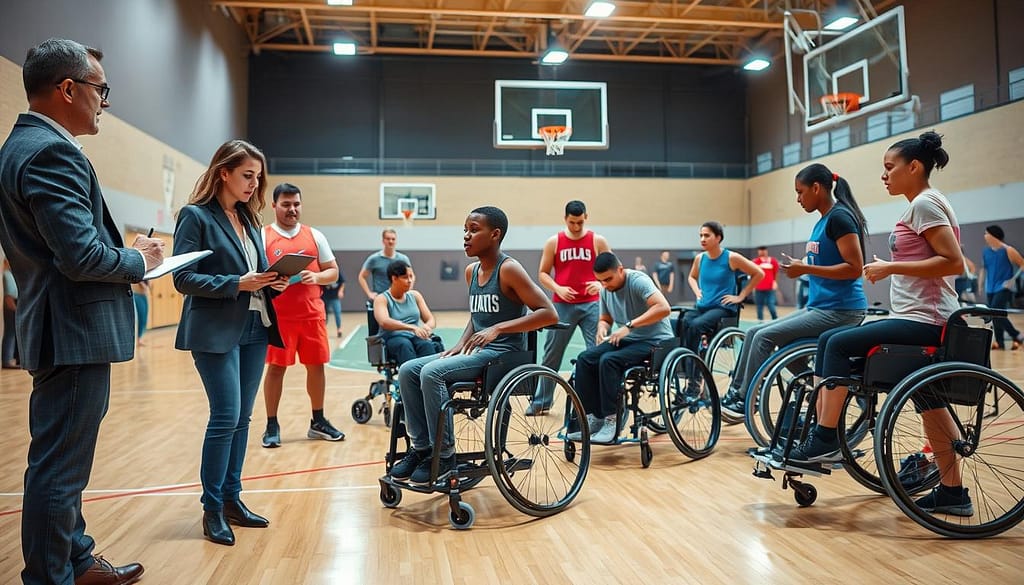
Take Nike’s deep dive with 13 elite athletes. They didn’t just ask “what do you need?” They hosted probing “listening sessions,” digging into inspiration, playing style, and physical presence. The goal? To uncover the narrative behind the need.
The iconic example is marathoner Eliud Kipchoge. Presented with a prototype, he didn’t cite a technical spec. He visualized his reality: Kenyan trail dust relentlessly clogging a sleek, aerodynamic heel cavity. His solution? A simple sketch on notebook paper to modify the design. A designer in Oregon might never have conceived of that specific environmental antagonist. That sketch is ethnographic gold.
This method is inclusive design in its purest form. It automatically expands the frame of reference. It seeks to understand the vibration of a stadium for a linebacker, the grip requirements on a wheelchair court for a para-athlete, and the impact of suburban pavement on a weekend warrior’s knees. It listens to environments as much as to people.
The payoff is the unquantifiable “athlete’s truth.” Data points give you averages and limits. Ethnography gives you the why behind the strain, the unspoken ritual, the environmental quirk. It’s a foundational pillar of inclusive design because it refuses to assume a single, standard experience. It builds for the world as it is, not as it appears on a spec sheet.
So, the next time you see a revolutionary piece of equipment, ask where it was born. Chances are, the first prototype wasn’t CAD software. It was a conversation in the dirt.
Persona Development for Diverse Athlete Types
Persona development in sports used to focus on stereotypes, not real people. But, human-centered design changed that. It moved away from the single, idealized “Elite Athlete” to a more realistic view of athletes.
Human-centered design asks us to design for people, not superheroes. It creates a spectrum of personas that feel real and relatable.
Let’s look at three examples. First, “The Unicorn.” He’s tall, loves sci-fi, and wants a shoe that feels like bare feet. Victor Wembanyama is a real-life example of this need.
Next, “The Adaptor.” She’s a wheelchair tennis player who needs gear that works with her chair. Diede de Groot’s need for a shoe that clips into her chair is a design challenge.
Then, “The Power Poet.” She wants a shoe that feels right for sprinting. For Sha’Carri Richardson, it’s not just about speed, but how it feels.
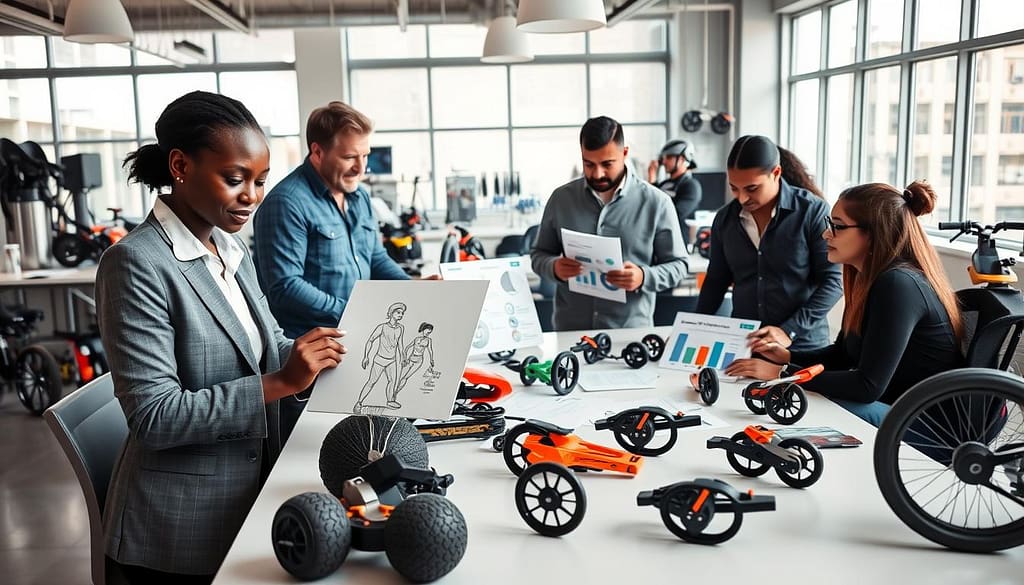
Creating these personas is about understanding people deeply. It’s about empathy in design. Designers must think about each person’s unique needs and lifestyle.
This detailed approach is key to sports accessibility. It shows that “performance” means different things to different people. A shoe for a power forward might not work for a point guard.
The old “Elite Athlete” was too simple. Our new personas offer a more detailed approach. This way, designers can create specific solutions for different athletes.
Sports accessibility is more than just following rules. It’s about creativity and understanding. Designing for Diede de Groot’s needs can help many athletes. Designing for Wembanyama’s preferences can improve materials for everyone.
The persona spectrum makes it clear what athletes need. It turns subjective wishes into clear design goals. This leads to personalized performance and gear that feels like it’s made just for you.
Persona development does more than make better products. It builds a more inclusive sports world. By accepting diversity, we open up new possibilities for sports equipment. This is how we make sports more accessible, one story at a time.
Journey Mapping for Equipment Interaction
If you think a basketball shoe’s story begins with a jump shot, you’re missing the start. The real story is in the locker room, with the lacing ritual every athlete has. It’s also in the anxious pivot during a timeout, the explosive cut, and the post-game ice bath.
Journey mapping charts every touchpoint between athlete and gear. It’s not just about peak moments. This method uncovers frictions and synergies that traditional design misses.
Consider Nike’s work with Victor Wembanyama’s shoe. Designers looked at how the shoe’s tread catches light during a crossover. They debated the Air unit’s visual gradient for his tall frame. This is user-centered design at its best—mapping both visual and tactile journeys.
The design process has a clear rhythm. AI creates concepts, athletes give feedback, prototypes are built, and refinements are made. At each step, designers do an “intuitive read.” Does the shoe feel like a basketball shoe? Would a point guard trust it on a wet court?
Digital testing comes before making physical prototypes. Virtual models are tested in simulated environments. This saves money and speeds up the user-centered design process.
For Paralympians, the journey includes moments designers often overlook. The clip-in mechanism for a wheelchair basketball athlete is key. It’s about the force needed, if it works with cold, wet hands, and if it clicks securely.
This detailed mapping turns products into experiences with stories. We’re not just selling equipment. We’re building confidence, ritual, and trust through every interaction.
| Design Focus Area | Traditional Approach | Journey Mapping Method | Innovation Opportunity |
|---|---|---|---|
| Lacing System | Maximize tensile strength | Map pre-game anxiety ritual | Haptic feedback for proper tension |
| Traction Pattern | Optimize for dry conditions | Chart moisture accumulation during play | Dynamic drainage channels |
| Visual Design | Brand aesthetics first | How light interacts during motion | Photochromatic materials |
| Attachment Mechanisms | Secure connection | Emotional reassurance needs | Auditory confirmation signals |
| Post-Game Experience | Durability testing | Cleaning and maintenance rituals | Self-cleaning material science |
Notice how journey mapping reveals opportunities that traditional thinking misses. It’s like comparing a photo to a movie—one captures a moment, the other tells a story.
The “intuitive read” question—”Does this read like a basketball shoe?”—becomes more profound. It’s not just about literal reading. It’s about whether every sensory input aligns with athletic intention.
This approach marks the evolution of user-centered design from feature-checklist to experience-orchestration. We’re no longer just solving problems athletes can articulate. We’re anticipating needs they haven’t yet recognized.
Think about that wet pitch moment. Traditional design might add more studs. Journey mapping asks: What does the athlete feel in their gut when they plant that foot? Is it confidence or hesitation? Does the equipment communicate “grip” through both performance and perception?
The finish line becomes almost irrelevant in this framework. By the time the athlete reaches it, 90% of their equipment relationship has already been written. The explosive start, the mid-race adjustment, the tactical shift—these are the chapters where gear proves its worth.
Mapping these journeys requires anthropology and engineering. You need to understand ritual as deeply as you understand rotational force. The locker room matters as much as the laboratory in true user-centered design.
Next time you watch a sporting event, don’t just watch the highlights. Watch the between moments. That’s where the real design revolution is happening—one mapped journey at a time.
FAQ
Q: What are the best ergonomic sports products for athletes?
A: The best ergonomic sports products for athletes include ergonomic sports gloves, ergonomic sports grips, and ergonomic sports handles. These products are designed to reduce strain and discomfort, improve performance, and enhance overall comfort during physical activities.
Q: How do ergonomic sports gloves improve performance?
A: Ergonomic sports gloves provide a secure grip, reduce blisters and discomfort, and enhance dexterity. They are designed to fit the hand perfectly, allowing for better control and precision in various sports and activities.
Q: What are the benefits of using ergonomic sports grips?
A: Ergonomic sports grips provide a comfortable and secure hold on equipment, reducing strain and discomfort in the hands and wrists. They are designed to fit the natural shape of the hand, allowing for better control and precision.
Q: How do ergonomic sports handles improve comfort during physical activities?
A: Ergonomic sports handles are designed to fit the natural shape of the hand, reducing strain and discomfort in the hands and wrists. They provide a comfortable and secure grip, allowing for better control and precision during physical activities.
Q: What are the benefits of using ergonomic sports products?
A: Ergonomic sports products provide a comfortable and secure grip, reduce strain and discomfort, and enhance overall performance. They are designed to fit the natural shape of the hand, allowing for better control and precision in various sports and activities.
Q: How do ergonomic sports products improve performance?
A: Ergonomic sports products provide a secure grip, reduce blisters and discomfort, and enhance dexterity. They are designed to fit the hand perfectly, allowing for better control and precision in various sports and activities.
Q: What are the benefits of using ergonomic sports products?
A: Ergonomic sports products provide a comfortable and secure grip, reduce strain and discomfort, and enhance overall performance. They are designed to fit the natural shape of the hand, allowing for better control and precision in various sports and activities.
Q: How do ergonomic sports products improve comfort during physical activities?
A: Ergonomic sports products are designed to fit the natural shape of the hand, reducing strain and discomfort in the hands and wrists. They provide a comfortable and secure grip, allowing for better control and precision during physical activities.
Q: What are the benefits of using ergonomic sports products?
A: Ergonomic sports products provide a comfortable and secure grip, reduce strain and discomfort, and enhance overall performance. They are designed to fit the natural shape of the hand, allowing for better control and precision in various sports and activities.
Accessibility Requirements in Sports Design
Seeing accessibility as just a checklist misses the point. It’s like using a Stradivarius as a doorstop. Sports accessibility is often seen as a minor issue, not a creative spark. This view is not just lazy; it’s a form of intellectual laziness.
True inclusive design asks different questions. It doesn’t just try to fit existing gear to different bodies. It wonders how to make top performance available to everyone. The answers often come from creative solutions born from challenges.
Take wheelchair tennis star Diede de Groot. Her Nike prototype couldn’t use Air cushioning in the usual way. So, designers came up with a new idea. They put Air in the upper part for better support and created a special clip for her chair.
This wasn’t just adapting to a need. It was true innovation. The challenge of not using Air cushioning in the usual way led to a breakthrough. The result was a shoe that solved a unique problem and changed how athletic footwear is made.
The secret most brands miss is that sports accessibility is not about making a “disabled version” of a product. It’s about solving puzzles that everyone faces, not just those with disabilities. These solutions often benefit all athletes.
Designing for someone who uses a wheelchair forces you to think differently. You have to rethink balance, weight, and materials. These ideas then improve sports equipment for everyone, making it lighter and more efficient.
The legal framework, like the ADA, sets a basic standard. But seeing it as the only goal stifles creativity. The real magic happens when designers see rules as starting points for a creative challenge.
This approach turns inclusive design into a competitive edge. It demands simplicity and efficiency. When every detail must be justified, you get top-notch engineering.
So, when someone talks about “accessibility requirements,” think of Diede de Groot’s shoes. Think of the innovations waiting to be found in challenges. Prioritizing sports accessibility is not just being politically correct. It’s about being creatively rigorous, like writing a sonnet.
In the end, equipment that works for many people tends to be better, plain and simple. This is not idealism. It’s just good design.
FAQ
Q: What is a user-centered design?
A: User-centered design focuses on creating products that meet the needs and preferences of users. It involves understanding user behavior, preferences, and pain points to design products that are intuitive, efficient, and enjoyable to use.
Q: Why is user-centered design important?
A: User-centered design is important because it ensures that products are designed with the user in mind. By understanding user needs and preferences, designers can create products that are intuitive, efficient, and enjoyable to use. This leads to higher user satisfaction, increased engagement, and improved overall user experience.
Q: How does user-centered design differ from traditional design approaches?
A: User-centered design differs from traditional design approaches in its focus on the user. While traditional design approaches often focus on aesthetics or technical specifications, user-centered design prioritizes understanding user behavior, preferences, and pain points. This approach ensures that products are designed with the user’s needs in mind, resulting in a more intuitive and enjoyable user experience.
Q: What are the key principles of user-centered design?
A: The key principles of user-centered design include understanding user behavior, preferences, and pain points. Designers should conduct user research to gather insights and feedback from users. They should also design prototypes and test them with users to validate design decisions. By following these principles, designers can create products that are intuitive, efficient, and enjoyable to use.
Q: How can user-centered design be applied in different industries?
A: User-centered design can be applied in various industries, including software development, product design, and web design. By understanding user behavior, preferences, and pain points, designers can create products that are intuitive, efficient, and enjoyable to use. This approach ensures that products meet the needs and expectations of users, leading to higher user satisfaction and engagement.
Q: What are the benefits of user-centered design?
A: The benefits of user-centered design include higher user satisfaction, increased engagement, and improved overall user experience. By understanding user behavior, preferences, and pain points, designers can create products that are intuitive, efficient, and enjoyable to use. This leads to a more positive user experience, increased user loyalty, and improved business outcomes.
Q: How can I implement user-centered design in my projects?
A: To implement user-centered design in your projects, start by conducting user research to gather insights and feedback from users. Design prototypes and test them with users to validate design decisions. Continuously iterate and refine your design based on user feedback. By following these steps, you can create products that are intuitive, efficient, and enjoyable to use.
FAQ
Q: What are the best ergonomic sports products for athletes?
A: The best ergonomic sports products for athletes include ergonomic sports gloves, ergonomic sports grips, and ergonomic sports handles. These products are designed to reduce strain and discomfort, improve performance, and enhance overall comfort during physical activities.
Q: How do ergonomic sports gloves improve performance?
A: Ergonomic sports gloves provide a secure grip, reduce blisters, and enhance dexterity. They are designed to fit comfortably and provide support to the hands, allowing athletes to perform at their best.
Q: What features should I look for in ergonomic sports grips?
A: When choosing ergonomic sports grips, look for features such as cushioning, non-slip materials, and adjustable sizes. These features help reduce strain on the hands and wrists, providing a comfortable and secure grip during physical activities.
Q: How do ergonomic sports handles enhance comfort?
A: Ergonomic sports handles are designed to fit comfortably in the hand, reducing strain and discomfort. They provide a secure grip and allow for a natural wrist position, promoting proper alignment and reducing the risk of injury.
Q: What are the benefits of using ergonomic sports products?
A: Using ergonomic sports products can improve performance, reduce the risk of injury, and enhance overall comfort during physical activities. They provide support and protection to the hands, wrists, and other body parts, allowing athletes to perform at their best.
Q: How do I choose the right ergonomic sports products for my needs?
A: When choosing ergonomic sports products, consider your specific needs and preferences. Look for products that provide the right amount of support, cushioning, and grip. Read reviews and seek recommendations from other athletes to find the best products for your sport or activity.
Q: Where can I find high-quality ergonomic sports products?
A: High-quality ergonomic sports products can be found online and in specialty sports stores. Look for reputable brands that prioritize ergonomics and performance. Online retailers often offer a wide selection of products and customer reviews to help you make an informed decision.
FAQ
Q: What is inclusive design?
A: Inclusive design is a design approach that focuses on creating products, environments, and experiences that are accessible and usable by everyone, regardless of their abilities or disabilities. It aims to eliminate barriers and ensure equal access to information and opportunities.
Q: Why is inclusive design important?
A: Inclusive design is important because it promotes equal access and opportunities for all individuals. It helps create a more inclusive and equitable society by ensuring that everyone can participate and contribute to their full capacity. It also fosters a sense of belonging and reduces social exclusion.
Q: How can I incorporate inclusive design into my projects?
A: To incorporate inclusive design into your projects, you can follow these best practices:
- Conduct thorough user research to understand the needs and preferences of diverse users.
- Design for accessibility by following accessibility guidelines and incorporating features that support users with disabilities.
- Test and iterate your designs to ensure they are usable and accessible by everyone.
- Engage with diverse stakeholders and seek feedback to ensure your designs are inclusive and meet the needs of all users.
Q: What are some examples of inclusive design in action?
A: Here are some examples of inclusive design in action:
- Accessible public transportation systems that accommodate users with disabilities.
- Accessible websites and digital platforms that provide equal access to information and services.
- Inclusive public spaces that are designed to be accessible and welcoming to everyone.
- Adaptive technologies that assist individuals with disabilities in their daily lives.
Q: How can I create inclusive design solutions?
A: To create inclusive design solutions, you can follow these steps:
- Conduct thorough user research to understand the needs and preferences of diverse users.
- Design for accessibility by following accessibility guidelines and incorporating features that support users with disabilities.
- Test and iterate your designs to ensure they are usable and accessible by everyone.
- Engage with diverse stakeholders and seek feedback to ensure your designs are inclusive and meet the needs of all users.
Q: What are the benefits of inclusive design?
A: The benefits of inclusive design include:
- Equal access and opportunities for all individuals.
- Increased participation and contribution from diverse users.
- Enhanced user experience and satisfaction.
- Reduced barriers and social exclusion.
Q: How can I create inclusive design solutions?
A: To create inclusive design solutions, you can follow these steps:
- Conduct thorough user research to understand the needs and preferences of diverse users.
- Design for accessibility by following accessibility guidelines and incorporating features that support users with disabilities.
- Test and iterate your designs to ensure they are usable and accessible by everyone.
- Engage with diverse stakeholders and seek feedback to ensure your designs are inclusive and meet the needs of all users.
Q: What are the benefits of inclusive design?
A: The benefits of inclusive design include:
- Equal access and opportunities for all individuals.
- Increased participation and contribution from diverse users.
- Enhanced user experience and satisfaction.
- Reduced barriers and social exclusion.
Measuring Success Beyond Performance Metrics
The old finish line was just a clock. Now, it’s about building a culture. True victory in sports design is more than just winning fast. It’s about the impact on people’s lives.
We now look at sports accessibility as a key measure. Did our design let more people play? We check if our gear lasts, like Patagonia’s. We also see if athletes feel a real connection with their equipment.
This change shows a broader view of success. It’s not just about beating the clock. It’s about how athletes feel in their community and environment. Our goals now include making athletes feel safe and valued.
The best way to improve is to design for the whole person, not just their speed. When gear makes someone smile, that’s a victory that can’t be measured by medals.