
Let’s face it: athletes sweat a lot. We’ve all spent a lot of money on clothes that promise to keep us cool and dry. But sometimes, these promises don’t quite live up to the hype.
But what if the real magic isn’t in the fancy words on the tag? What makes some gear truly stand out from the rest? It’s all about the engineering, not just the marketing.
Science is taking over in the world of athletic gear. We’re moving beyond just “wicking” and “breathable” materials. Now, we’re using technology from space and architecture.
Phase-change materials act like personal thermal batteries. Aerogels are so light, they’re almost like air, but they keep you warm. And tiny vents control airflow with amazing precision.
This article will show you the real engineering behind the gear. We’ll look at how it can make you feel like a champion, not a soaked sponge.
Thermal comfort vs performance—design targets
The main challenge in making performance wear isn’t just about comfort. It’s about choosing which discomfort to focus on. A soft, fleece-lined onesie feels great but can make you too hot too fast. Athletes need gear that keeps them cool and dry to perform better.
Think of it like overclocking a computer chip. You push it for more power, but it gets hotter. Without good cooling, it slows down. Your body works the same way. When you’re working hard, you get hot. If your clothes can’t cool you down, your body will get tired.
The goal isn’t just to feel good. It’s to find the perfect balance of heat and cool. We want your body to use as little energy as possible to stay at the right temperature. This is where advanced materials come in, helping you perform better by feeling a bit uncomfortable.
This raises a tough question: should we focus on feeling comfortable or on performing better? They are two different things.
- Comfort Targets: How you feel. Keeping your skin at a nice temperature. Feeling dry and cozy.
- Performance Targets: How well you do. Losing heat quickly. Keeping your core cool. It’s all about science.
For casual athletes, feeling good is important. But for serious athletes, doing well is everything. That’s where phase change materials sports science helps, by managing heat better.
It’s about making a choice. You might not feel as warm and cozy at first. But you’ll perform better in the long run. It’s about finding a balance between your body’s needs and your goals.
Heat transfer fundamentals for designers
The secret to thermal performance isn’t found in a lab coat’s pocket. It’s in the relentless, four-act play of conduction, convection, radiation, and evaporation. Think of heat as a form of energy with a serious commuting problem. It’s always trying to get from a place of higher temperature to a place of lower temperature. Your gear is the entire transportation network.
Before we get fancy with phase-change materials or aerogels, we need the basics. Every piece of gear is a battlefield for these four forces. Mastering them is the difference between a product that feels like a second skin and one that feels like a betrayal.
The Four Doors Heat Walks Through
- Conduction (Touch): This is direct molecular handshake. When your body touches a cold carbon fiber bike saddle, heat energy jumps from your warmer posterior to the colder material. A material with high thermal conductivity, like metal or carbon fiber, is a superhighway for this energy. It’s great for a heat sink, terrible for your comfort on a frosty morning.
- Convection (Flow): Here, heat hitches a ride on moving air or fluid. A breeze stealing warmth from your skin is convective cooling. A poorly sealed jacket that lets in a cold draft? That’s convection working against you. Designing baffles or windproof membranes is essential for air molecule traffic control.
- Radiation (Invisible Waves): No contact needed. Your body radiates infrared energy like a tiny, inefficient space heater. A reflective layer in a jacket or a survival blanket acts like a mirror, bouncing that energy back to you. Forget it, and your warmth just wanders off into the night.
- Evaporation (Phase Change): When sweat turns to vapor, it consumes a massive amount of heat energy from your skin. This is your body’s most powerful built-in cooling system. A fabric that traps that vapor turns your microclimate into a swamp. One that wicks and vents it? That’s leveraging evaporation for good.
So, how do we quantify a material’s role in this drama? We look at its thermal properties. Thermal conductivity (measured in W/m·K) is the star. A low number means the material is a great insulator, resisting conductive heat flow. Aerogels are champions here. A high number means it’s a conductor, like the carbon fiber saddle that mercilessly siphons your body heat.
But there’s more to the story. Specific heat capacity tells you how much energy a material can store before its temperature rises. Think of it as thermal inertia. And latent heat is the hidden energy absorbed or released during a phase change, like a PCM melting. It’s the thermal equivalent of a secret bank account.
Understanding these fundamentals lets you predict behavior. You stop guessing and start engineering. You realize that choosing a lining isn’t just about feel; it’s about strategically blocking one of heat’s four entry points. For a deeper dive into how we measure these properties in the real world, the sensor landscape for thermal testing is fascinating.
Get these basics wrong, and all the advanced materials in the world are just expensive bandaids. Get them right, and you’re not just making gear. You’re designing a microclimate.
PCM selection, loading, and encapsulation
You can’t just pour wax into a sock and call it smart clothing. The real engineering starts with three main challenges: selection, dosage, and containment. Get these right, and you have an active thermal layer. Get them wrong, and you have a mess.
Phase change materials are the clever chemists in your kit. They absorb excess heat as they melt, storing it like a battery. They release it back as they solidify. Brands like Outlast have mastered this, weaving PCMs into fibers that maintain optimal thermal comfort. It’s a constant, silent exchange of energy.
But which one gets the part? You’re casting for a role that requires perfect timing and durability.
- Paraffin Waxes: The reliable veteran. High latent heat, predictable. But they can be heavy.
- Salt Hydrates: The potent specialist. Huge energy density. Prone to supercooling and separation—diva behavior.
- Bio-based Alternatives: The promising newcomer. Sustainable appeal. Often working on its performance resume under extreme conditions.
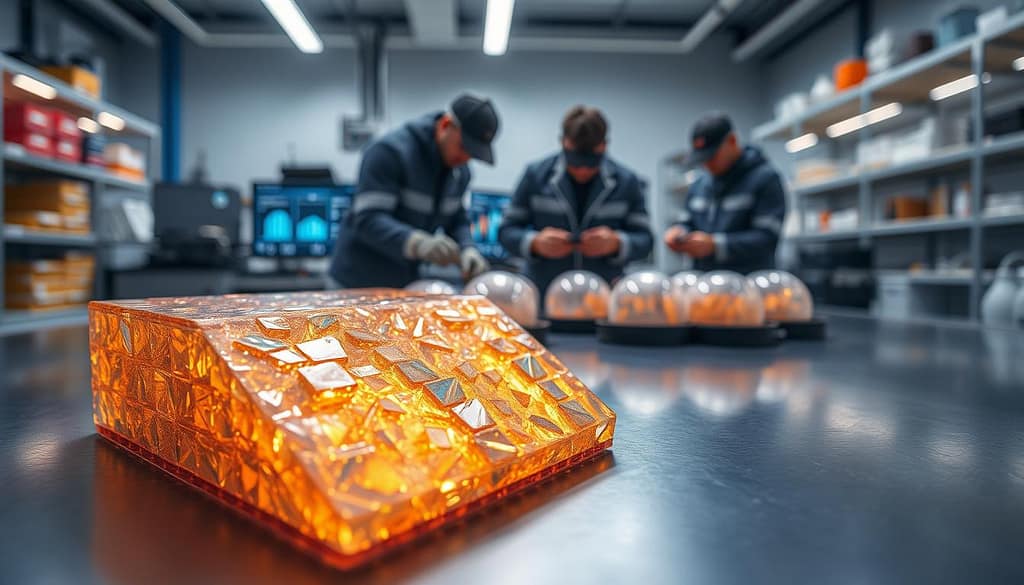
Next, dosage. How much of this magical stuff do you need? This is the loading, measured in grams per square meter (gsm). A light sprinkle might be fine for a summer running shirt. It offers a subtle buffer. A heavy payload is for a downhill ski jacket facing long, cold lifts. More isn’t always better. It adds weight and cost. It’s a precisely calculated trade-off.
Now, the million-dollar question. How do you package these often-liquid-adjacent materials into a fiber? You can’t have pure paraffin sloshing around in your sleeve. The answer is encapsulation. We build microscopic prisons.
Microcapsules are the classic approach. Tiny polymer shells, each holding a droplet of PCM, are bonded to the fiber. Core-shell fibers are more advanced. The PCM is literally spun into the core of the thread itself, with a protective polymer sheath. The goal is the same: survive the rock tumbler cycle of real life.
Because that’s the battle. Washing, flexing, compression—they all stress these tiny containers. Leakage is failure. It’s the sports gear equivalent of trying to keep the cream filling inside a Twinkie during a marathon. Research into advanced polymer shells, like those discussed in a study on material durability, is critical. The encapsulation game is what separates a lab prototype from gear you can trust.
So, selecting phase change materials for sports gear isn’t a single choice. It’s a systems engineering puzzle. You choose the actor (the PCM), decide its screen time (the loading), and design its unbreakable costume (the encapsulation). Only then does the thermal performance truly shine.
Aerogels and advanced foams for insulation
Scientists have found that the best insulator is, in fact, nothing. This is the world of aerogel insulation, where keeping warm doesn’t mean carrying a lot of weight. It’s all about clever nano-scale engineering.
Aerogels are not like anything you’ve seen before. They are over 95% air, trapped in a web of silica or polymer strands. This makes them incredibly good at stopping heat from moving around. It’s like magic, where your body heat just disappears.
Originally used by NASA to catch stardust, aerogels are now used for everyday items. Imagine wearing boots or jackets that are as warm as down but much thinner. Aerogels make this possible, saving you from carrying extra weight.
But there’s more. Other materials, like advanced polymer foams, work in a similar way. These foams have special structures that make it hard for heat to move. This turns a thin sheet into a strong barrier against cold.
This idea is also seen in radiative cooling technologies. Materials like the “hierarchical-morphology metafabric” or nanoporous polyethylene actively manage heat. While we focus on passive insulation, the future of keeping warm is in tiny details.
So, how do you choose? Let’s compare the options.
| Material | Core Mechanism | Key Advantage | Ideal Use Case |
|---|---|---|---|
| Aerogels | Nano-porous network inhibits conduction/convection | Extreme warmth-to-thickness ratio; ultra-light | High-performance zones where space is critical (ski boot toe box, cycling shoe sole) |
| Advanced Polymer Foams | Engineered closed-cell structure traps air | Excellent durability & compression recovery; more cost-effective | Full-length insoles, protective padding in helmets, mid-layer insulation in apparel |
| Traditional Down | Clusters of loft trap air pockets | Unbeatable warmth per weight when dry and lofty | Static insulation in jackets and sleeping bags for cold, dry conditions |
| Hybrid Approaches | Combining aerogel particles with foam matrices | Balances supreme insulation with needed flexibility and toughness | Next-generation gloves, mountain boots, and expedition suits |
The table shows the choices. Aerogel insulation is top for keeping warm without being thick. But, early versions were too brittle. Now, new composites make them flexible and strong. Advanced foams offer a reliable, affordable way to keep warm without bulk.
The goal is to stay warm without carrying a lot. It’s about using smarter insulation, not more of it. Whether it’s the light touch of an aerogel or the clever design of a foam, the message is clear. In the fight against cold, sometimes less is more.
Active venting and micro-channel structures
Imagine your jacket could sweat for you. Micro-channel structures make this idea real, pushing out heat like a bellows. While passive insulation keeps you cool, moving makes your body a hot furnace. You feel like you’re in a personal sauna.
Enter micro-ventilation, not a simple zipper. It’s a smart design in the fabric’s core. It creates tiny heat and vapor paths that open when needed.
CoolMax is a great example. Its secret isn’t a special chemical but its shape. The fiber’s four-channel design boosts surface area and wicks moisture better than round fibers.
But there’s more to it. Modern active venting systems use laser-cut holes. These tiny openings are often covered by a breathable layer. This lets the fabric control heat loss, like a smart exit for hot air.
The real magic happens when you move. As you walk or run, the fabric adjusts. Its micro-channels act like tiny bellows, pushing out warm air and pulling in cool. It’s a dynamic system that works with you.
Choosing the right micro-ventilation depends on your activity. For intense, sweaty work, one approach is best. For activities with stops and starts, another is better.
| Venting Technology | Core Mechanism | Key Advantage | Ideal Use Case |
|---|---|---|---|
| Four-Channel Fibers (e.g., CoolMax) | Enhanced surface area & capillary wicking | Superior moisture transport away from skin | High-intensity aerobic activities |
| Laser-Cut Micro-Perforations | Precision-cut physical pores in fabric | Targeted, low-weight convective cooling | Variable-paced activities needing spot cooling |
| Breathable Membrane Backing | Micro-porous film laminated behind perforations | Blocks wind/water while allowing vapor escape | Weather-exposed, high-output scenarios |
| Hybrid Channel Structures | Combination of shaped fibers and engineered fabric textures | Multi-directional air pumping with movement | Dynamic sports with complex motion patterns |
Is this just marketing? No way. The difference is clear. A smart micro-ventilation fabric doesn’t feel like plastic when you get hot. It manages its own climate, responding to your body’s heat.
Managing heat isn’t always about blocking it. Sometimes, you need to actively let it out. This approach turns your gear into a thermal partner. That’s a smart wardrobe.
Measuring performance: guarded hot plate, sweating manikin, IR
To find out what’s real and what’s not, engineers use three tools that sound like something from a sci-fi movie. They give a harsh reality check to your fabric’s comfort.
The guarded hot plate might sound like a medieval torture device, but it’s actually a tool for measuring thermal conductivity. It creates a steady heat flow across a fabric sample.
This test gives a precise number, often in clo values. One clo is like the insulation of a business suit. If your jacket has a 2 clo rating, thank the hot plate for the data.
Then, there’s the sweating thermal manikin. It looks like a robot and simulates human heat output and sweat. It moves, breathes, and sweats on command.
This robot tests total thermal and evaporative resistance. A low RET means sweat evaporates fast, cooling you. A high RET means you’re hot and sweaty. It checks if a fabric really breathes well.
If your gear claims to be breathable, the manikin is the final test. Your feeling of breathability often loses to its data.
Lastly, we have infrared thermography. It turns heat into a colorful map. Remember the study where IR images showed a vest’s temperature difference? That’s IR in action.
Thermocouples under the fabric confirmed cooling. The camera shows you why and where. Hot spots show bad insulation or blocked airflow. Cool zones show where micro-ventilation or phase-change materials work.
Seeing a number for thermal conductivity is one thing. Seeing a bright red blob on your back in an IR photo is another. The combination is powerful: data meets visual proof.
So, what do designers and consumers learn? Marketing talk about “advanced cooling” is just noise until these tools speak. The guarded hot plate sets the insulation baseline. The sweating manikin tells the story of heat and moisture. IR thermography shows the undeniable proof.
Together, they turn engineering into evidence. They show if a new membrane is a breakthrough or just expensive hype.
Moisture management and coupled heat–mass transport
Forget wicking—modern sports gear is about choreographing moisture’s journey from skin to sky. Sweat isn’t just perspiration; it’s liquid cargo for thermal energy. When it evaporates, it hauls away a massive amount of heat. But let it loiter, and you’re soaked, chilled, and chafed. The entire system is a coupled dance of heat and mass. You can’t engineer one without the other.
This is where phase change materials sports engineering gets clever. It’s not about creating a sponge. It’s about building microscopic freeways that direct sweat away from your skin and toward zones where it can evaporate efficiently. Think of it as urban planning for water molecules. The goal is dual: prevent the “cold, wet clammy” effect while maximizing the cooling payoff of evaporation.
Recent studies reveal how precise this architecture is. Scientists optimize a fabric’s personality by tweaking four key parameters:
| Parameter | Design Goal | Performance Impact |
|---|---|---|
| Water-Fiber Contact Angle | Control surface affinity | Dictates initial wicking speed and spread. |
| Fiber Radius | Fine-tune capillary force | Determines the “pull” strength moving moisture. |
| Yarn Structure | Create internal pathways | Establishes the moisture transport network. |
| Yarn Porosity | Balance air and water flow | Enables evaporation while maintaining insulation. |
Get this combo right, and magic happens. Take woven polyethylene (PE) fabric. By mastering these levers, its water-wicking properties can surpass those of natural fibers and commercial textiles. That’s not an accident. It’s physics by design.
So, where do phase change materials fit into this wet ballet? They’re the temperature regulators in the wings. A good PCM stabilizes skin temperature by absorbing excess heat. But if it’s wrapped in a fabric that traps sweat, you’ve created a sauna. The integrated system must allow moisture to escape through and around the PCM capsules, so evaporation cooling and latent heat storage work in concert, not conflict.
It’s a delicate balance. Too much focus on dry, and you lose cooling. Too much focus on cool, and you’re drenched. The best phase change materials sports apparel solves both. It uses capillary action—the same principle that draws water up a tree—to shuttle sweat to the fabric’s outer layers. There, it evaporates, taking a heroic amount of heat with it.
This isn’t just fabric science. It’s environmental engineering at the millimeter scale. Your sweat becomes a strategic resource, not waste. The next time you’re on a long ride or run, remember: your comfort is being managed by a silent, microscopic transport system, directing every drop to its most useful destiny.
Durability under flex, compression, laundering
The aerogel insulation matrix faces a tough daily test. It’s tested by flex, crush, and chemicals. The lab is calm, but the real world is harsh.
Your backpack and body test it every day. Your washing machine also puts it through a tough cycle. This is where its strength is truly tested.
Compression can make the aerogel collapse. It’s like a snowflake under a boot. Its insulating power is lost. The phase-change material in fabrics can also break down with flexing.
The water-repellent finish often washes off. This leaves the fabric cold and wet.
To survive, scientists focus on making materials stronger. They use cross-linking polymers and reinforce nanostructures. This makes materials more resilient.
The binder is a key player. It keeps advanced materials together through tough conditions. It’s the glue that holds everything together.
High-performance gloves and jackets face many challenges. They must handle dynamic flexing, static compression, and harsh laundry cycles.
- Dynamic Flexing: The constant motion of elbows, knees, and shoulders.
- Static Compression: Being stuffed in a gear bag or sat on for hours.
- Chemical/Mechanical Laundering: Detergents, agitation, and heat.
Without solutions to these challenges, advanced materials fail. It’s the work after the initial discovery that matters. A material that fails after one use is a disappointment.
Durability is key, not just an extra feature. Every new material must pass a tough test to be useful. The goal is to make gear not just smarter, but also stronger.
Case snapshots: grips, saddles, shells
Forget the lab for a moment. The real battleground for thermal comfort is your handlebar, your saddle, and your helmet. Here, theory meets asphalt, and every material choice is a tactical decision. Let’s examine the puzzles.
Grips: The Conductivity Conundrum. Your hands are delicate sensors. Too cold, and they go numb as a politician’s conscience. Too hot, and you’re baking blisters. The key variable here is thermal conductivity. You need a material that’s just Goldilocks-level right—insulating enough to block bar chill, but conductive enough to wick away sweat heat.
Some high-end designs slip in thin phase-change material layers. They act as a thermal buffer, absorbing excess heat during hard efforts and releasing it when you coast. It’s like having a tiny climate control unit for your palms.
Saddles: The Pressure Cooker. This is the ultimate design challenge. You have maximal pressure, minimal airflow, and a biological system that really, really doesn’t like being a swamp. The solution isn’t just more padding—that often traps more heat.
The answer lies in engineered micro-ventilation. We’re talking about strategic channels cut into supportive foams, breathable textiles suspended in a matrix, and surfaces designed to promote air exchange with every micro-movement. It’s about creating a passive airflow system where physics does the work your sitting posture prevents.

Shells: Helmets & Boots. These are your body’s extreme climates. Your head is a furnace; your toes are distant outposts begging for warmth. A one-material-fits-all approach here is a recipe for misery.
Modern helmets use zoned insulation. Thicker, insulating foams over the crown where heat escapes; thinner, vented sections over the brow. Active venting ports with sliding gates let you manage airflow like a cockpit. The goal? To prevent the “boiling head” syndrome without turning your skull into a wind tunnel.
Boots face the opposite fight. They need to block convective heat loss while managing internal moisture. The trick is combining a low-thermal conductivity insulation layer with a micro-ventilation liner that wicks perspiration up and away from the skin. No one wants a “frozen toe” scenario because their own sweat turned to ice.
Each piece of gear is a unique application of the same fundamental rules. It’s not magic. It’s applied physics, with a dash of clever material science, solving very human problems.
Validation plan and KPIs
So, you’ve created a fantastic fabric. But how do you show it’s not just a clever trick? A fancy marketing sheet won’t do. You need a solid validation plan to win over skeptics.
Start by setting clear Key Performance Indicators. What does “better” mean? Is it a lower core temperature during climbs? Or faster drying after rain? Begin with specific, measurable goals. Track thermal conductivity and evaporative efficiency under real conditions.
But numbers only tell part of the story. You also need feedback from real athletes. Did they stay warmer on descents? Was the saddle drier? Their experiences turn data into something real.
A good plan combines both. It’s the last check before you’re sure. It shows your gear will make a difference, not just promise it. Your validation plan is proof you’ve got performance, not just hype.