
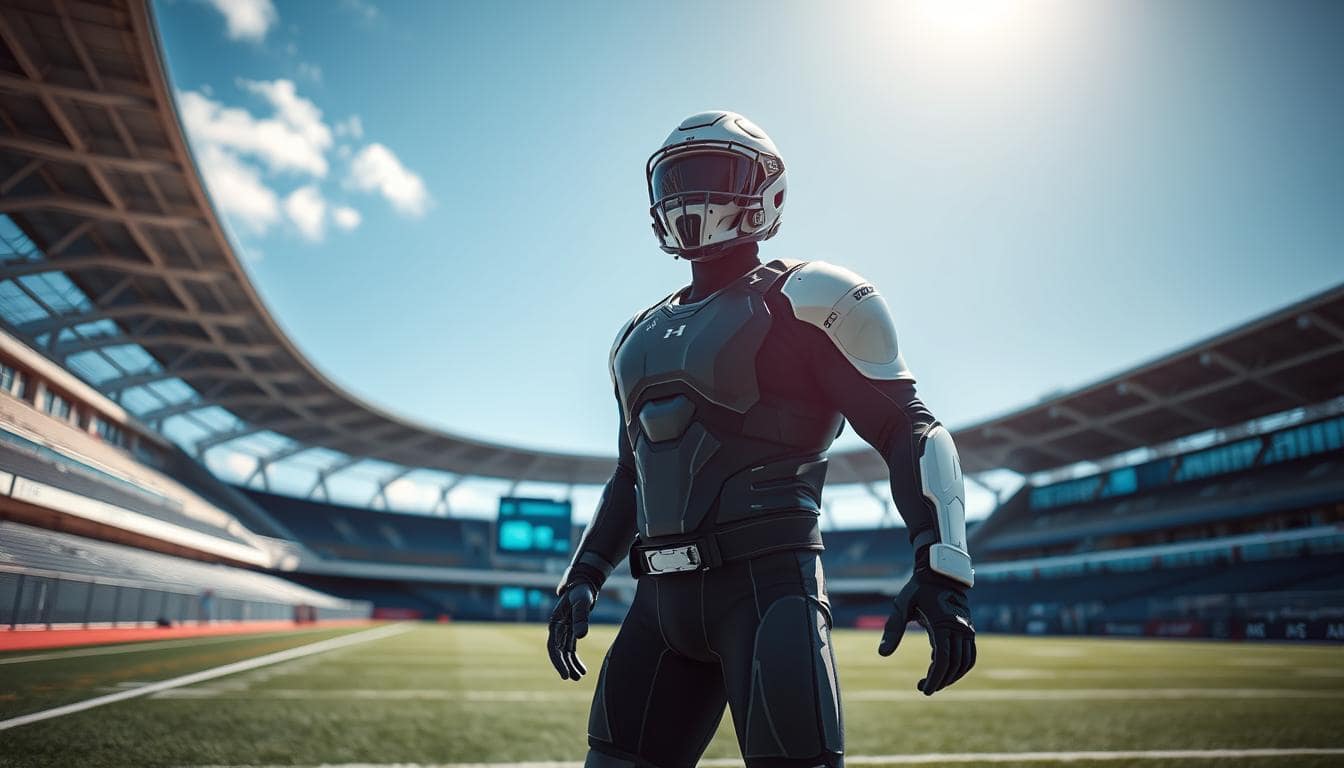
Remember when your safety gear was just a piece of plastic and a wish? Those days are over.
We’ve moved on from simple padding to something smarter. Now, our gear thinks, reacts, and adapts. This marks the beginning of intelligent protective gear.
The D-air® Ski 2 vest is a great example. It uses complex algorithms to act fast. It can react in just 45 milliseconds, quicker than you can blink.
In&motion’s AI is also impressive. It’s trained on over 450 million kilometers of data. It can predict dangers before they happen.
This change is huge. We’re moving from simple padding to smart systems. It’s like switching from a castle wall to a force field.
This isn’t just a small update. It’s a major sports safety innovation. It’s as big as the first helmet.
Smart Protection Principles
Imagine if your helmet could react before you fall. That’s the idea behind the five core principles of smart protection. It’s not just about adding more padding. It’s about making safety smart and intelligent.
It works like a living system:
- Impact Detection: The system’s brain.
- Adaptive Materials: The muscles.
- Real-Time Monitoring: Always watching.
- Automated Responses: Quick reactions.
- Injury Prevention: The main goal.
Impact Detection: The Gear’s Sixth Sense
This is when your gear springs to life. Modern impact detection equipment uses sensors to detect motion. It’s like your phone knowing it’s sideways, but even more sensitive.
Is that a slide or a crash? The system’s brain, the electronic control unit, knows in milliseconds. It’s not just measuring a hit; it’s predicting a disaster before you feel pain.
Adaptive Materials: The Shape-Shifting Shield
Knowing a hit is coming is just the start. The next step is having armor that can change. Enter adaptive protection systems made from smart materials.
These materials don’t just sit there. They “dynamically react to forces, changing in milliseconds.” Imagine a fabric that turns from soft to hard fast. It’s like having a force field that only turns on when needed.
Real-time monitoring is always watching. It tracks your heart rate, G-force, and more. It’s not just for analysis; it’s for your safety.
Then comes the automated response. This is the system’s quick action. If it detects a bad fall, it acts fast. We’re talking about deploying an airbag in under 60ms. That’s quicker than your brain can react.
All of this leads to the final goal: injury prevention. The aim is to stop injuries before they happen. It’s where physics meets physiology in a life-saving dance. The old way was to reduce damage. The new way is to prevent it.
Impact Detection Systems: Your Gear’s Inner Forensics Lab
Imagine your helmet reporting every impact with details. It tracks vectors, rotations, and risk levels. This is no longer science fiction. Today, impact detection equipment is a silent witness, turning harsh physics into useful data.
This isn’t just a beep after a hit. It’s a constant flow of data. The In&box system does 1,000 analyses per second, tracking movements in real-time. The D-Air ski vest also monitors surroundings constantly. Their goal is to understand force, not just record it.
Accelerometer Arrays: More Than Just a G-Force Meter
Forget simple “how hard” measurements. Modern accelerometer arrays are tactical grids. They track the impact’s story: direction, onset, and duration.
This data shows if it was a direct hit or a glancing blow. Was it a quick jab or a long crush? This detailed info is key for smart helmets sports systems. It’s like having the black box telemetry from a car crash.
Gyroscope Integration: Tracking the Dangerous Spin
Here’s where it gets clever. A hit to the head often causes violent rotation. This is a major cause of concussions and brain injuries. An accelerometer alone might miss this.
Enter the gyroscope. It measures the rate and axis of rotation. Was the head snapped sideways or twisted? By combining gyroscopic and linear acceleration data, the system creates a 3D model of head movement. It answers the question: Is the brain spinning like a top inside the skull?
This sensor fusion enables advanced impact severity assessment. We move beyond “hard hit” vs. “soft hit” to a detailed biomechanical risk profile. This data then feeds concussion detection algorithms.
These algorithms are trained on millions of data points, including pro athlete data. Their goal is to spot concussion patterns or sub-concussive hits. It’s like having a doctor’s mind in the helmet.
| Data Type | What It Measures | Key Metric | Role in Injury Assessment |
|---|---|---|---|
| Linear Acceleration (Accelerometer) | The straight-line force of an impact (forward, backward, sideways). | Peak G-force, Duration, Onset Rate | Identifies the magnitude and type of direct, translational impact. High G-forces correlate with skull fracture risk. |
| Rotational Force (Gyroscope) | The spinning or twisting motion of the head after impact. | Rotational Velocity (degrees/sec), Axis of Rotation | Flags high-risk events for brain injury. Shear forces from rotation are a primary cause of concussions. |
| Combined Vector Analysis | The sum of linear and rotational forces in 3D space. | Head Injury Criterion (HIC) scores, Severity Index | Provides a holistic view of the impact’s biomechanical insult. This is the gold standard for modern impact detection equipment. |
| Algorithmic Output | Processed sensor data compared to injury models. | Concussion Probability, Alert Threshold | Translates physics into medical risk. Can trigger real-time alerts for coaches or post-impact reports for medical staff. |
So, the next time you see a player take a hit, remember: the most important analysis isn’t happening on the sidelines. It’s happening inside the helmet itself, in a microsecond ballet of sensors and software, working to turn chaos into clarity.
Adaptive Material Technologies
Imagine padding that softens when you run but hardens with a tackle. It’s not science fiction, it’s smart polymers. Materials science has become a superhero. We’ve moved beyond simple foam.
Today’s adaptive protection systems use materials that can change and defend in real-time. They have a kind of molecular intelligence.
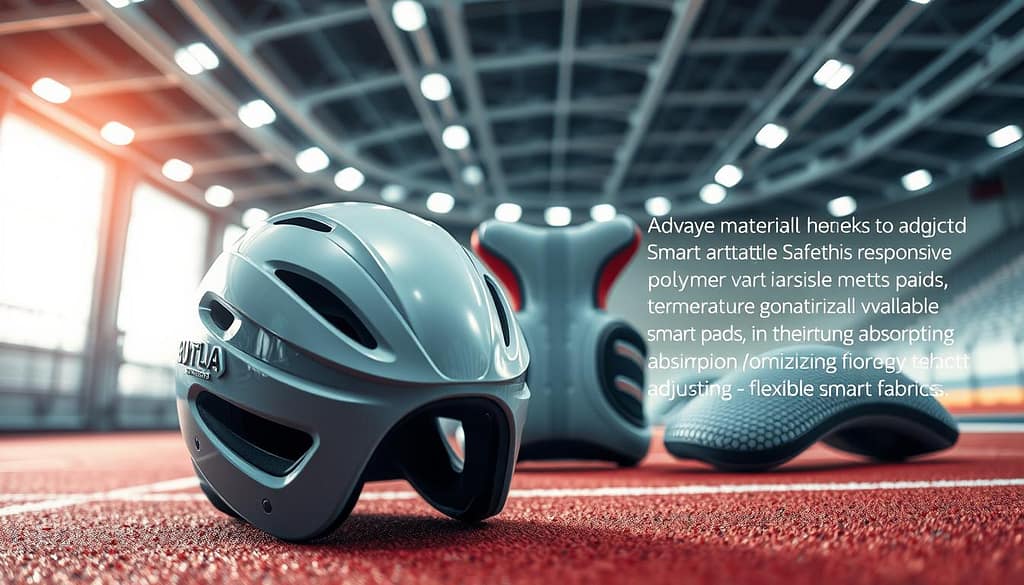
The key to this change is a new class of substances. They are like the chameleons of safety.
Smart Polymers: The Shape-Shifters
These aren’t your usual plastics. Smart polymers change their properties in response to certain stimuli. They have a built-in fight-or-flight response.
- Shear-Thickening Fluids (STFs): This is a bodyguard in a liquid form. It flows like a liquid but turns semi-solid on impact. It’s like wearing a vest that turns into a shield when hit.
- Shape-Memory Polymers (SMPs): These materials remember their shape. They can be deformed and then return to their original shape when triggered. This is great for gear that needs to withstand many impacts.
- Graphene-Enhanced Composites: Adding graphene to fabrics or foams makes them stronger and better at absorbing impact. It’s like supercharging traditional padding.
Variable Stiffness: The Molecular Lockdown
The magic in adaptive protection systems is changing from soft to hard. Variable stiffness is key. Gear needs to be soft for comfort but hard when needed.
This isn’t just one setting. It’s a dynamic response. A smart knee pad might stay soft while sprinting but harden with a bad landing. This precise control is what makes advanced gear stand out.
Adding more complexity are temperature-responsive materials. These change based on heat or body temperature. They ensure gear works well in any condition.
The goal of all this is energy absorption optimization. It’s not just about blocking force. It’s about changing it. A sharp jab is turned into a broad push. This is the difference between a punch and a wall.
Communication & Alert Systems
The smartest impact detection is useless if it doesn’t alert anyone. It’s like a brilliant diagnosis in a silent room. This is where connected safety gear shines. It’s the difference between a helmet that knows you’re hurt and one that does something about it.
After a sensor registers a hit, the system must act. It decides, communicates, and acts. This turns protective equipment into an active safety net.
Emergency Notifications: The Digital Distress Flare
When an athlete takes a hard hit, confusion sets in. Adrenaline masks pain. The world gets fuzzy. Connected safety gear cuts through the fog.
Pre-programmed emergency notifications can fire automatically. Imagine a system that texts your coach or emergency contact. It sends a simple, terrifying message: “Alert: Significant impact detected. Athlete ID: #7. GPS Coordinates Attached.” It’s a digital flare shot into the sky, bypassing the downed athlete’s ability—or reluctance—to call for aid.
Medical Alerts: From “I Fell” to Data-Driven Triage
This is where the tech gets surgical. Basic alerts are good. Data-rich medical alerts are a game-changer for first responders. Instead of a panicked “He got hit in the side,” the alert transmits: “Lateral thoracic impact. Estimated force: 28G. Rotational acceleration: 4200 rad/s². Possible rib fracture and spleen injury.”
This turns a vague complaint into a targeted medical checklist. It’s the difference between a general assessment and a detailed plan. For concussions, this data stream can flag specific risk patterns long before symptoms fully manifest, prompting immediate removal from play.
The communication loop extends beyond crises. Coaching communication channels use aggregated impact data to provide feedback. A lineman might get a weekly report: “You’re leading with your head on 30% of engagements. Drill X can correct this.” It shifts safety from reactive to profoundly proactive.
None of this magic happens without robust, invisible infrastructure. Data transmission protocols are the unsung heroes. They must be:
- Secure: Patient and performance data is highly sensitive.
- Fast & Low-Power: Alerts must be near-instant, without draining the battery mid-game.
- Reliable: Functioning perfectly in a packed stadium or a remote mountain trail.
Ultimately, this layer of connectivity turns a piece of equipment into a node in a vast safety network. Your shoulder pads aren’t just for you anymore. They’re a reporter, a messenger, and a guardian, all woven into a single, intelligent shell. The gear doesn’t just absorb the hit—it tells the story.
Power & Electronics Integration
When we talk about intelligent protective gear, we often overlook the unsung hero. It’s not the fancy sensors or the advanced materials. It’s the power and electronics that make it all work. Without solid integration, that smart helmet is just an expensive hat.
This engineering ensures your gear works in harsh conditions. It survives crashes and doesn’t fail near cell towers. It’s the backbone that keeps your gear running.
Battery Placement: The Logistics Puzzle
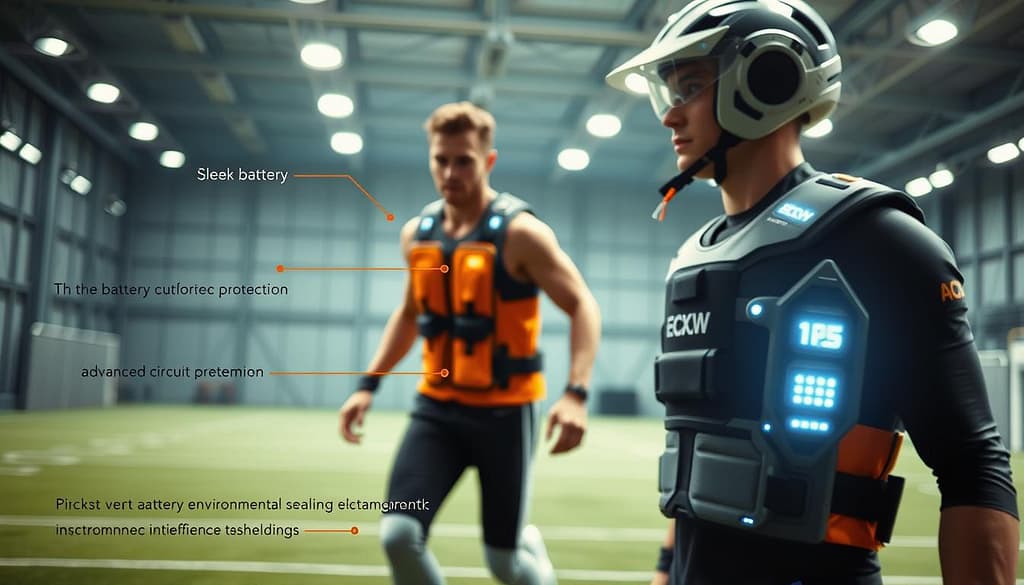
Where to put the battery is a complex challenge. It must be safe, easy to reach, and away from impact zones. Putting it on the outside is a snag risk. Hiding it too deep makes maintenance hard.
Think of a motorcycle airbag vest’s electronic control unit. Its battery and gas canister must be easy to access yet secure. Custom compartments in the gear solve this problem, making the battery a key part of the system.
Circuit Protection: The Digital Black Box
Prototypes and products differ in their electronic brains. Your gear’s “brain” must survive the impact it’s designed to protect against. A big hit can damage a smartphone’s motherboard. Circuit protection is essential.
Systems use shock-absorbing mounts and conformal coatings to protect. They also have redundant pathways. This ensures the system keeps working even if one part fails.
What’s the point of a sensor that breaks when needed? The protection includes voltage spikes and shorts. Smart power management prevents over-discharge and manages charging and data without issues.
Environmental sealing is key to keeping electronics safe. Gaskets and nano-coatings protect against sweat, rain, and mud. Electromagnetic interference shielding keeps signals clear, even near radio towers or ski lifts. This makes your gear reliable and trustworthy.
Testing & Certification Protocols
Here’s the truth about sports safety innovation: a great idea in a lab doesn’t mean much on the field. It must pass through many tests to become real. This is where certification comes in, making cool tech ready for action.
Safety Standards: The Ever-Evolving Rulebook
Groups like ASTM International and the National Institute of Justice are like league commissioners. They make the rules. For years, these rules were simple, testing helmets for one big hit. But new tech needs new rules.
Old tests like drop-tower impacts and gunfire tests are the base. They check if it breaks or stops bullets. But new materials and systems need more tests.
Impact Testing: It’s Never Just One Hit
Old impact tests focus on one hit. New tests are like a concert tour. They test for all kinds of hits, not just direct ones.
Labs use cameras and sensors to check how well tech works. They look at how materials change in a split second. This shows if the tech really works.
This change means we need new ways to test. We move from simple pass/fail tests to a range of scenarios.
| Test Protocol Dimension | Traditional Standard | Next-Gen Challenge | Key Validation Metric |
|---|---|---|---|
| Impact Type | Single, linear impact | Repeated, multi-angular impacts | Consistency of material response |
| Environmental Factor | Ambient temperature | Extreme heat/cold & moisture | Algorithm & material stability |
| Data Collection | Post-test physical inspection | Real-time sensor data telemetry | Millisecond-level system activation |
| Durability Focus | Structural integrity failure | Electronic & software fatigue | Battery life & signal integrity over cycles |
So, what’s the outcome? All this testing leads to one goal: regulatory compliance. That certification is key. It lets a product go from a cool idea to something you can buy to keep people safe. It proves the tech works in real life, not just in theory.
User Experience Design
User experience design makes advanced technology feel normal. It’s not about flashy lights. It’s about making the gear work seamlessly, unnoticed, until it saves you.
For connected safety gear to be trusted, every design choice must focus on the athlete. It’s about serving the user, not showing off.
Ever felt a seam or imbalance? It can ruin your focus. Comfort optimization is key, not just padding. DECATHLON’s teams improved vest design for better movement.
Comfort Optimization
Comfort is a three-legged stool: material, fit, and physics. Get one wrong, and it all falls apart. Modern smart fabrics must be soft, durable, and sensor-friendly.
Fit is critical. It’s the difference between wearing gear and the gear wearing you.
Weight Distribution
Engineering meets ergonomics in a delicate dance. A misplaced battery or sensor can be exhausting. It turns a workout into a struggle.
Smart design spreads weight evenly. It places heavy parts near your body’s center and uses the harness to carry the load. This makes the gear feel like an extension of you.
The next challenge is ventilation. Electronics don’t like sweat, and athletes produce a lot of it. Material science must solve this by creating breathable layers.
Then, there’s ease of use. Can you recharge it easily? Is the interface simple? The best systems are as easy to use as a toaster but smarter.
Maintenance simplicity is also key. Can you rinse it? Are batteries easy to replace? Is the software easy to update? A low-maintenance gear is a long-term partner.
True excellence in connected safety gear combines comfort, weight, climate, interface, and upkeep. The underlying wearable technology enhances performance, but UX makes it enjoyable. When it all works, the tech disappears, leaving you to focus on your game.
Data Collection & Analysis
Forget fortune cookies; the real future of athlete safety is in petabytes of impact data. We’ve moved from gut feelings to gigabytes. It’s not just about making a better helmet. It’s about making a smarter one that learns from every hit.
The magic happens in the feedback loop. Each piece of gear acts as a sentinel, quietly watching. When it deploys its protection or records a vibration, that event isn’t lost. It’s uploaded, anonymized, and added to a growing mountain of evidence. This is where intelligent protective gear earns its name.
Impact Databases: The Collective Memory
An impact database is like the gear’s collective consciousness. It’s the shared memory of every jolt, twist, and collision by thousands of athletes worldwide. Companies like In&motion show the scale: their technology is trained on over 450 million kilometers of user data from more than 120,000 users.
That’s not just big data. It’s save-your-life data. Each entry is a digital fingerprint of force—direction, magnitude, duration. This database doesn’t sleep. It constantly compares new impacts against historical ones, looking for patterns invisible to the human eye.
Here lies the holy grail: injury correlation. The goal is to link specific impact signatures with specific medical outcomes. Was it a 15G lateral hit to the temple that caused that concussion? Or a series of smaller, sub-concussive hits over a season?
By cross-referencing impact data with medical records (with strict privacy protocols), algorithms can start to see causality. This turns “I got my bell rung” into quantifiable, preventable science. We move from treating injuries to preventing their very conditions.
But the analysis goes beyond just trauma. Subtle vibration patterns can correlate with muscle fatigue. Changes in a runner’s gait, detected by smart insoles, might signal overtraining weeks before an injury occurs. This is predictive analytics wearing a jersey.
The long-term monitoring trends across entire leagues or sports are perhaps the most powerful. They allow us to spot macro-level risks. Maybe a certain playing surface or a specific drill consistently produces dangerous force profiles. This collective intelligence lets the entire system evolve.
Your minor tumble today helps the algorithm recognize the precursor to someone else’s major disaster tomorrow. It’s a form of technological altruism. This wealth of data-driven expertise is what allows for the next leap in advanced protective technologies, creating a living, learning shield.
In the end, the most valuable player on the field might be the silent one: the database. It’s the coach that never sleeps, the doctor who’s seen every possible injury, and the engineer who learns from every failure. That’s the true promise of data-driven, intelligent protective gear.
Professional Adoption Strategies
The real test for any sports safety innovation isn’t the lab. It’s the field. When the International Ski Federation (FIS) makes airbag systems mandatory for World Cup racers, you take notice. This rule is more than just a guideline; it’s a market signal.
League Requirements Create the Blueprint
Pro-level mandates are a high-stakes proving ground. They push engineers to solve real-world problems under extreme conditions. The data from FIS events doesn’t just protect a skier. It refines the algorithm for everyone.
This top-down pressure speeds up development. It’s faster than any startup garage could.
The Insurance Incentive Calculus
Here’s a thought. Will an insurance company offer a lower premium to a football team using certified smart protective equipment? It’s a logical bet. Quantifiable risk reduction is an actuary’s love language.
If the data shows fewer concussions, the financial incentive for adoption becomes immense. This could be the silent partner that pushes tech into every locker room.
Democratizing the Cost Barrier
Elite gear is expensive. The trick is the trickle-down. Partnerships, like the one between DECATHLON and In&motion, are key. They aim to compete on cost with traditional safety solutions.
The goal isn’t a $2,000 vest for a pro. It’s a $200 vest for a weekend warrior. That’s how you move from boutique to mainstream.
Training for the New Toolkit
You can’t just issue smart gear. Athletes and coaches need a new playbook. What does the alert mean? When does the system activate? How do you charge it?
Simple training protocols turn advanced smart protective equipment into trusted, everyday kit. The path forward is clear. League mandates prove the tech. Insurance incentives fund it. Strategic partnerships scale it. Proper training integrates it.
This is the ecosystem required for true sports safety innovation to become standard issue. The future of protection is intelligent, and it’s coming down from the mountain.