
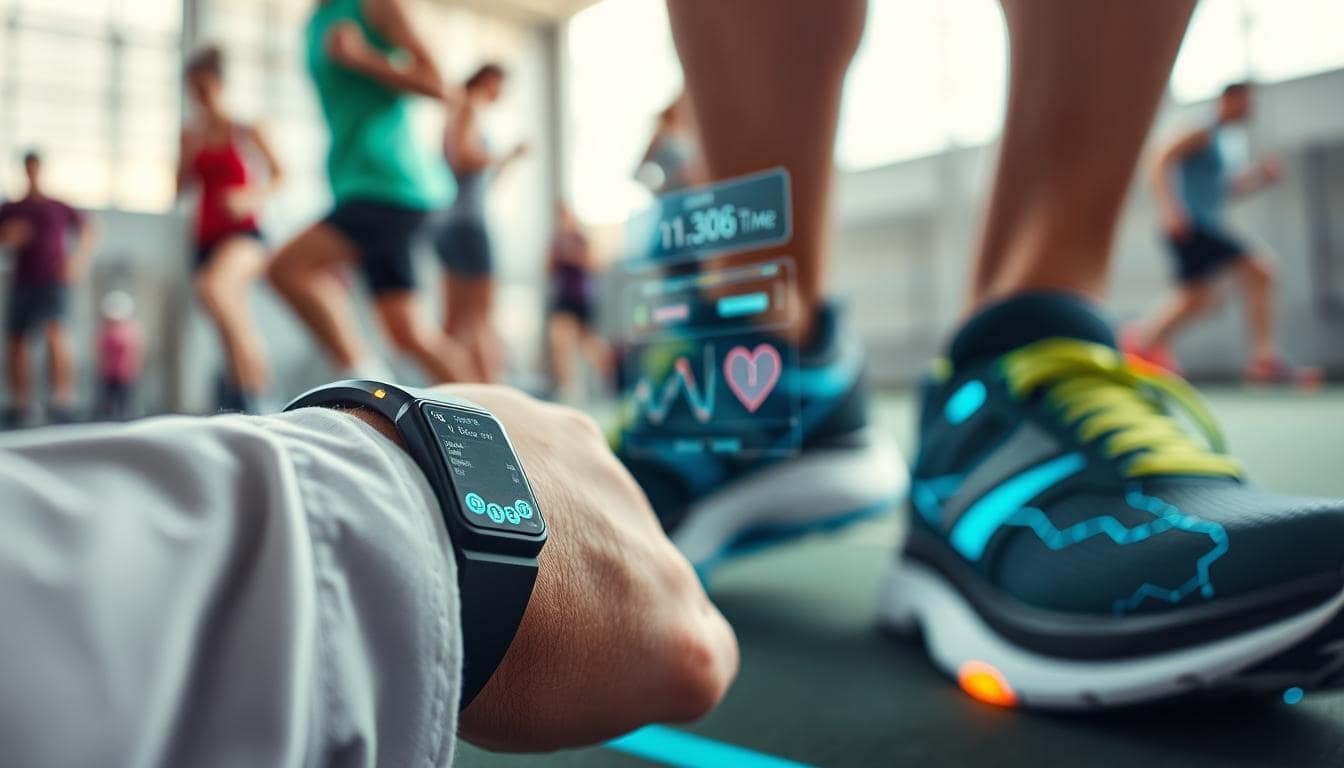
Let’s be honest: calling some of this gear “sports equipment” feels like labeling a smartphone as merely a “camera.” Today’s athletic arsenal is a silicon symphony strapped to your body, where tech reigns supreme. We’ve moved way past simple step counters; the new frontier includes flexible sensors that cling to your skin or clothing, measuring pressure and strain with the sensitivity of a neurotic poet.
Consider the electrochemical sensors—real alchemists of the group. They analyze your sweat for metabolites and electrolytes in real-time, turning your post-workout drip into a valuable data stream. And let’s not forget the inertial measurement units (IMUs), the bread and butter of motion capture. These devices pack accelerometers and gyroscopes, dissecting every angular velocity and linear acceleration of your limbs.
For the truly hardcore, we even have telemetry pills that broadcast core body temperature from within. Is it invasive? Perhaps. But is it revealing data that shatters old physiological theories? Absolutely. This isn’t just gear; it’s a distributed network of embedded intelligence. Understanding these types is the first step to grasping what’s actually being measured when an athlete claims to “give 110%.”
Evolution of sports sensor technology
Before sleek smartwatches became popular, the world of sports sensors started with the Douglas Bag. This early device was used by athletes for activities like boxing and running. It even went up Everest with Pugh, showing its early use in performance tracking.
In 1978, Polar introduced the first wireless heart rate monitor. This innovation was like switching from smoke signals to fiber optics. It allowed athletes to track their heart rates without being tied to big machines, starting a new era in training.
By the 1990s, portable oxygen analyzers became popular among East African runners. These tools helped uncover the secrets behind their speed. This was a big step in understanding human performance, but it was just the start.
Now, we’re seeing a huge leap in sports sensors. We’ve moved from single sensors to systems with many sensors working together. A GPS watch can now work with a chest strap and a foot pod, sending data to a dashboard. This new system is changing how we understand human performance in real-time.
| Year | Technology | Significance |
|---|---|---|
| 1920s | Douglas Bag | First wearable tech for performance monitoring |
| 1978 | Polar HR Monitor | First wireless heart rate monitoring |
| 1990s | Portable Oxygen Analyzers | Advanced performance analysis for athletes |
| Present | Multi-Sensor Suites | Real-time data integration and analysis |
The growth of sports sensors is more than just tech. It’s about understanding human performance in new ways. For more on this topic, read this research article.
Integration challenges and solutions
Integrating sensors into athletic technology is like running an obstacle course. There are many challenges, and they seem to pop up everywhere. One big problem is the skin fit issue. If a sensor meant to measure skin response starts to move, it becomes useless.
Environmental disturbances also cause trouble. Things like sweat, temperature changes, and magnetic fields can mess up the data. Imagine trying to track an athlete’s heart rate while dealing with interference from a stadium’s scoreboard. It’s a nightmare for data analysts!
Another issue is that everyone’s body is different. Athletes sweat in their own unique ways, making data hard to understand. I’ve seen sensors move during a marathon, creating confusing data. It’s a chaotic situation that needs better technology.
So, what’s the answer? Sensor fusion algorithms are the solution. These algorithms check data from different sensors to find the truth. They’re like personal trainers for your data, keeping it accurate and focused.
Advanced machine learning models are also being developed. They can pick out important data while ignoring the rest. These models learn what makes each athlete special, adapting to the chaos of competition.
In summary, while adding sensors to athletic gear is tough, new solutions are making data collection better. The aim is to create tech that’s as flexible as the athletes who use it.
Data accuracy and calibration protocols
In the world of embedded sensor systems, getting accurate data is key. Your wrist-based heart rate monitor might seem perfect, but it’s not always right. The gap between what you get at home and what scientists use is huge.
At the Tokyo 2020 Olympics, a race walker wore both a smartwatch and a chest strap. They found a big difference in heart rate readings. This shows how important accuracy is, not just for fun but for safety.
The problem is with the wrist’s optical photoplethysmography. It gets messy during intense workouts. That’s why calibration protocols are so important. They make sure your sensor is working right, not just making up numbers.
For measuring core temperature, we use a special method. It makes sure the sensor is in the right place and not cooled down. This way, we get accurate readings, like about 39.2°C. It’s all about the process that turns data into useful information.
Power management and battery optimization
Power management in sports sensors is like the quarterback: it’s key but often ignored. A top-notch multi-sensor suite is useless if it runs out of battery in the third quarter. Asking a linebacker to charge up during a timeout isn’t an option.
The battle is between the need for high-fidelity data and the limited battery life of small devices. Self-powered sensors are the dream solution. They aim to use the motion they measure to generate power. Think of a shoe insole that charges itself with every step.
But, the reality is more down-to-earth. TENGs struggle with inconsistent contact and high costs. That’s why simple piezoresistive sensors, which use less power, are more practical.
Improving power management means making tough choices about how often to send data and when to sleep. It’s all about using the last bit of energy for the most important moments. The future of sports sensors depends on solving these problems to keep athletes connected without pause.
For more on the sensor world, check out this detailed guide: Sensor Landscape.
Wireless communication protocols
Choosing the right wireless communication protocols is key in athletic equipment technology. Data is useless if it can’t be sent. It’s like a digital castaway on a deserted island of silicone.
The art of sending data from an athlete’s shoe to a coach’s dashboard is complex. It’s like playing a game of wireless protocol roulette.
The Tokyo 2020 project is a great example. We created a custom gateway bracelet that worked like a cellular router. It used e-SIMs to connect to Japan’s network, sending core temperature and biomechanics to the cloud. It was like giving each athlete their own personal, high-security cell tower.
In experimental settings, you might see an Xbee module sending data to a laptop. But, if someone walks between the transmitter and receiver, the data stream can hiccup. The choice of protocol is tough. It involves balancing data throughput, range, power consumption, and electromagnetic interference.
Imagine a stadium full of 80,000 fans, all with their own radio stations in their pockets. It’s a silent battle for spectrum, and the athlete’s data must win. Do you choose Bluetooth for its short-range, low-power connection? Or do you need ANT+ or a proprietary protocol for longer range?
Choosing the right wireless communication protocol is vital for athletic equipment technology. The stakes are high, and the choices are complex. But, the rewards of seamless data transmission are worth it.
Real-time vs. post-processing analysis
The world of sports analytics is divided. Do you like the excitement of real-time data or the detailed work of post-processing? This choice affects how we see athletic performance.
At the Tokyo 2020 Olympics, real-time monitoring showed its power. A team watched as an athlete’s core temperature hit 40.2°C in the 10,000m final. Before, such high temperatures were only known after the race. Now, thanks to embedded sensor systems, medical teams can act fast.
But real-time data is not always perfect. It can have errors and be incomplete. That’s where post-processing comes in. It’s like refining a sketch into a detailed painting. Analysts can then understand an athlete’s performance better.
The best approach is to use both real-time and post-processing. A good system can quickly check data for safety and then analyze it deeply later. This way, athletes stay safe and get better.
| Analysis Type | Real-time Analysis | Post-processing Analysis |
|---|---|---|
| Data Speed | Immediate | Delayed |
| Data Accuracy | Prone to artifacts | High precision |
| Use Case | Emergency interventions | In-depth performance analysis |
| Outcome | Quick response | Strategic insights |
Cost-benefit analysis for manufacturers
Manufacturers of athletic equipment technology are not just innovating; they are calculating the risks and rewards of their investments. Creating cutting-edge sensors sounds glamorous, but the numbers tell a different story. For example, triboelectric nanogenerators (TENGs) have high-end materials and precise manufacturing, leading to high production costs.
Imagine designing a sensor as sensitive as a safecracker’s stethoscope. But if that sensor doubles the price of running shoes, your market shrinks dramatically. The sweet spot for manufacturers is making products that are “good enough.” We see a classic tech industry trickle-down effect, where once-expensive technology is now affordable.
Now, the challenge is balancing performance and price. A capacitive pressure sensor might be cheap and energy-efficient. But does it match the stability and response time of a pricier piezoresistive option? Manufacturers need to think strategically here.
- Cost considerations: High production costs can limit market reach.
- Performance trade-offs: Balancing sensitivity, stability, and price is key.
- Market trends: The sports technology market is expanding, making tech more accessible.
The winners in this space won’t be those who create the most exquisite, laboratory-grade instruments. Instead, they will be the ones who engineer rugged, reliable, and cost-effective sensors. These are the tools that provide undeniable, actionable insights for a high school coach, not just a pro franchise.
Future sensor technology trends
The future of embedded sensor systems is thrilling. Imagine your wrist sensor doing more than just counting steps. It could predict how weather changes affect your performance, thanks to advanced algorithms. This is what the International Olympic Committee envisions.
They want to keep athletes safe by monitoring them in real-time. This could prevent injuries and illnesses.
These advancements aren’t just for sports. They can also change public health and safety. Think of a firefighter being checked for heat stress or a soldier’s gait analyzed for fatigue. Embedded sensor systems will become key in many areas, improving safety and performance.
Broadcasting will also change. Viewers will experience games through live biometrics. Heart rates and temperatures will add to the story, making athletic achievements more compelling. Sensors will become storytellers, guardians, and coaches in our lives.
As we move forward, biosensors, big data, and AI will come together. This will create a complete wearable solution. The future looks bright, with technology and human performance blending together.