
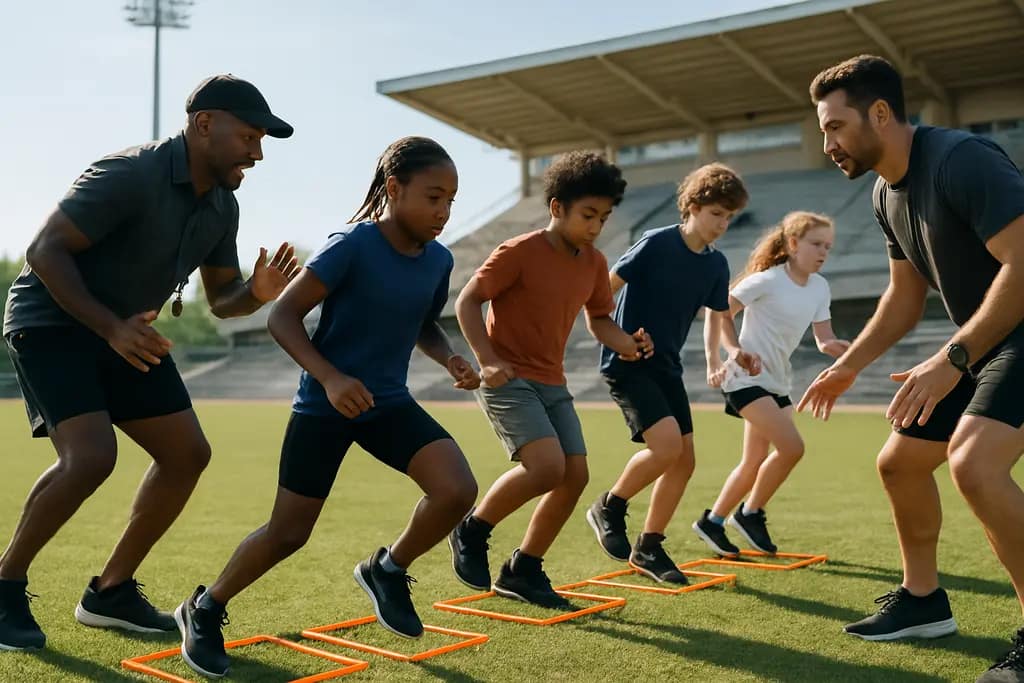
On July 21, 2026, federal agencies including Housing and Urban Development, Education, Labor, and Health announced a partnership with the NFL aimed at supporting at-risk youth through sport, with an emphasis on children in or near public housing. The youth sports initiative was framed around sports and well-being, using football and related local programming as a way to build discipline, connection, and healthier routines. As of September 4, 2026, the available public detail remained limited: the agencies had signed a memorandum of understanding and planned to identify a limited number of locations with local partners.
That narrow rollout matters. A small launch can protect quality if the first sites test what actually works: coaching access, safe practice space, low-cost equipment, and transport barriers. It can also fail quietly if performance data and sustainability planning are treated as afterthoughts. From a sports equipment and wearables standpoint, the question is not whether gear can fix social barriers. It cannot. The better question is whether well-chosen, durable equipment and careful measurement can help coaches support more athletes without raising costs or waste.
What The Youth Sports Initiative Changes
Federal Agencies And NFL Partners
The federal announcement signaled a cross-agency model rather than a single grant program. HUD’s role points toward housing-linked access. Education and Labor suggest school, youth development, and workforce-adjacent pathways. Health involvement aligns the program with physical activity and well-being goals. The NFL connection gives the effort sports visibility and potential local club relationships, though the research available does not identify the selected locations, budgets, staffing models, or delivery schedules.
That caution is necessary. A sports program serving at-risk youth has to be judged by more than enrollment photos or one-day clinics. Recurring practice, trained adults, safe equipment, and clear referral pathways are what keep a child involved after the first session. Related coverage on youth development systems, including youth talent ID, shows how access and evaluation can drift apart if programs reward only the children already closest to organized sport.
Youth Sports Initiative Metrics To Watch
The youth sports initiative sits against a national participation target that remains out of reach. Healthy People 2030 set a goal of raising the share of children and adolescents who play sports to 63.2% by 2030; the 2022-23 figure was 54.6%, below the 2016-17 baseline of 58.3%, according to Healthy People 2030. That trend gives the federal effort a measurable policy frame, but it also raises the standard for evidence.
For performance analysts, participation rate is only the first layer. Programs should track attendance over time, session frequency, equipment condition, coach-to-athlete ratios, and age-specific retention. None of those measures alone proves social impact, yet together they show whether young athletes are receiving a stable sporting environment. If the July 2026 effort remains limited to a few sites, the first test should be whether each site can report consistent, comparable data without burdening coaches.
Participation Gaps Shape Performance Access
Income, Age, And Gender Barriers
The strongest case for a federal sports intervention is the gap between children who can reach organized sport and those who cannot. National Survey of Children’s Health data for June 2023-24 reported that 56.7% of U.S. youth ages 6-17 participated in a sports team or took sports lessons after school or on weekends in the past year, equal to nearly 28 million children. The same data showed 36.7% participation among youth in families below the poverty threshold compared with 74.1% among youth in families at 400% or more of the poverty level, as reported in the NCBI data brief.
The age and gender splits add more context. In the 2023-24 data, participation was highest for ages 9-11 at about 60.0%, then fell to 50.8% for ages 15-17. Boys participated at 60.7%, compared with 52.6% for girls. These figures do not explain why each child stops or starts, but they point to pressure points: middle-school transitions, high-school costs, travel demands, social fit, and access to teams that welcome late beginners.
Why Equipment Quality Matters
Equipment is not the whole answer, yet it is one of the first barriers a family feels. Shoes, protective gear, weather-appropriate apparel, balls, cones, and storage can decide whether a young athlete can practice safely and repeatedly. For football-based programming, the stakes are even higher because fit, maintenance, and replacement cycles affect comfort and readiness. The research provided does not list equipment standards for the July 2026 program, so any claim about gear quality would be premature.
A practical access model would treat equipment as shared infrastructure. That means inventory logs, cleaning routines, repair decisions, and size availability are part of program design, not side chores. This is also where sustainability enters the performance conversation. Durable gear that survives multiple seasons can lower recurring costs and reduce waste, but only if it is selected for the conditions of public-use programs rather than short campaigns.
Sustainable Equipment And Wearables For Access
Measure What Programs Can Maintain
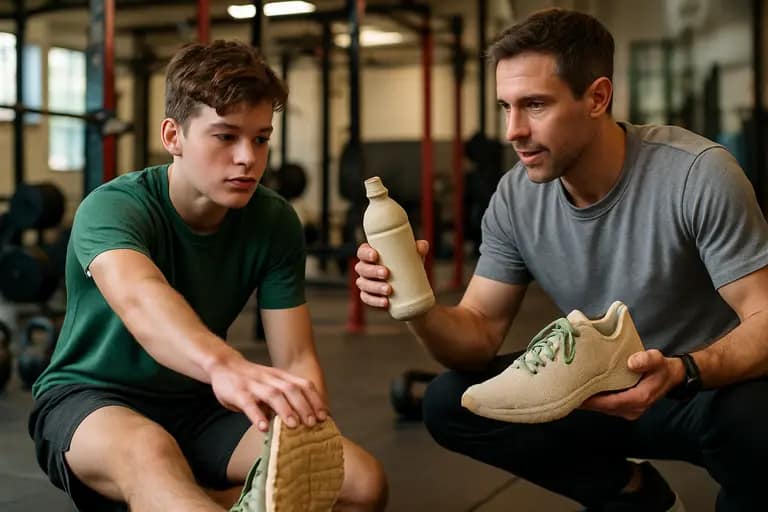
Wearables can help youth programs understand movement load, attendance patterns, or basic activity exposure, but only under strict limits. Devices create costs, charging needs, privacy responsibilities, and data interpretation demands. For at-risk youth programs, the first question should be whether a coach can use the information to improve practice safely and fairly. If not, a lower-tech attendance and participation system may be more useful.
The youth sports initiative should avoid technology for its own sake. A wearable pilot can be reasonable if families understand the purpose, data collection is minimal, and the program can maintain the devices without shifting costs to participants. A poorly supported device program can become another access barrier. In community sport, performance tools should serve the athlete’s consistency, not the other way around.
Reuse Before Replacement
Sustainable sports access starts with the unglamorous details: buying fewer disposable items, choosing repairable equipment, storing gear properly, and matching inventory to local demand. A site serving younger athletes may need more size turnover, while a high-school-age program may need a stronger retention plan because participation often drops among ages 15-17. The research does not identify site-level age mixes for the federal launch, so planners should resist a single equipment package for every location.
Community sports networks can also share lessons across regions. For readers tracking sports access and sustainability across related outlets, AP Levante provides another valuable resource on this topic from within our network. The key is to compare programs by what they can sustain: repeat sessions, safe gear, coach support, and fair access for families with the fewest resources.
- Access: Track whether participation rises among youth near public housing and among lower-income families.
- Performance support: Measure repeat attendance, age retention, and basic readiness rather than only first-day signups.
- Sustainability: Monitor equipment lifespan, repair rates, storage practices, and replacement needs.
Youth Sports Initiative Performance Questions
The youth sports initiative announced on July 21, 2026, has a clear policy rationale: youth participation is below the Healthy People 2030 target, and income gaps remain severe. Its promise will depend on execution at the local level. A limited number of locations may be the right starting point if the pilots are studied carefully and adjusted before expansion.
For sports performance, the strongest version of the program would connect coaching quality, safe equipment, and simple measurement. For sustainability, it would treat gear as a long-term asset rather than a launch expense. For at-risk youth, it would reduce the practical friction that keeps children away from sport: cost, transport, inconsistent schedules, and equipment that does not fit. Until the federal partners release site details and implementation data, the responsible view is cautious optimism backed by specific questions.
The next evaluation point should not be whether the announcement drew attention. It should be whether young athletes returned week after week, had usable equipment, and found programs that could keep serving them after the first funding cycle.