
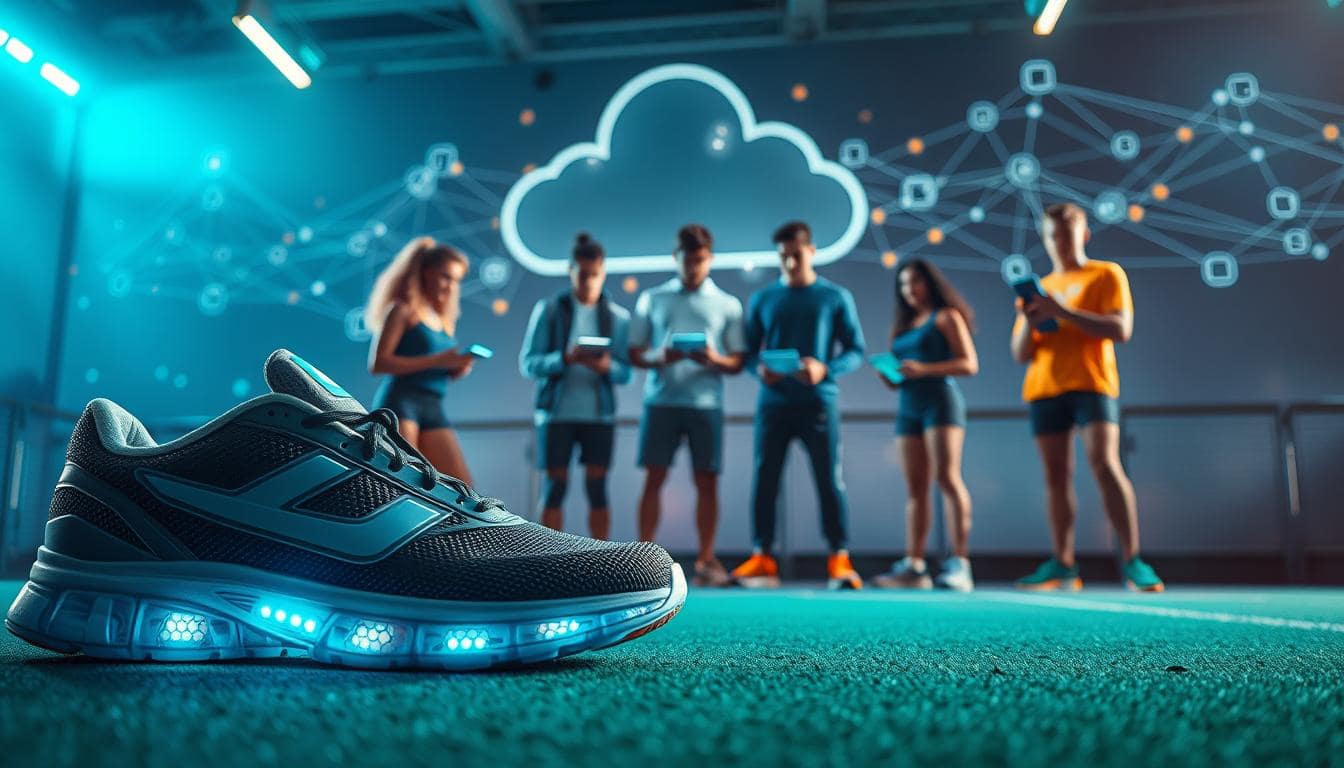
We’ve entered a new era where technology meets sports. The mix of artificial intelligence and the internet of things has changed how we see athletes. No longer is “smart” just about looks. It’s about creating a network of sensors that understand and act on an athlete’s needs.
This new way of working is changing how we look at sports performance and safety. Imagine your gear not just tracking your stats but also predicting your next move. It’s like having a personal coach who knows you better than you know yourself. This is the heart of today’s sports world—a mix of data and real-time feedback.
As we dive deeper, we’ll see how these changes are not just making athletes better. They’re also changing how athletes and their gear interact. The big question is: are we ready for a future where our gear thinks for us?
Edge computing vs. cloud processing
In the world of smart athletic gear, a big debate exists. Should data be processed right away or sent to the cloud? Athletes need real-time insights to improve their performance. Every millisecond is important when you’re sprinting.
Real-time data transmission is key. Athlete performance metrics and environmental factors must be captured and processed quickly.
Edge computing is like a sprinter’s secret weapon. It processes data on the device, like your smart insole analyzing foot strike. This technology gives feedback that feels almost telepathic. Coaches and sports scientists can make quick decisions based on immediate insights.
Cloud processing, on the other hand, is like a wise old sage. It analyzes terabytes of historical data, revealing trends and patterns. While it’s slower than edge computing, its analysis is deeper. It’s like choosing between fast food and a Michelin-starred meal.
The best solution is a hybrid architecture. It balances both edge computing and cloud processing. This way, your smart gear doesn’t slow you down during critical moments. Nothing ruins the illusion of being an athletic omniscient like a spinning wheel on your smart goggles.
| Feature | Edge Computing | Cloud Processing |
|---|---|---|
| Speed | Instantaneous feedback | Potential latency |
| Data Analysis | Real-time insights | Deep historical analysis |
| Use Case | Immediate athletic performance metrics | Long-term trend analysis |
Machine learning model deployment
Imagine trying to fit a high-performance sports car engine into a bicycle frame. That’s what machine learning model deployment is like. It’s not just about having a new model. It’s about making it work well in real-time.
The Scaled Conjugate Gradient algorithm is great for sports. But putting it in a device with limited resources is tough. You’ll spend a lot of time on model compression, quantization, and pruning.
Teams often spend months on their neural networks. But their smart basketball might not work well. Real-time inference needs more than a good model. It needs the right hardware too.
In smart gear development, finding the right balance is key. TinyML helps us deploy models without losing performance. This turns data into insights that drive innovation.
Here are the main factors for successful model deployment:
| Factor | Description | Impact on Performance |
|---|---|---|
| Model Compression | Reducing the model size to fit hardware. | Improves speed and efficiency. |
| Quantization | Lowering model weights precision. | Reduces memory usage without losing accuracy. |
| Real-Time Inference | Ensuring quick predictions. | Key for sports performance. |
| Battery Management | Optimizing device power use. | Crucial for long event use. |
Deploying machine learning models is an art. Finding the right balance is everything. So, next time you see a smart tennis racquet or high-tech football, think about its firmware update. It might be the most important match of the season.
Sensor fusion and data aggregation
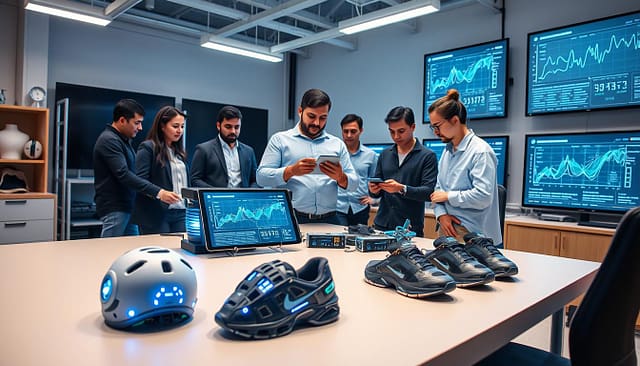
In sports, sensor fusion is like having a coach in your pocket. It mixes data from many sensors to understand athlete performance and safety. Imagine your running shoes with accelerometers, gyroscopes, and heart rate monitors. They all work together to give insights that go beyond just numbers.
These IoT sensors give real-time feedback, helping athletes improve their performance. It’s not just about running a mile. It’s about knowing how your form changes during the run. This data helps prevent injuries and improve training, making it key for serious athletes.
The real magic is in combining this data. It’s like a symphony where each part adds to the whole. Without fusion, you get just numbers, like a solo violin playing Beethoven’s Ninth. The challenge is making these different data streams talk to each other.
Engineers face the challenge of syncing data from various sensors. It’s like solving a Rubik’s Cube on fire. Get it right, and your AI can spot when your form fails during a deadlift. Get it wrong, and it might celebrate a personal best while you’re wondering about your gym choices.
In artificial intelligence sports, data without context is just noise with a fancy dashboard. The real strength of sensor fusion is turning raw data into useful insights. So, when you put on your smart shoes, you’re not just going for a run. You’re stepping into a world where data and performance meet.
Predictive maintenance for equipment
Imagine if your athletic gear could whisper secrets about its condition, warning you before a catastrophic failure. This is the promise of predictive maintenance. It’s a game-changer in the world of IoT athletic equipment. It’s like having a trusty sidekick that knows when to step in and save the day.
When your favorite gear fails, it’s a heartbreak of epic proportions. A snapped bike chain on a steep hill or a cracked tennis racket during match point can ruin your day. But what if your equipment could alert you to its fatigue before it lets you down? This isn’t science fiction; it’s the reality of modern technology.
By embedding sensors that monitor stress, vibration, and material fatigue, manufacturers can create digital twins of their products. These twins simulate the entire lifecycle of equipment before it ever leaves the factory. For instance, Siemens’ Solid Edge suite allows engineers to virtually torture-test a bicycle frame, analyzing its limits in a digital environment.
This innovative approach not only enhances the performance of IoT athletic equipment but also shifts the business model. Instead of merely selling products, companies can offer service-based revenue models, focusing on uptime. In the future, you won’t just buy a bike; you’ll subscribe to a guarantee that it won’t betray you on a downhill.
| Feature | Traditional Equipment | IoT-Enabled Equipment |
|---|---|---|
| Failure Prediction | No alerts | Real-time notifications |
| Maintenance Schedule | Reactive | Proactive |
| Data Insights | Limited | Comprehensive analytics |
| Customer Engagement | Transactional | Subscription-based |
In conclusion, the integration of AI IoT Sports Integration into athletic equipment represents a significant leap forward. It transforms how we interact with our gear, ensuring we stay ahead of possible failures. With predictive maintenance, the future of sports gear is not just about performance; it’s about reliability and peace of mind.
User experience design considerations
Designing user experiences for smart gear is like solving a fun riddle. The answer should always be ‘user-friendly.’ Most smart gear interfaces look like they were made by engineers who don’t know what ‘user-friendly’ means. The difference between raw data and a great experience is where many products fail.
User experience design for smart gear is more than just pretty dashboards. It’s about making AI feel like a wise, sarcastic coach in your ear. Imagine a smart running shoe that tells you to run lightly, without using hard-to-understand terms.
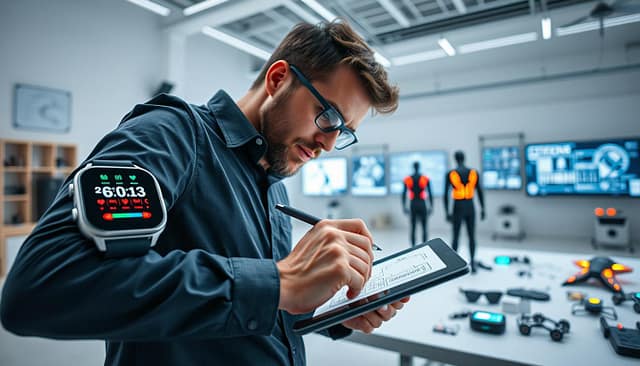
The key to great user experience is personalized recommendations. Imagine an app that suggests new shoes based on your gait analysis, not just because it’s payday. This section will explore the balance between useful info and too much.
How many notifications is too many for smart goggles? Can augmented reality make workouts better without making you look weird? In smart gear, the real test is whether it makes you feel powerful or just annoyed.
A device that’s smart but not friendly is just a fancy paperweight. The best designs hide complexity, making everything feel easy and natural.
As we dive into user experience design, remember: our goal is to make technology a helpful friend, not a hassle. We must keep the user at the heart of this tech revolution.
Security protocols for connected devices
In the world of artificial intelligence sports, security is key. Imagine your fitness tracker sharing your secrets with the competition. This is the reality of connected devices.
Protecting athlete data is vital. We need strong access control and encryption to keep data safe. SSL and TLS are important for encrypting data when it’s sent.
The connected nature of artificial intelligence sports gear brings big security risks. We’re not just worried about stolen credit card numbers. We’re talking about personal biometric data like heart rates and performance metrics.
Experts agree: we need strong security. This means encrypting all data or facing a big scandal. Keeping data local on devices can help reduce the risk of it being exposed.
Securing IoT athletic equipment is a challenge. We must understand the rules around biometric data. Your smart yoga mat might need a security update more than your laptop. In a world where your gear knows your secrets, trust is everything.
Scalability and manufacturing challenges
Turning a new design into a mass product is like a thrilling yet risky tightrope walk. The excitement of making a smart bike that tracks every step is just the start. The real test is making thousands of them without chaos in your factory.
Scalability is the key to success in IoT athletic equipment. It’s like navigating through the challenges of supply chains, molds, and software updates for many products. A case study with Rotor Bike Components showed a 15% faster design change implementation and a 15% cut in routine tasks with Siemens NX software. Such small improvements can make a big difference in the market.
Getting products to market quickly is vital. Customer tastes change fast, and being first can win loyalty and a competitive edge. But, adding sensors, keeping things waterproof, and ensuring connectivity across many units is a complex task.
This part looks into the details of scaling up. How do digital twins and platforms like Solid Edge help in simulating products and manufacturing? What are the risks of over-the-air updates? And how do we balance new ideas with the need for cost-effective mass production?
A smart gear revolution that stays in the lab is just an expensive hobby. Let’s dive into the details of making your dream a reality.
| Challenge | Impact on Production | Solution |
|---|---|---|
| Integration of Sensors | Complexity in assembly | Modular design approach |
| Waterproofing | Increased production time | Advanced materials |
| Firmware Updates | Potential for errors | Robust testing protocols |
For more on manufacturing hurdles, see this article on automation and this resource on sensors.
Regulatory compliance requirements
In the world of smart gear, innovation meets the challenge of rules. When your product tracks things like heart rates, you become a data controller. This means you must follow GDPR, CCPA, and more, which can be very complex.
Using AI IoT Sports Integration is exciting but also requires careful handling of data. It’s like adding privacy to your product from the beginning. How do you get users to agree while they’re out of breath? This is a big challenge.
Brands that do well see compliance as a chance to stand out. They build trust by being open and responsible. Your smart gear can be a game-changer, but it must also be safe and reliable. The fine print is key to your brand’s reputation.
As sports technology evolves, companies that follow the rules will do well. So, remember to include compliance in your plans. It’s not just about new ideas; it’s about being honest and fair.