
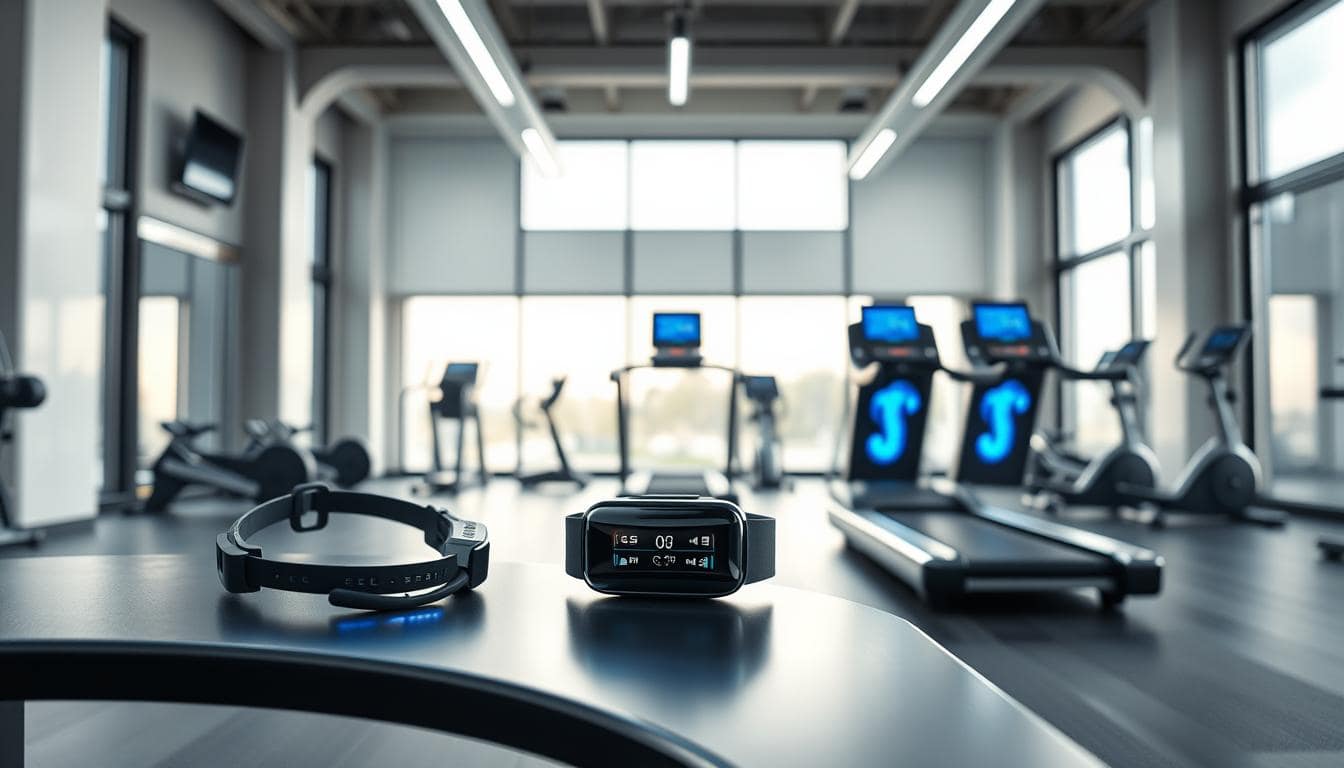
The old ways of keeping players safe, like ice and tape, are outdated. They’re as useful as a flip phone on Mars.
We’ve entered a new era. It’s not just about better bandages. It’s about gear that knows your body’s secrets. Your sweatband might have a PhD in biomechanics.
Sensors and artificial intelligence are at the core of this change. These wearable devices track your every move. The AI analyzes this data, finding patterns we can’t see.
It’s like having a digital sixth sense. It can predict injuries before they happen. We’ve moved from treating injuries to preventing them.
So, goodbye to “no pain, no gain.” We’re now focused on pre-emptive protection. We’re using technology to keep athletes safe. The game has changed, and so have the rules.
Wearable Sensor Applications
The sports safety revolution is happening right on the skin. It’s the era of the cyborg athlete, where tech is stuck to the body. Biomechanical monitoring is now done with a simple patch.
Placing tech on the body is a puzzle. An Inertial Measurement Unit (IMU) on a shin decodes a runner’s stride. A force sensor in a shoe insole audits every step. It’s not guesswork; it’s a detailed analysis.
Field sports used to rely on GPS for tracking. But now, sports safety technology looks at the small details. Accelerometers and gyroscopes detect even the slightest imbalance. They turn movement into numbers.
Fatigue doesn’t shout its arrival. It sends a signal through Heart Rate Variability (HRV). A drop in HRV warns of overexertion. Wearables now predict when to slow down.
Electromyography (EMG) sensors listen to muscles. They check how muscles work and when they fail. In rehab, they guide. In training, they critique. It’s biomechanical monitoring at its closest.
The market is full of devices, each with its own role. Here’s how the top ones compare:
| Device Type | Primary Application | Key Metrics Tracked | Best For |
|---|---|---|---|
| GPS Performance Trackers (e.g., Catapult Sports) | Movement & Load Analysis | GPS location, speed, distance, player load | Team sports, tracking overall exertion and positioning |
| HRV & Recovery Bands (e.g., WHOOP) | Strain & Recovery Management | Heart Rate Variability (HRV), sleep quality, skin temperature | Assessing daily readiness and preventing overtraining |
| Consumer Activity Trackers (e.g., Fitbit) | General Health & Activity Monitoring | Steps, heart rate, sleep stages, active minutes | Broad wellness overview and activity motivation |
| Recovery Rings (e.g., Oura Ring) | Sleep & Readiness Scoring | Sleep latency, HRV, body temperature, respiratory rate | Detailed sleep analysis and recovery insights |
| EMG Sensor Patches | Muscle Activation Analysis | Muscle electrical activity, contraction patterns | Rehabilitation, technique refinement, muscle imbalance detection |
The WHOOP strap is more than a bracelet; it’s a burnout predictor. The Oura Ring is more than jewelry; it’s a sleep detective. Catapult’s GPS vests map athletic stress in real-time. Together, they form a nervous system for sports.
This is the frontline. Not with scalpels, but with sensors. The goal is simple: listen to the body’s whispers so we never hear its scream.
Real-Time Biomechanical Feedback
Forget the post-game film session; the future of coaching is happening inside your earbuds right now. We’ve traded the grainy replay for a live, data-driven symphony of corrections. This isn’t about reviewing what went wrong. It’s about stopping the wrong from happening in the first place.
Think of it as a pit crew for your body. While you’re in motion, an array of sensors and cameras performs a million-point scan of your movement. This is biomechanical monitoring at its most potent. It spots the subtle drop of a hip, the slight inward collapse of a knee, or the uneven distribution of force. These aren’t quirks. They’re invoices for future pain, and real-time feedback is here to cancel them.
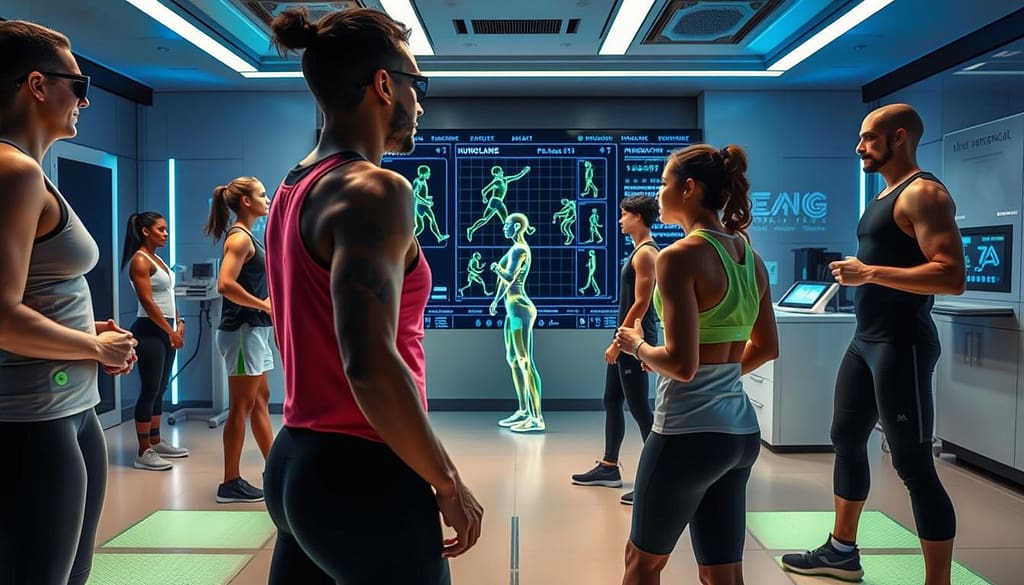
Gait analysis systems are the workhorses of this revolution. Once confined to lab treadmills, they’ve been miniaturized and weaponized. They don’t just record your stride; they deconstruct it into a blueprint of efficiency and risk. Is your left foot striking at a 3-degree greater angle than your right? The system knows. More importantly, it can tell you—and your coach—immediately.
This is where technique correction gets a real-time upgrade. Instead of ingraining bad habits for weeks, you get a gentle auditory nudge or a smartwatch buzz the millisecond your form drifts. It’s the difference between reading a map and having a GPS reroute you on the fly. The goal is movement pattern optimization, sculpting the most efficient and safest version of your athletic self.
But what about stopping the big injuries before they happen? Enter injury prediction AI. This isn’t magic; it’s math. By constantly analyzing the river of biomechanical monitoring data, sophisticated algorithms learn what “normal” looks like for you. Then, they vigilantly hunt for deviations that correlate with future strain. That slight change in arm swing during a tennis serve? It might be the first whisper of a rotator cuff issue. The AI flags it, turning a hunch into a actionable alert.
The power of injury prediction AI lies in its context. It cross-references your movement data with training load, fatigue levels, and even historical injury databases. It’s like having a super-observant coach who never sleeps, remembers every player they’ve ever seen, and has a PhD in kinesiology. The result isn’t fear, but freedom—to train smarter and push boundaries with informed confidence.
How does this feedback actually reach you? The methods are as varied as the sports themselves. The table below breaks down the primary modalities changing the game today.
| Feedback Modality | How It Works | Best For | Example Technology |
|---|---|---|---|
| Audio Cues | Real-time verbal or tonal instructions delivered via earbuds. | Technique-heavy sports (golf, swimming), running form correction. | Smart insoles with connected Bluetooth headphones. |
| Haptic Vibration | Patterned vibrations on the skin signal form deviations. | Discreet correction in team settings, weightlifting posture. | Wrist-worn wearables, smart apparel with embedded motors. |
| Visual Display (AR) | Overlays biomechanical data or avatars onto real-world view. | Complex skill acquisition, rehabilitation visualization. | Augmented reality glasses linked to motion capture systems. |
| Biofeedback Metrics | Numerical or graphical data on force, angle, and symmetry. | Quantitative analysis for coaches, post-session deep dives. | Tablet dashboards synced to sensor networks. |
The beauty of this ecosystem is its personalization. Your biomechanical monitoring profile is as unique as your fingerprint. The feedback you receive is tailored not to a textbook ideal, but to your body’s mechanics, goals, and limits. This is the core promise: moving away from one-size-fits-all coaching to a truly individualized athletic development plan.
Ultimately, this isn’t about creating robotic athletes who move with machined perfection. The human element—the grit, the creativity, the unpredictability—is what makes sport compelling. Real-time feedback and injury prediction AI are simply the tools to optimize the beautiful, flawed machine. They give athletes more years to play, more confidence to perform, and more data to win.
AI-Powered Risk Assessment
Wearable sensors are like the nervous system of sports safety. AI models crunching their data are like the brain. This brain is a mix of statistician, psychic, and sometimes a black box. It turns raw biometrics into useful predictions. Welcome to the heart of preventive sports medicine.
Forget simple calculators. We’re talking about machine learning models. These models are like seasoned doctors with a knack for recognizing patterns. They learn from huge datasets where injuries are the answers.
What do they look for? The signals are often hidden in plain sight:
- A gradual decrease in heart rate variability, the body’s whisper of stress.
- Asymmetries in leg power or movement that hint at an imbalance.
- Drastic spikes in training load without adequate rest.
These aren’t gut feelings; they are mathematical correlations waiting to be found.
The accuracy of this injury prediction AI is impressive. In research, models score 0.85 and higher. This means the algorithm is very good at predicting injuries.
Real-world applications show its value. In elite soccer, teams use GPS tracking and AI. The system can predict soft-tissue injuries by analyzing running patterns and fatigue. It’s not magic; it’s machine learning.
But there’s a catch. This brain needs clean, integrated, and diverse data. Data integration is a challenge. An algorithm trained on soccer might not understand data from a linebacker.
This leads to the biggest challenge: the “black box” problem. If an AI model says to bench an athlete but can’t explain why, do you trust it? The human mind needs a reason. A probability score alone feels like trusting a stranger’s hunch.
The future of injury prediction AI depends on solving this problem. It’s about making AI explainable. The goal is to give experts a second opinion that never gets tired.
Equipment-Integrated Safety Systems
Forget the smartwatch. The real brainpower in sports safety technology is now in the gear itself. Helmets are now analyzing every hit like a forensic scientist.
This is the upgrade athletes have been waiting for. Instead of adding sensors, we’re putting them into the protection itself. It’s like the difference between carrying a phone and living in a smart home.
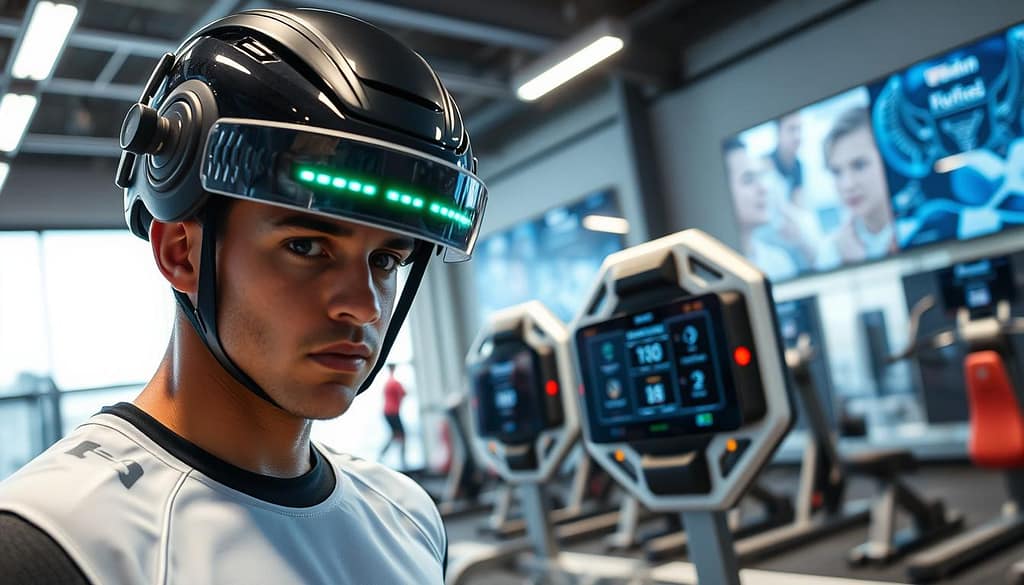
Modern smart helmets are changing the game. When a linebacker meets a running back, it’s not just physics—it’s data science. The helmet tracks force, rotation, and impact time.
Then it does something amazing: it sends the data to the sidelines. Medical staff get instant updates. Was it a normal hit or a concussion risk? The gear now has an opinion.
But why stop at helmets? Intelligent padding is changing contact sports. Shoulder pads with sensors create a real-time impact map.
Mouthguards have become like in-helmet telemetry units. They track head acceleration and rotation with great detail. That piece of plastic isn’t just protecting teeth—it’s gathering data.
The NFL’s “Digital Athlete” project shows this shift. They use Amazon Web Services to simulate impacts. It’s not just about better helmets. It informs design and rules.
Think of it as crash-test dummies for athletes. The data answers big questions. How do different hits affect injury risk? What padding is best?
The goal is automatic emergency response. A big hit triggers an alert. Medical staff get location and impact data before they arrive.
Those saved minutes could be life-changing. We’re moving from reactive medicine to predictive protection. The equipment warns of danger.
This change is a big shift in philosophy. Old gear was like a castle wall: thick but dumb. Modern smart athletic equipment is like that wall—but with cameras and sensors.
This technology is changing athlete safety at all levels. It’s not getting smarter by accident. It’s getting smarter to prevent accidents.
What happens when every piece of equipment becomes a data node? We get a safety network. Helmets talk to padding. Padding talks to shoes. It’s a symphony of protection.
This isn’t science fiction anymore. It’s the current state of sports safety technology. The next time you see a player hit, remember: their gear is analyzing it. And if something’s wrong, it’s already calling for help.
Professional Implementation Strategies
Putting smart injury prevention tech in pro sports teams is like a delicate dance. It’s not just about installing software. It’s about getting athletes to trust algorithms that track their every move. When the gear arrives, the real challenge starts.
The first step is access. Who gets to see the data? The head coach, the trainers, the players, or their agents? This is a political decision, not just technical. Clear rules are key to avoid distrust.
Getting athletes to accept this tech is critical. It’s like asking for a constant physical check-up. Framing it as a tool for punishment or contract leverage is a quick way to lose trust. The pitch must focus on empowerment, like giving athletes a superpower to see fatigue early.
How do you fit this into the coaches’ busy schedules? The answer is to make it simple. The injury prediction AI should give clear alerts, not complex reports. A red alert for Player X should mean an immediate change in drills.
This tech should blend into the team’s routine. Insights from wearable injury prevention systems should be part of daily talks between coaches and athletes. It’s about using data to plan, not just react.
Success changes the team’s culture. It moves from gut feelings to data-driven decisions. The injury prediction AI becomes a key part of the team, like the playbook. It’s a quiet change, measured in trust and careers saved.
Data Integration Challenges
Data integration in sports safety technology is a big challenge. It’s like trying to get everyone to speak the same language. Everyone wants a single dashboard that shows all the important data. But, we’re stuck with different systems that don’t talk to each other.
Your GPS tracker uses one language, while your force-sensing insoles use another. Your motion capture suit speaks yet another. It’s hard to get them all to communicate smoothly. This is where many biomechanical monitoring promises fall short.
Why is it so hard? There’s no universal translator. Each company keeps their data format secret. This creates digital silos, making it hard to use data from different sources.
Privacy adds another layer of complexity. This data is very personal. It’s like a blueprint of an athlete’s body. Who owns this data? The team, the league, or the player?
These questions are real. This data can affect an athlete’s career. Getting consent from athletes is a legal and ethical challenge. Can a young athlete really understand how their data will be used years later?
There are also legal rules to follow. In the U.S., HIPAA and in Europe, GDPR, protect personal data. A sports safety technology system must follow these rules. Building tech that meets these standards is a big challenge.
| Challenge Type | Technical Hurdle | Operational Impact | Compliance Risk |
|---|---|---|---|
| Multi-Source Fusion | Incompatible data formats & sampling rates | Delayed or inaccurate injury risk alerts | Low |
| Standardization | Vendor-locked proprietary APIs | Inability to switch or upgrade equipment easily | Medium (Data Portability) |
| Data Privacy | Identifying & anonymizing biometric data streams | Erosion of athlete trust, possible misuse | High (GDPR, HIPAA) |
| Model Applicability | AI trained on one sport fails in another | False predictions, wasted resources | Medium (Liability) |
We don’t have enough good data. Most AI models are made for specific sports. A model great for one sport might not work for another. We need more diverse and standardized data.
So, what’s the way forward? We need open standards and clear rules on data ownership. The next big thing in sports safety technology will be how it handles these challenges.
Clinical Validation Requirements
The gap between a fitness tracker and a medical device is huge. It’s filled by solid clinical evidence. You can’t just add an “AI Inside” sticker and call it medicine. For it to be a real tool in preventive sports medicine, it must pass the clinical validation test.
This process combines science with startup drive. It begins with evidence-based design. This means creating tools based on proven biomechanical principles, not just cool features. It’s about knowing, not guessing. A strong base in evidence-based design ensures the problem is right before coding starts.
Then comes the tough part: regulatory pathways. For devices making health claims, the FDA approval process is key. It separates the real tools from the fake ones. The path requires clear data, reproducible results, and a focus on patient outcomes. It’s a tough but necessary step for sports safety technology.
The heart of validation is efficacy studies. Does this technology really prevent injuries and improve outcomes? We need facts, not just promises. Controlled trials, like those in rigorous efficacy studies, must show cause, not just correlation. It’s not enough to predict an injury; it must prevent it.
This is where ethics and evidence meet. Athlete tracking and biometric sensors collect very personal data. Validating a tool means it works and is used right. Who gets the data? How is it used? Privacy and explainable AI (XAI) must be part of the package from the start.
So, what does this journey look like? It’s a long, multi-stage race, not a quick sprint. The table below shows the main steps from idea to clinic.
| Validation Stage | Primary Focus | Typical Duration | Key Success Metric |
|---|---|---|---|
| Pilot Feasibility Study | Basic safety & protocol testing | 6-12 months | No adverse events; data collection viable |
| Controlled Efficacy Trial | Proving cause-and-effect impact | 1-2 years | Statistically significant reduction in target injury rate |
| Real-World Effectiveness Study | Performance in uncontrolled, practical settings | 2+ years | Improved long-term athlete outcomes and adoption rates |
| Regulatory Clearance (e.g., FDA) | Meeting safety & efficacy standards for medical claims | 12-18 months (post-trial) | 510(k) clearance or De Novo classification granted |
The long-term goal is the ultimate judge. A validated tool in preventive sports medicine should lead to better athlete lives. It’s not about selling more gadgets. It’s about setting a new standard of care where sports safety technology is trusted like an MRI. The future of sports depends on this level of scrutiny.
Cost-Benefit Analysis for Organizations
When organizations think about wearable injury prevention tech, the first thing they notice is the cost. But the benefits are worth it. The initial price might seem high, but it’s a smart investment.
The real cost is in training staff. It’s not just about the tech. You also need to pay for software, IT setup, and training. This is where the real challenge lies.
The cost of injuries is much higher. Think about the lost games, ticket sales, and the salary for rehab. Suddenly, the tech cost seems like a small price to pay.
Effective smart athletic equipment is a smart investment. It keeps athletes healthy. This means more talent, better performance, and a stronger team.
There are also indirect benefits. Showing you care about safety can lower insurance costs. This is a big win for your bottom line.
The sports analytics market is growing fast. It was worth nearly $4.8 billion in 2024 and could hit $24 billion by 2032. This shows the value of data in sports.
But, there are challenges. The initial cost includes setting up with old systems. You also need to ensure data quality and overcome resistance from some staff.
In the end, it’s about making a smart choice. Are you investing in your team’s future or just buying gadgets? The right choice will keep your team strong and competitive.
Future Technology Roadmap
The future of athletic performance isn’t just about reaching a goal. It’s about merging with the athlete themselves. In the next decade, sensors will move from wearable patches to implants and ingestibles. Your body will become a real-time data source.
AI is getting better at explaining its decisions. This is key for doctors to trust it in sports medicine. Your injury prediction AI will not only warn you but also show why it’s right.
Imagine your smart mouthguard talking to the stadium’s medical team. This team will know everything about you, thanks to your AI and daily health scans. It’s not just about avoiding injuries; it’s about creating a perfect performance environment. The athlete and technology will become one.
This blend is why the regeneration tech market is expected to reach $3 billion. It’s a big change, as explained in this article on athlete health. By 2040, AI coaches might outnumber human ones. The game is changing fast.