
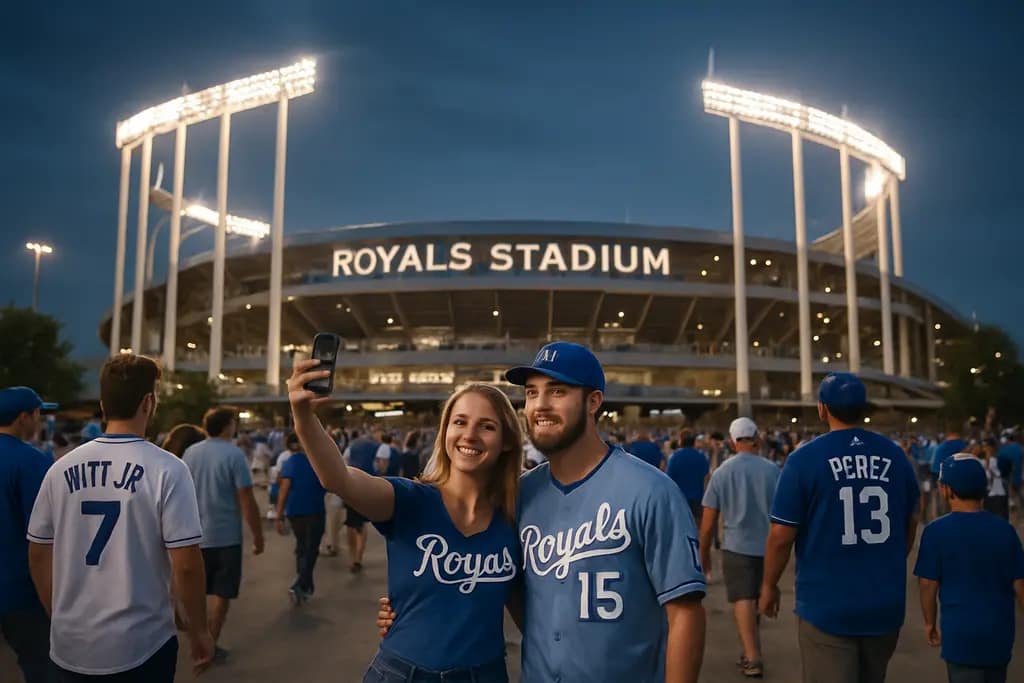
The Royals stadium impact debate is no longer just a baseball facilities story. As of October 11, 2026, Kansas City officials and the club have framed the proposed Crown Center ballpark district as a sports tourism, downtown development, and public finance project, with the Royals targeting a move by Opening Day 2028. The case for the project rests on visitor demand, event programming, tax capture, and job creation. The sustainability case is less settled, because the available public material gives more detail on economic output than on verified emissions, water, materials, or transit performance.
That split matters. Modern stadium projects can draw out-of-town fans, concerts, private events, and hotel demand, but they also concentrate traffic, construction impacts, public debt exposure, and land-use pressure. Kansas City’s proposal sits at that tension point. The public claims are large, and some are backed by city statements and outside projections. Still, projections are not results, and sports tourism gains should be weighed against what the public is being asked to finance.
Royals Stadium Impact And The Tourism Math
Measuring Royals Stadium Impact Through Attendance
The tourism argument starts with volume. The research record projects about 2 million new visitors annually tied to Royals games and events around the district. Forecasts also point to average attendance of roughly 26,000 fans per game across 81 home games, with 2 concerts and 50 private events each year. If achieved, that would shift the ballpark from a single-purpose baseball venue toward a more active event district.
That model is common in modern stadium development: use the anchor tenant to create predictable traffic, then add non-game events to stretch spending beyond MLB dates. The question is not whether games bring people. They do. The harder question is how many visitors are truly new to Kansas City, how many would have spent money elsewhere in the region anyway, and whether downtown businesses benefit without being displaced by higher rents or construction disruption.
For readers tracking the linked downtown questions, our prior analysis of the Kansas City downtown test examines public costs, land use, community benefits, and sustainability claims around the same project. The key point is that tourism impact should be measured after substitution effects, not just by counting turnstile activity.
Events Beyond Baseball
The event calendar matters because 81 home games leave long gaps in annual venue use. The research estimate of 2 concerts and 50 private events suggests an effort to create more year-round spending, but the current public figures do not prove how those events would be distributed by season, price point, or visitor origin. A private event attended mainly by local firms is not the same tourism asset as a multi-day event that fills hotel rooms.
For Kansas City, the sports tourism question also intersects with a broader market that includes football, college basketball, soccer, conventions, and youth tournaments. Baseball can add a dependable spring-to-fall rhythm, but the new district would need to compete for discretionary trips and corporate event budgets. A stronger downtown setting may help, yet it does not remove the need for evidence after opening.
Public Funding, Jobs, And Fiscal Risk
Bond Financing Is Central To The Deal
The largest verified public finance figure is Kansas City’s proposed commitment of $600 million in city-issued bonds, to be repaid through tax revenue generated by the stadium and surrounding district, as reported by the Associated Press. The broader research record describes a roughly $2 billion project cost, with about 55 percent, or near $1.1 billion, coming from public sources at the city and state levels.
The Royals stadium impact case depends on the district producing enough incremental activity to justify that scale of public participation. The 30-year projections in the research include nearly $1.4 billion in tax revenue, including revenue attributed to the stadium, the expanded district, restaurants, parking, gaming, and related sources. Those figures are notable, but they are forecasts tied to assumptions about development pace, attendance, event demand, inflation, taxable sales, and property value growth.
From a cautious sports-business view, the main risk is timing. Public debt and infrastructure spending can arrive before the promised tax base fully matures. If district revenue grows more slowly than expected, the public may face a gap between forecast and actual return. If the district grows faster than expected, Kansas City could see a stronger fiscal result. The present evidence supports neither certainty nor dismissal.
Jobs Claims Need A Performance Scoreboard
The official city announcement said the construction phase is expected to create 20,000 jobs and that regular game days would support around 1,000 permanent union jobs, according to Kansas City’s release. The research record also includes estimates of 2,200 new onsite office jobs, about $200 million in annual labor income, and more than $500 million in annual district-wide economic output.
Those job claims are meaningful for a sports venue project, but they should be tracked with clear categories. Construction jobs are temporary by definition. Game-day jobs may be seasonal or part-time depending on role and schedule. Office jobs depend on whether companies relocate from elsewhere in the metro area or represent net new regional employment. A credible performance review should separate construction job-years, permanent full-time jobs, seasonal operations work, and relocated employment.
- Tourism metric: share of visitors from outside the region, not only total attendance.
- Fiscal metric: annual tax revenue against bond repayment and public service costs.
- Labor metric: wages, hours, job duration, and local hiring outcomes.
- Business metric: sales growth for existing firms inside and near the district.
- Climate metric: verified energy, transport, waste, and water results after opening.
Sustainability Questions For The Crown Center Plan

Walkability Helps, But It Is Not The Full Test
The proposed district’s 4 square mile Tax Increment Financing zone is projected to include more than 1,700 businesses, with 70 percent less than a 20-minute walk from the site. That walkability figure is relevant for sports tourism because visitors who can move between hotels, restaurants, offices, transit stops, and the ballpark on foot may spend more time downtown and may rely less on short vehicle trips.
Still, a walkable location does not automatically make a stadium sustainable. Construction materials, embodied carbon, energy sources, waste systems, water use, shade, heat exposure, and public transit capacity all affect the environmental ledger. The research provided for this analysis does not verify specific building-performance targets, renewable energy commitments, low-carbon concrete plans, stormwater goals, or post-event waste diversion standards. That is a serious information gap for a project being discussed as a long-term civic asset.
The Royals stadium impact conversation should therefore separate location efficiency from environmental performance. A downtown site may reduce some travel burdens compared with an isolated car-dependent site, but that benefit can be weakened if event-day operations still depend heavily on parking, rideshare congestion, and high-emission construction inputs.
What A Verified Green Stadium Case Would Require
A stronger sustainability case would publish baselines and targets before construction. That means estimated embodied carbon, expected operational energy use, water demand, stormwater strategy, heat mitigation, waste diversion, and transit mode share. Without those numbers, the public is left with a financial forecast, not a full sports sustainability assessment.
Sports venues now operate in a market where fans, sponsors, and public agencies increasingly ask for proof. A stadium district can promote local spending and still fall short on climate performance. It can also achieve strong building standards and still fail on equitable access if workers and fans cannot reach the venue affordably. Kansas City’s challenge is to connect the tourism model with verifiable environmental reporting.
Fans interested in the business logistics of sports venues can explore insights at NBA Playbook, where similar discussions on arena management and public involvement are prevalent.
How Kansas City Should Judge The Royals Stadium Impact
A Scorecard Before Opening Day 2028
The Royals stadium impact should be judged against measurable outcomes before and after the proposed Opening Day 2028 move. Kansas City does not need to wait 30 years to ask whether the project is working. Early indicators can be tracked during construction, in the first year of operations, and across the first full MLB calendar at the new ballpark.
For sports tourism, the cleanest measure is new spending from visitors who would not otherwise have come to Kansas City. For public finance, the test is whether stadium and district tax revenue arrive on pace with repayment needs. For labor, the test is whether promised union jobs, local hiring, and wage gains are verified. For downtown businesses, the test is whether existing firms share in the lift or simply endure disruption while larger developers capture most of the upside.
The sustainability test should be just as direct. Kansas City should ask for annual public reporting on event-day travel patterns, energy use, water use, waste diversion, and district-level heat and stormwater outcomes. If those figures are not reported, claims about a better urban sports model will remain incomplete.
My view is cautious rather than dismissive. The Crown Center proposal could strengthen Kansas City’s position as a sports tourism market if attendance, events, visitor spending, and district activity meet the forecasts. It could also expose the city to fiscal and environmental risk if public costs outrun verified gains. The responsible way to evaluate the project is not by treating the stadium as either a civic win or a public mistake in advance. It is to require a scoreboard with numbers that residents can check.