

In the sports equipment world, green manufacturing is more than a trend—it’s essential. Imagine a factory with an outdated energy dashboard, last updated in the Clinton era. It’s like trying to use a paper map to navigate a Tesla—it’s outdated and silly.
Visibility is key. Without knowing your energy use, you’re wasting money and resources. It’s like throwing money out the window without seeing it go.
Deloitte says smart data can boost asset efficiency by 20% and cut costs by 30%. Think of a sports goods plant that saved 15% on energy just by fixing a big mistake. That’s money for new projects or company fun.
Before you start with solar panels or new materials, check where your energy goes. If you can’t answer, you’re not really going green. You’re just making educated guesses.
Process Selection Casting Forging Machining Thermoforming Lamination and Their Footprints
Choosing the right manufacturing process is like picking a life partner. It’s a choice that lasts a long time. Each method, like casting, forging, machining, thermoforming, or lamination, has its own environmental impact. It’s not just about how fast you can make things; it’s about how it affects our planet.
I once worked with a golf club maker that was forging iron heads using a lot of energy. They didn’t know switching to casting could cut waste by 40% and energy use by a quarter. It was a big wake-up call for them.
The ISO 14001 standard is more than a decoration. It makes you think, “Is this process good for the planet?” The sports equipment world is moving towards sustainable materials. For example, tennis racket frames made from flax and soy-based resin, made with low-temperature thermoforming, are becoming a reality.
Thermoplastic composites that can be remelted and reshaped are leading the way in recycling. Instead of throwing away scrap, factories can turn it into new products. Choosing a process is not just about being efficient; it’s about the environmental impact you’re making.
Before buying a new forging press, think about its environmental footprint. Can your ISO 14001 system handle it?
| Process | Energy Consumption | Material Waste | Recyclability |
|---|---|---|---|
| Casting | Moderate | 40% reduction possible | High |
| Forging | High | Significant | Low |
| Machining | Moderate | Variable | Moderate |
| Thermoforming | Low | Minimal | High |
| Lamination | Moderate | Variable | Moderate |
Energy Projects VFDs Heat Recovery Compressed Air Leaks Solar and PPAs
If you just pay your energy bills without thinking, it’s time to change. Energy projects are key to saving money. For example, a VFD retrofit on a hydraulic press can pay off in 14 months. This is because it uses less energy, saving you money.
Compressed air leaks are another big problem. They waste 20-30% of your air. Fixing them might not be exciting, but it saves a lot of money. It’s like taking care of your teeth to avoid bigger problems later.
Heat recovery is also important. It uses waste heat from ovens to warm up new air. This is like getting a free coffee every morning. Companies like Adidas are already using solar power, and Nike aims for 100% renewable energy.
Solar panels and power purchase agreements (PPAs) are leading the energy change. Solar can protect you from price changes, and a good PPA can make your CFO happy. So, be like a lean and six sigma expert and find ways to save energy.
For more on energy efficiency, check out this comprehensive manual. It goes into sustainable energy practices in detail.
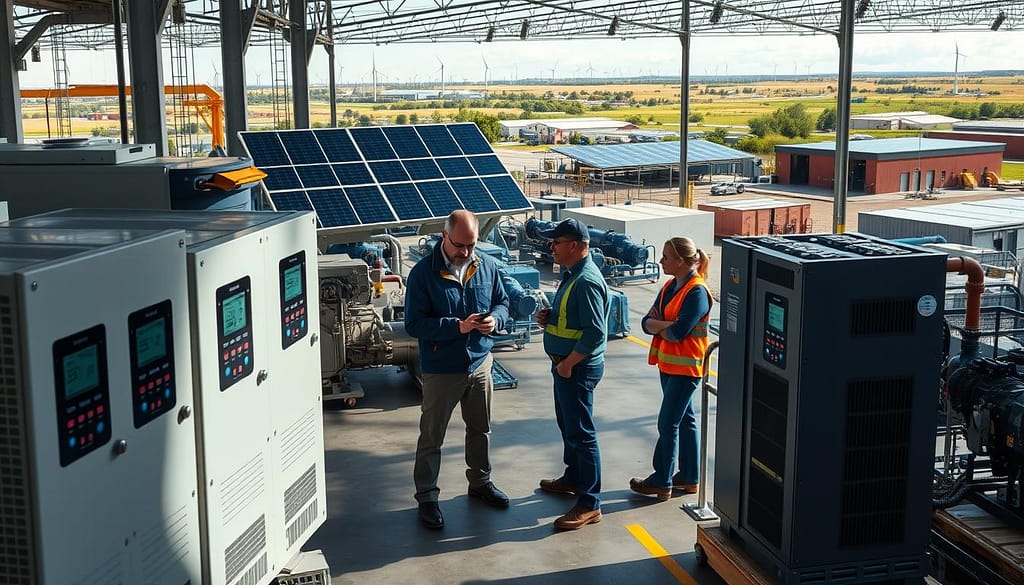
Solvent Elimination Waterborne and UV Systems Closed Loop Cleaning
Solvents are unwanted guests at the manufacturing party. It’s time to kick them out. In the sports equipment industry, there’s a big move towards solvent elimination. Manufacturers are choosing waterborne and UV-curable systems for better productivity and a greener environment.
Picture a snowboard lamination facility with clean air. Light does the curing, making production lines run faster. This change cuts down on harmful fumes and volatile organic compounds (VOCs).
Adding closed-loop cleaning to these systems is a big leap. It recycles water, saving a lot and avoiding waste. Imagine a bike helmet factory using waterborne adhesives and renewable energy for curing. That’s a win-win!
Certifications like Bluesign® show products are safe for the planet and workers. So, is your factory ready to move away from solvents and towards a cleaner future?
Scrap Reduction DFM Tolerances Nesting Regrind SPC and Mistake Proofing
Scrap reduction isn’t just a trendy buzzword; it’s the heartbeat of efficient manufacturing. In sports equipment, every piece of material that’s thrown away is a cry for help. Each carbon fiber offcut and mis-molded sole means money, energy, and resources wasted. Reducing waste isn’t just a goal; it’s a must in today’s competitive world.
It starts with Design for Manufacturing (DFM). If your design is too complex, it won’t work. Tighten tolerances only where they matter. This simple step can save a lot of material.
Nesting software is another game-changer. It can squeeze 10-15% more parts from the same sheet. This not only saves material but also reduces waste.
Don’t overlook regrind. Recycling your own thermoplastic scrap is a step towards a circular economy. But, it needs Statistical Process Control (SPC) to keep quality high. Without it, your products might suffer.
Mistake-proofing is about making errors impossible. I once saw a factory use a simple sensor to stop a press if material wasn’t right. This led to an 8% scrap reduction overnight. It’s not complicated; it’s just smart manufacturing.
To sum up, lean and six sigma tools are your allies. Before buying more materials, walk the factory floor. Look for waste and plan to cut it down.
| Strategy | Description | Benefits |
|---|---|---|
| DFM | Optimize product design for manufacturability | Reduces scrap and production costs |
| Nesting | Maximize material usage through efficient cutting patterns | Increases yield and minimizes waste |
| Regrind | Recycle thermoplastic scrap back into production | Supports circular economy and reduces material costs |
| SPC | Monitor and control manufacturing processes | Ensures consistent quality and reduces defects |
| Mistake-Proofing | Implement systems to prevent errors | Reduces scrap and enhances efficiency |
Worker Safety Green Chemistry Substitution Ventilation PPE and Audits
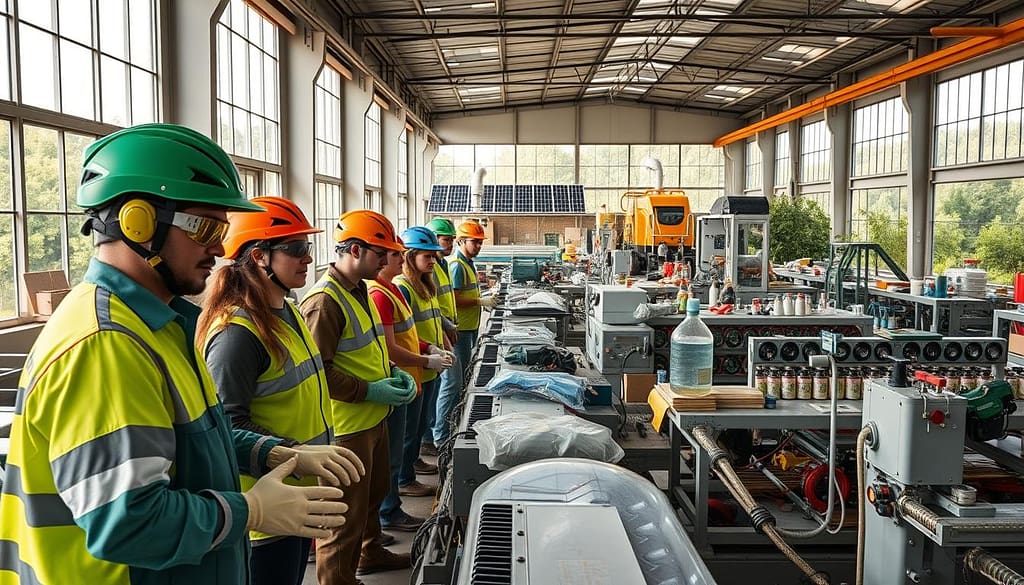
In the realm of green manufacturing, worker safety is non-negotiable. A factory that harms its workers is not sustainable, no matter its green efforts. Green manufacturing begins with the safety of the workers on the line. I’ve seen factories with poor ventilation and outdated PPE. This is not a factory; it’s a danger waiting to happen.
Green chemistry substitution is a quiet but powerful change. It involves replacing harmful chemicals with safer alternatives. The sports equipment industry, for example, uses a lot of adhesives and paints. Getting certifications like Bluesign® shows you’ve checked the safety of your chemicals.
Ventilation systems must be designed, not just set up. Local exhaust systems are much more effective than ceiling fans. PPE should be the first line of defense, not the last. Audits help find and fix problems, not just to catch mistakes.
If worker health isn’t part of your green plan, you’re missing the point. A product that’s good for the planet but made with unhealthy conditions is not worth it.
| Aspect | Current Status | Recommended Action |
|---|---|---|
| Ventilation | Improvised systems | Install engineered local exhaust systems |
| PPE Compliance | Outdated equipment | Update PPE to fit workers properly |
| Green Chemistry | Limited use | Increase bio-based solvent adoption |
| Safety Audits | Infrequent | Conduct regular, thorough audits |
Digital Twins and MES to Cut Trial Runs Optimize Cure and Cycle Times
Digital twins are changing how we make things, making trial runs old news. Imagine having a virtual copy of your production line. You can test without wasting any material. This tech is more than a novelty; it’s a big deal.
For example, a bike frame maker cut their cure cycle by 12 minutes per frame using a digital twin. This saves time, energy, and cuts down on carbon emissions. It’s a win-win-win!
A Manufacturing Execution System (MES) connects everything, giving you real-time control and tracking. Imagine an ISO 14001 auditor seeing your data-driven work. Digital twins are the ultimate data tool. You can test new materials and process changes without stopping production.
AI is also making a big splash, thanks to techniques like manifold learning and probabilistic modeling. It’s like having a magic crystal ball that uses algorithms. If you’re stuck in trial runs, it’s time to think about digital twins.
Your ISO 14001 goals and profits will appreciate it.
| Aspect | Traditional Trial Runs | Digital Twins |
|---|---|---|
| Material Waste | High | Minimal |
| Time Efficiency | Lengthy | Significantly Reduced |
| Energy Consumption | High | Lower |
| Data Utilization | Limited | Extensive |
To learn more about improving your manufacturing, check out this resource.

Vendor Scorecards Tier 1 to 3 Accountability and Corrective Actions
Vendor scorecards are like a playbook for sustainable manufacturing. They outline strategies for accountability. But, if your Tier 2 supplier is using harmful practices, your sustainability efforts are in vain.
Deloitte’s research shows a shocking fact: supply chain emissions are 7.7 times higher than your own. This should worry every procurement manager. Vendor scorecards are key tools for addressing this issue.
Just getting a certificate isn’t enough. You must score your suppliers on important factors like:
- Energy use
- Waste management
- Chemical handling
- Labor practices
Then, make sure those scores lead to real actions. I’ve seen a brand cut ties with a supplier over slow progress on wastewater treatment. They chose a local Tier 3 supplier instead, who was eager to improve.
Corrective actions are not just penalties; they guide improvement. If a supplier can’t or won’t get better, you need a plan to move on. Lean and six sigma methods help here: identify waste and risks, and keep improving.
So, use those scorecards to grade your suppliers. In today’s world, their actions reflect on you. For more on vendor scorecards, check out this informative resource.
Verification Metering Submetering and Third Party Assurance
In the world of sustainable manufacturing, verification is key. It’s not just a buzzword; it’s essential. When companies say they use renewable energy, we need to check. Trust, but verify—this is true in a world where greenwashing is common.
Metering and submetering are your allies. They help you see how much energy each part uses. This info is priceless. For example, you might find that a supposedly efficient oven uses a lot of energy. Or, your solar panels might not be working well because of dust.
Then, there’s third-party assurance. ISO 14001 audits, FSC certifications, and Bluesign® approvals are the gold standard. They show who’s real and who’s not. In the sports equipment world, where people know their stuff, this is very important.
Putting out a clear supply chain report with real data does more than follow rules. It builds trust in your brand. That trust leads to more sales. So, why not spend on meters and auditors? Let the data prove your claims.
Business Case Payback Sensitivity Analysis and Incentives
Every sustainability project needs a strong business case. It’s not just about saving the planet; it’s about making the CFO happy. Waste minimization projects often have quick payback periods, like a viral video.
For example, fixing compressed air leaks can pay back in just three months. Heat recovery systems take about eighteen months. And solar setups can save money right away.
Sensitivity analysis is key. It lets you test different scenarios. What if carbon prices triple? Suddenly, your project becomes a must-have.
Incentives are also important. The Inflation Reduction Act has nearly $6 billion for cutting greenhouse gases. State grants, utility rebates, and tax credits can make a project a no-brainer.
I helped a sports equipment maker get a grant for 30% of a new waterborne coating line. This cut their solvent waste and sped up payback. The business case is about more than ROI; it’s about staying strong in a changing world.
So, get ready with your Excel skills, outline your cash flows, and go after those incentives. Your shareholders and the planet will thank you.