
Let’s cut through the green haze. The world of high-performance gear isn’t just a simple switch from oil to plants. It involves a mix of bioresins, new biopolymers, and tricky processing.
PLA is a big player, making up about 60% of biodegradable plastics. But, its heat deflection temperature is only around 55°C. This means it can melt quickly, like your dreams of summer fun in a hot car.
PHA and PBS are the tricky ones. They need careful handling to avoid damage. I’ve seen engineers struggle with PLA gears that warped before they could test them.
The processing window is key. It decides if a gear tooth is strong or weak. Let’s explore more, from bio-polyethylene to nucleated PLA. But we’ll also face tough questions: Are we just trading one set of problems for another?
Biobased nylons PA11 PA1010 benefits fatigue impact moisture uptake and cost
Ever held a bike saddle and thought, “This feels different”? That’s the magic of biobased nylons like PA11 and PA1010. These materials are not just fancy names; they represent a leap forward in performance. Derived from castor oil, PA11 boasts a moisture uptake of merely 1.9% at saturation. In contrast, its petroleum-based cousins, PA6 and PA66, absorb moisture like a sponge, with uptakes of 9.5% and 8.5%, respectively. This significant difference is critical in applications where precision is key.
Imagine your gear swelling at the worst possible moment—like a bike saddle losing its shape mid-ride. PA11 stands firm against such moisture-induced disasters, maintaining dimensional stability and exceptional fatigue resistance. It’s as if PA11 laughs in the face of cyclic loading, proving its worth time and again.
Now, let’s not ignore the financial elephant in the room. At 2-3 times the cost of PA6, choosing PA11 is more than a mere material selection; it’s a statement of intent. But for applications where failure isn’t an option—think protective guards that must endure repeated impacts without cracking—the investment becomes justifiable.
Enter PA1010, the pragmatic middle child. It offers a blend of properties that make it an attractive alternative. While it doesn’t fully escape the financial vertigo associated with PA11, it provides a bio-content halo without the hefty price tag. The trade-offs are clear:
| Property | PA11 | PA1010 | PA6 |
|---|---|---|---|
| Moisture Uptake | 1.9% | 3.5% | 9.5% |
| Fatigue Resistance | Excellent | Good | Fair |
| Cost | 2-3x PA6 | 1.5-2x PA6 | Baseline |
In the world of high-performance gear, biobased isn’t just a buzzword; it’s a material choice that demands careful consideration. The benefits of PA11 and PA1010 extend beyond mere performance metrics—they embody a shift towards sustainability without sacrificing quality. So, the next time you grip that racket handle or settle into a bike saddle, remember: it’s not just gear; it’s the future of materials.
Natural fibers flax hemp basalt selection sizing and interface chemistry
Choosing the right natural fiber for composites is like casting a perfect movie ensemble. Each option—flax, hemp, or basalt—has its own strengths and quirks.
Flax is the elegant sprinter, with tensile strengths of 500-900 MPa and moduli of 50-70 GPa. It’s lighter than glass fiber, with a density of 1.5 g/cm³. Hemp, on the other hand, is the rugged contender, tougher and more variable.
Basalt is the volcanic interloper, adding fire resistance and mineral rigidity. It’s a unique player, but the chemistry with polymer matrices is where the real drama unfolds.
Without the right sizing and coupling agents, like maleic anhydride grafted polymers, the interface can fail. Imagine a flax-epoxy laminate that should be stiffer than glass fiber, yet it fails early. It’s like a well-cast film that flops due to poor direction.
The retting method—whether dew or enzymatic—determines fiber consistency. It’s not just trivia; it’s the difference between reliable performance and unpredictable behavior.
To transform a weak interface into a stress-transferring powerhouse, we explore techniques like silane treatments and plasma treatments. In the world of natural fiber reinforced polymers, remember: the fiber is only half the story. The real magic happens at the molecular handshake, where the right chemistry can make all the difference.
Biocomposite layups compression injection and thermoforming routes
Choosing the right method for biocomposite layups is as important as the ingredients in a dish. Each method has its own benefits and challenges, affecting the final product.
Compression molding with non-woven flax mats is key for car interiors. It’s reliable and can be scaled up. But, humidity can be a problem, like a soufflé failing if the oven is off.
Injection molding needs a gentle hand. For example, a mix of polypropylene and 30% flax requires careful temperature control. Natural fibers degrade at 200°C, close to the temps of many plastics. A small mistake can ruin the flax fibers.
Thermoforming is new and uses pre-consolidated sheets. It’s great for complex shapes like bike saddles. But, cooling takes longer because biocomposites are slow to cool, like wool.
Let’s look at the different layup strategies:
| Method | Advantages | Challenges |
|---|---|---|
| Compression Molding | Scalable, forgiving | Humidity sensitive |
| Injection Molding | Precision, complex shapes | Temperature control critical |
| Thermoforming | Versatile, ideal for curves | Longer cycle times |
In summary, working with biocomposites is complex. Each method has its own challenges, like cooking a dish. Knowing these can help create high-quality products.
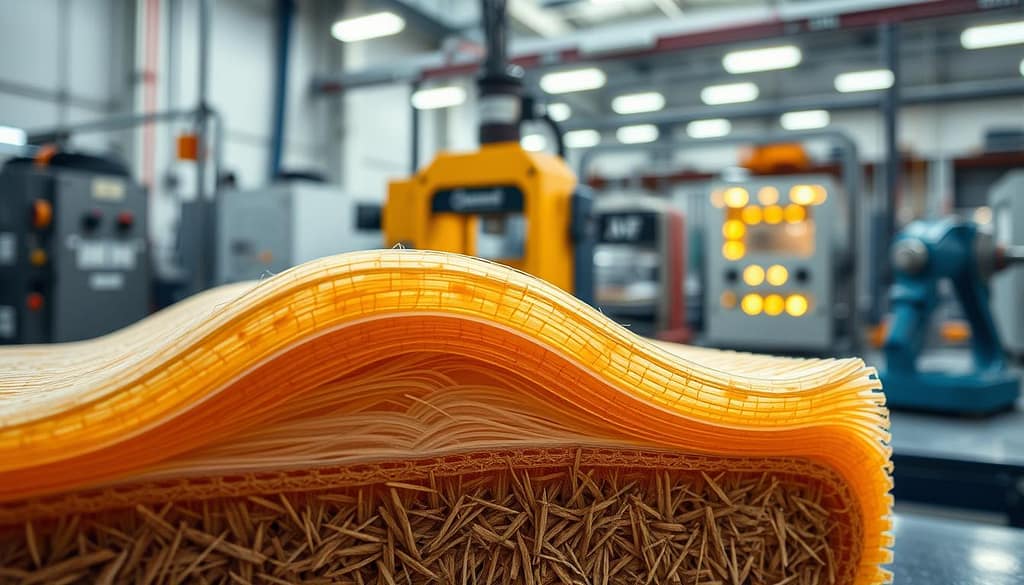
Moisture UV and creep mitigation coatings coupling agents and design factors
Imagine your favorite wooden cutting board, left in the sink overnight. Now, think of that as a helmet component. Moisture is a big problem for natural fiber composites. It makes the matrix soft and the fibers swell, causing microcracks.
This can make the material’s strength drop by 20-40% in humid conditions. That’s a big problem!
UV exposure is another enemy of durability. It breaks down lignin, making your flax-reinforced gear turn yellow and brittle. Nobody wants that.
Creep is also a concern. It’s when a part slowly sags, losing its fit. PLA, a biobased polymer, is very susceptible to this when wet and warm. It’s a big worry for many applications.
So, what can we do to fight these problems?
- Barrier Coatings: Bio-based polyurethanes can seal surfaces, protecting them from moisture.
- Coupling Agents: Maleic anhydride grafted polymers improve bonding between materials. This reduces moisture absorption and boosts durability.
- Design Factors: Overbuilding by 50% can add weight but ensures a durable product. It helps avoid warranty claims.
Mitigation is key for biocomposites to succeed. It’s about finding the right balance between performance and durability. We need to think carefully about coatings, chemistry, and design margins. Remember, a soggy helmet is not what we aim for.
End of life options mechanical recycling composting and chemical routes reality check
The world of bioplastics is more complicated than it seems. We often hear about biodegradable plastics, but they don’t just disappear. PLA cups can stay in compost piles for over a year, showing they’re as tough as a Twinkie.
Composting bioplastics needs special conditions: 58°C, 50% humidity, and 180 days. These are hard to meet at home. So, composting bioplastics is not as easy as it sounds, as most places can’t handle these conditions.
Mechnical recycling sounds good, but it often means downcycling. The material weakens, and what was once strong might become a park bench. It’s better than the landfill, but not perfect.
Chemical recycling is a different story. It can break down PLA back to lactic acid. But, it’s expensive and needs subsidies. We should be careful with how we talk about these processes.
Now, let’s look at PHA and PBS. These plastics are truly marine biodegradable. They break down in seawater without harming the ocean. But, we must check the details of the ASTM D6691 test.
The most sustainable option isn’t just biodegradable in a lab. It’s about collecting, processing, and recycling. Anything less is just green theater.
| Bioplastic Type | End-of-Life Option | Feasibility | Environmental Impact |
|---|---|---|---|
| PLA | Mechanical Recycling | Challenging | Downcycling |
| PLA | Industrial Composting | Feasible | Requires specific conditions |
| PHA | Marine Biodegradation | Feasible | Low microplastic impact |
| PBS | Marine Biodegradation | Feasible | Low microplastic impact |
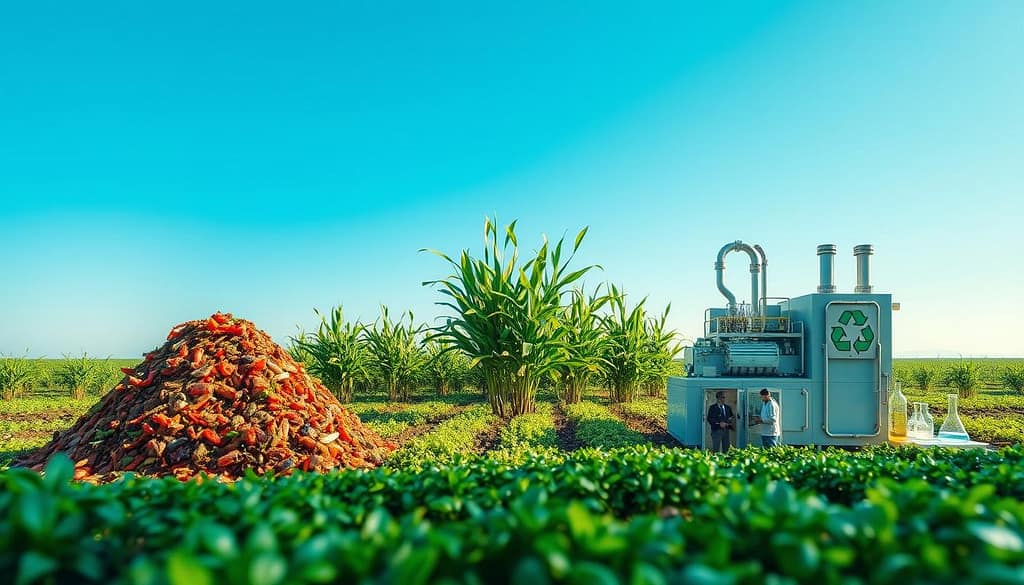
Case applications bike saddles racket handles helmets protective guards and boards
Ever wonder how biocomposites are changing sports gear? These materials are not just for looks; they’re changing how we play. Let’s explore flax hemp fiber composites in sports gear.
Bike saddles made from flax fiber composites are not just stylish. They also reduce vibrations. Imagine a mountain bike ride where your saddle absorbs bumps, not your spine. It’s like riding on air, thanks to natural fibers.
Racket handles also benefit from flax fiber composites. They absorb vibrations, reducing arm fatigue. Say hello to a responsive feel in every swing, unlike traditional materials.
Helmets and protective guards use these materials for safety. A hemp-reinforced shin guard I tested withstood impacts better than traditional ones. It’s light yet strong, like a sports gear superhero.
Many products use these materials. Snowboards with Biotex flax fabric offer the stiffness and pop riders want. Canoes from Flaxland show the materials’ versatility. Even car door panels are made from these materials, changing the auto industry.
These products are not just for show; they’re real and can be composted. Let’s look at some key uses:
| Application | Material | Benefits |
|---|---|---|
| Bike Saddles | Flax Fiber Composites | Vibration damping, comfort |
| Racket Handles | Natural Fibers | Reduced arm fatigue, responsive feel |
| Helmets | Hemp-Reinforced PP | High impact absorption, lightweight |
| Snowboards | Biotex Flax Fabric | Pop, torsional stiffness |
| Automotive Panels | Natural Fiber Mats | Low off-gassing, sustainability |
Flax hemp fiber composites have moved from concept to must-have. The future of sports gear is green. For more on these materials, check out this study.
Testing roadmap ASTM D638 flex ISO 14125 impact DMA and aging protocols
If you think testing is just a tedious checklist, you haven’t seen a biocomposite gear fail at 4,000 RPM. The testing roadmap for natural fiber reinforced polymers is more than a formality. It’s a detailed journey through the complexities of viscoelasticity and moisture sensitivity.
The ASTM D638 tensile tests give you the headline numbers, showing the material’s strength. But, the ISO 14125 flexural testing often tells a different story, revealing the true nature of thin-walled components like racket handles. It’s not just about the numbers; it’s about their real-world meaning.
Impact testing sparks a debate: Charpy or Izod? Instrumented or not? Hemp-PP composites may show good notched Izod values in lab tests. Yet, they can shatter in real-world multi-axial impacts. This is because lab tests often overlook the critical fiber orientation effects in actual use.
DMA is like a crystal ball—it shows the glass transition, softening point, and creep compliance. These are key to understanding how your gear will perform under stress.
Lastly, accelerated aging is like sending materials to a torture chamber. It’s where the robust separate from the overly optimistic. It’s essential for predicting long-term moisture and creep performance.
| Test Type | Standard | Purpose |
|---|---|---|
| Tensile Test | ASTM D638 | Measures tensile strength and elongation |
| Flexural Test | ISO 14125 | Assesses flexural strength and modulus |
| Impact Test | Charpy/Izod | Evaluates resistance to sudden impact |
| Dynamic Mechanical Analysis | DMA | Analyzes viscoelastic behavior |
| Accelerated Aging | N/A | Predicts long-term performance under stress |
In conclusion, a datasheet without context is just a work of fiction. Understanding these testing protocols is key for anyone working with natural fiber reinforced polymers. They are not just numbers; they are insights that can save your project from a costly failure.
LCA spotlight carbon intensity per kg vs fossil incumbents and durability modeling
LCA isn’t just a buzzword; it’s a reality check that could reshape our understanding of sustainability. When evaluating biocomposites, we must confront the carbon footprints that often hide in plain sight. For instance, natural fibers typically have a carbon footprint of 0.5-1.5 kg CO2 eq/kg, while glass fiber ranges from 1.7-2.2 kg CO2 eq/kg. This stark contrast highlights the biobased materials’s great promise.
PLA production emits around 1.3 kg CO2 eq/kg, significantly less than the ~2.0 kg CO2 eq/kg associated with polypropylene (PP). Yet, we must ask ourselves: does a lower initial carbon output truly equate to a greener product? If your biocomposite gear lasts only two seasons while its fossil counterpart survives five, we might be trading short-term gains for long-term losses.
Durability modeling is key here. It determines if our “sustainable” choices are truly eco-friendly or just greenwashed illusions. For example, while PHA boasts marine biodegradability, its production carbon intensity can rival some petroleum polymers if the fermentation feedstock isn’t optimized.
We need to consider the entire lifecycle, including use phase challenges like moisture-induced creep and UV degradation. These factors can lead to premature replacements, effectively negating any upfront carbon savings. The reality is, true sustainability isn’t about the lowest upfront number; it’s about the lowest total impact over the product’s actual life.
| Material | Carbon Intensity (kg CO2 eq/kg) | Durability (Years) |
|---|---|---|
| Natural Fibers | 0.5 – 1.5 | 3-5 |
| Glass Fiber | 1.7 – 2.2 | 5-7 |
| PLA | 1.3 | 2-4 |
| PP | 2.0 | 5-10 |
| PHA | 1.5 – 2.0 | 2-3 |
As we spotlight these figures, it becomes clear: we must look beyond the surface. The environmental impact of our material choices can be profound. By understanding both carbon intensity and durability, we can make more informed decisions that truly reflect a commitment to sustainability.
Supplier short list material data sheets and sample kit requests
Exploring biocomposites is like a treasure hunt. You get excited as you look at different suppliers. Each one promises something new and sustainable. Companies like Composites Evolution, NPSP Composites, and CTS offer exciting options for your projects.
Composites Evolution has Biotex flax fabrics and EcoPreg prepregs. These materials are making waves in snowboarding and canoeing. Their sample kit is so nice, you might not want to cut it.
NPSP Composites focuses on hemp-bioresin panels. They ensure your outdoor projects will last. Their team is ready to help you choose the right materials.
CTS uses cashew nut shell liquid in their prepregs. This resin is strong and reliable. When you ask for data sheets, look at the fiber volume fraction and moisture conditioning. This info is key for the best results.
Sample kits should have test plaques and fiber swatches. These let you test the materials yourself. It’s important to check the supplier’s claims before trusting them. Your gear needs the best, so be informed and choose wisely.