
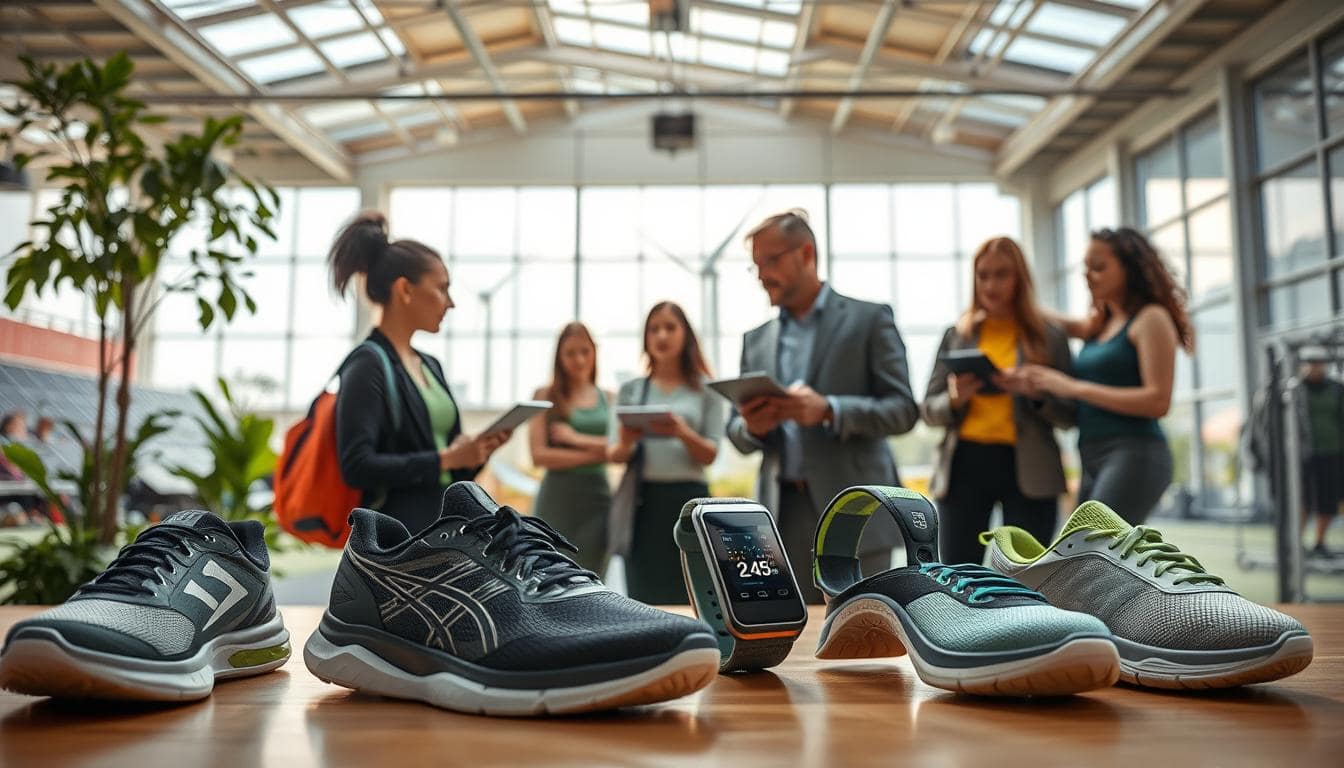
The term “sustainable sports tech” is often used loosely. Many brands claim to care about the environment but don’t follow through. Before we explore the real leaders, let’s establish a clear criteria.
I’m drawing from the Sports Industry 5.0 approach. It focuses on innovation that also puts people first. It’s not just about making products faster or stronger. It’s about making them better for our planet and health.
To judge these brands, I consider four key questions:
- Is the innovation addressing a real environmental issue or just a PR stunt?
- Are the claims backed by credible third parties?
- Can the solution grow beyond small collections?
- Is there real innovation, or are we seeing recycled ideas?
Most performance gear is made from materials derived from petroleum. These brands are not flawless but are moving forward. They’re redesigning their products from scratch, marking a significant shift.
Footwear: Recycled Midsoles, Castor-Based Nylons, Supercritical Foams, and Glue-Free Uppers
Imagine a world where your running shoes are made from castor beans instead of petroleum; welcome to the future of footwear. The footwear industry has long used petrochemical products. Now, innovative brands are changing this. They aim to make shoes more sustainable.
Every year, about 300 million pairs of shoes end up in U.S. landfills. But what if we could recycle them? This could make the industry more circular.
Patagonia’s Common Threads Initiative is a great example. It encourages people to repair and reuse their old clothes. This effort has recycled 45 tons of clothing, making 34 tons into new clothes. This idea is also important for shoes, which can also be recycled.
On, a Swiss brand, is leading with its CleanCloud initiative. They use castor beans to make nylon, reducing their environmental impact. This change keeps their shoes bouncy and eco-friendly.
Brands are also moving away from harmful adhesives. These adhesives can harm the environment and workers. Now, they use glue-free methods, like precision knitting and thermal bonding. This change is good for the planet and workers.
Supercritical foaming is also changing midsoles. It uses CO2 or nitrogen to make foam without harmful chemicals. This makes shoes lighter and more eco-friendly.
But, not all bio-based shoes are biodegradable. And not all recyclable shoes are actually recycled. Many end up in landfills. The real change comes from brands with take-back programs.
In conclusion, the future of shoes depends on innovation and recycling. We need brands that make shoes that can be recycled and support recycling programs. Only then can we truly make a difference.
Apparel: PFC-Free DWR, Bio-Based Membranes, and Microfibre Control
Patagonia leads in outdoor gear by focusing on sustainability. Yvon Chouinard, the founder, aimed to protect nature. This is seen in their use of organic cotton and recycling programs.
The “Don’t Buy This Jacket” campaign is a great example. It surprisingly boosted sales by 30% during Black Friday. It’s a clever way to encourage buying.
Let’s talk about the challenges of sustainable clothing. Waterproof jackets can feel like they’re trapping sweat. This is due to PFCs, harmful chemicals that harm our environment.
Patagonia tackled this problem early on. They worked hard to make their waterproof gear without PFCs. It wasn’t easy, but they’ve made great progress.
New, eco-friendly membranes are also being developed. These are made from plant oils and recycled materials. They match the performance of traditional Gore-Tex.
Microfibre shedding is another big issue. Synthetic clothes release thousands of tiny plastic particles with each wash. Patagonia suggests washing less and repairing more. They also encourage recycling.

Hardgoods: rCF Frames, Modular Bindings, Low-Carbon Aluminum, and Recycled TPU Grips
Hardgoods might not steal the spotlight in sustainability discussions, but they carry a heavy load of carbon impact. While we focus on eco-friendly clothes and shoes, hardgoods are often overlooked. They have a big carbon footprint, like a snowboard or bike frame. We need to pay attention to this.
Materials in hardgoods are hard to make green. Aluminum, for example, needs a lot of energy to make. Carbon fiber, used in high-performance items, also has a big carbon footprint. Brands like Burton are working hard to solve these problems.
Burton is leading the way with innovative hardgoods. They use recycled carbon fiber (rCF) frames, made from scrap carbon. This is a big step towards reducing waste.
Burton also has modular binding designs. These let you replace parts instead of the whole binding. This is a big change in a world where products are often thrown away.
Another great thing about Burton is their low-carbon aluminum. It’s made using hydroelectric power, not coal. They also use recycled TPU grips, made from waste. These small steps add up to make a big difference.
The problem with hardgoods is their long purchase cycle. You might buy a snowboard every five years. This means the benefits of sustainability take time to show. A bad jacket might last two years, but a bad bike frame could last ten, using much more carbon.
In conclusion, hardgoods are key to sustainability discussions, even if they’re not the first thing we think of. Brands like Burton are showing us that innovation in hardgoods can make a big difference. As we work on sustainability, let’s remember the important role hardgoods play.
Ball and Racket Tech: Bio-Based Strings, Solvent-Free Coatings, and Repair Kits
Tennis balls are a big problem for the environment. They’re made of rubber and felt, and millions end up in landfills every year. The pro circuit alone throws away about 125,000 balls per tournament.
Brands like Wilson are working hard to change this. They’re exploring new materials like bio-based strings. These are made from castor oil or recycled polyester, which is better for the planet.
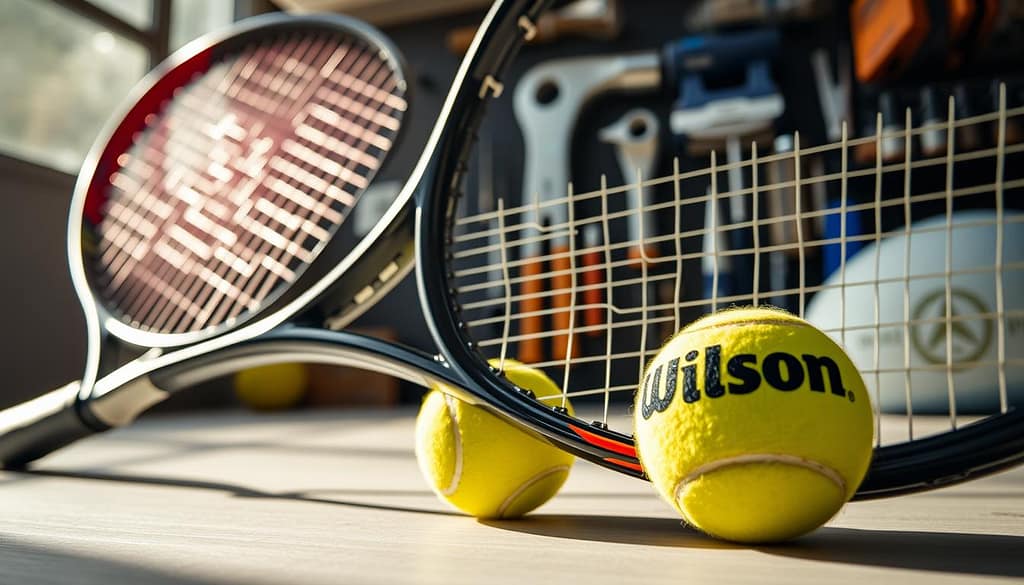
Another big step is using solvent-free coatings. Old racket finishes used chemicals that harm the air. Now, new coatings are safer and better for the environment.
Repair kits are also a game-changer. They help rackets and balls last longer. When Wilson sells these kits, they’re showing they care about the planet. It’s a new way to build customer loyalty.
These changes from Wilson and others show real progress. They’re using eco-friendly materials and making products that can be fixed. This makes sports more sustainable and fun.
So, next time you play tennis, think about the planet. Your gear can make a difference. For more on sustainable sports, check out this in-depth look.
Factory Decarbonization: Renewable Heat, Dyeing Innovations, and Wastewater Zero Liquid Discharge
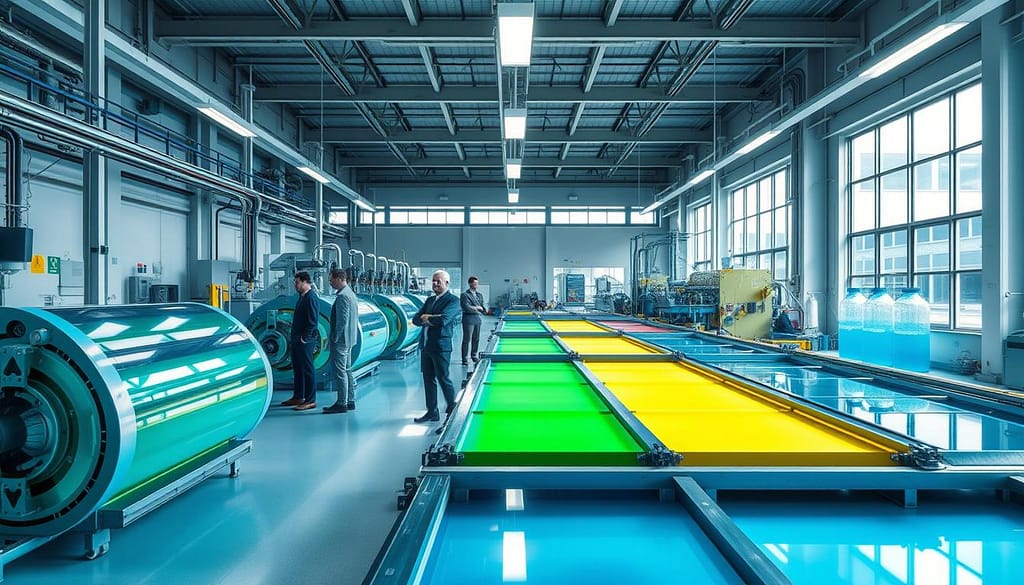
The environmental impact of sports manufacturing is huge, and it starts in the factory. The textile industry uses a lot of water and pollutes it. For example, dyeing one kilogram of fabric can use 100 to 150 liters of water. This shows why we need new ideas at the factory level.
Brands like adidas are leading the way. They know that just using recycled materials isn’t enough. The real change comes from using renewable energy to power factories. Most factories use steam from coal or gas. Switching to solar, biomass, or heat pumps could cut down on carbon emissions a lot.
But changing factories isn’t just about technology; it’s also about money. Manufacturers don’t want to spend on new systems, and brands are hesitant to pay for it. Only those really committed to going green are willing to invest in new ways to make things.
Dyeing methods are also key. New ways like using supercritical CO2 and digital printing use less water and no toxic dyes. Closed-loop systems that reuse water are becoming the norm in green manufacturing.
Zero Liquid Discharge (ZLD) is another big goal. Factories with ZLD systems treat and reuse all water, sending none out. This is expensive and uses a lot of energy, but it’s vital in areas where water is scarce. For adidas, achieving ZLD is a must for making things responsibly.
Decarbonizing factories is more than just about new tech; it’s about changing how we work together. Brands need to share costs with suppliers they’ve pushed to lower prices. This change is key for a green future in sports manufacturing.
| Innovation Type | Description | Impact |
|---|---|---|
| Renewable Heat | Switching to solar thermal, biomass, or industrial heat pumps | Reduces reliance on fossil fuels, lowering emissions |
| Waterless Dyeing | Using supercritical CO2 for dyeing fabrics | Significantly decreases water usage |
| Zero Liquid Discharge | Recycling all wastewater produced in factories | Prevents water pollution and conserves resources |
Business Models: Repair Clubs, Lease-to-Own, and Certified Renewed Programs
Today’s brands are moving away from old consumerism ways. They’re embracing repair clubs and new leasing models. Patagonia’s Common Threads Initiative is a great example. It fixed over 30,000 items in 18 months, showing how to turn waste into wealth.
Decathlon, a French sports giant, is also changing the game. They’ve created a system of repair, rental, and resale. This approach challenges the usual growth focus. Their in-store repair clubs help fix everything from tents to bike tires.
Lease-to-own models for expensive gear, like bikes and fitness machines, help with the cost barrier. This ensures gear is used, not left unused. Certified renewed programs also play a role, reselling returned or lightly used gear at a discount.
These models are good for business. Renewed products often have higher margins than new ones. But changing consumer views on newness versus quality is tough.
Decathlon’s size helps them invest in repair infrastructure. But will others follow, or will repair stay a niche for premium brands?
| Business Model | Benefits | Challenges |
|---|---|---|
| Repair Clubs | Reduce waste, increase foot traffic, foster loyalty | Requires investment in training and tools |
| Lease-to-Own | Access for more customers, ensures usage | Complex logistics and possible revenue loss |
| Certified Renewed | Higher margins, sustainability | Changing consumer perceptions |
Outcomes: CO2e Per Unit, Water, Energy, and Durability Test Deltas
The real impact of being green is shown through numbers, not just words. In sports tech, things like CO2e per unit, water use, energy use, and how long things last are key. These help us see if a brand is truly green.
Salomon is a brand that shows its green side through real numbers. They don’t just talk about being green; they show it with facts. The CO2e per unit is important because it shows how much carbon is made for each product. If a brand just makes fewer products, that’s not really being green. Salomon has cut down on carbon by using recycled materials and bio-based midsoles.
Water use per unit is also very important. Where a product is made affects how green it is. For example, a shoe made in Vietnam might have a different carbon footprint than one made in northern China.
Energy use per unit is another key number. It shows how efficient a factory is and if they use clean energy. Salomon is working hard to use less energy and make more products.
The durability test deltas are perhaps the most telling. How long does a green product last compared to a regular one? If a green product wears out faster, it’s not really green. Salomon’s tests show their green products last almost as long as ones made from new materials.
In short, without these numbers, “green” could just be a marketing term. For more on what it means to be green, see this resource.
Playbook: What Is Transferable, Risks, and Required Enablers
In the world of sustainable sports tech, what can one brand really share with another? Vaude shows us that environmental care is key. Not every new idea works for everyone. Many green projects fail because they don’t fit with the real world.
Vaude’s story teaches us about sharing good practices. Three important things stand out:
- Material Innovation: It must be as good as the old stuff. Think waterproofing without harmful chemicals or clothes that last after washing. If it’s not as good, only a few will choose it.
- Business Model Innovation: It’s all about making money the right way. Look at services that make money, like fixing things or recycling materials. It’s not just about saving the planet.
- Radical Transparency: Being open is key. Share where things are made, how they’re made, and their impact. Being honest builds trust with customers.
But, there are risks too. Greenwashing is a big one—making claims that aren’t really true. For example, saying a shoe is made from recycled materials when it’s only 5% recycled is misleading.
Another risk is making things worse while trying to fix them. Bio-based materials might need a lot of farming, which can harm the environment.
For real change, we need rules that help everyone. Voluntary actions don’t work if others don’t follow. We also need to invest in things like recycling and clean energy that brands can’t do alone.
Lastly, people need to be willing to pay more for green products. Vaude shows that if a brand is honest and consistent, customers will support them.
Scorecard Matrix: Quick Reference of Tactics, Suppliers, and Standards
Now that we’ve looked at sustainable sports tech, it’s time to get hands-on. The Scorecard Matrix is your guide for checking out brands. It helps you see through the hype and find what truly matters.
The matrix focuses on three key areas: tactics, suppliers, and standards. Each is vital for a brand’s green commitment. Tactics show what a brand does, like using recycled materials or waterless dyeing. Specialized, a California cycling company, uses recycled carbon fiber and bio-based saddle foams.
The suppliers column is all about being open. Brands that reveal their suppliers get higher scores. A brand’s green efforts are only as good as its weakest link. This is where honesty and trust come in.
The standards column looks at things like the Science-Based Targets initiative. This makes sure brands meet tough environmental goals. Self-certification isn’t enough; only third-party standards count.
This matrix is a good starting point for your own research. Remember, the best choice is often not buying at all. If you do need to buy, choose brands that really care about the planet.