
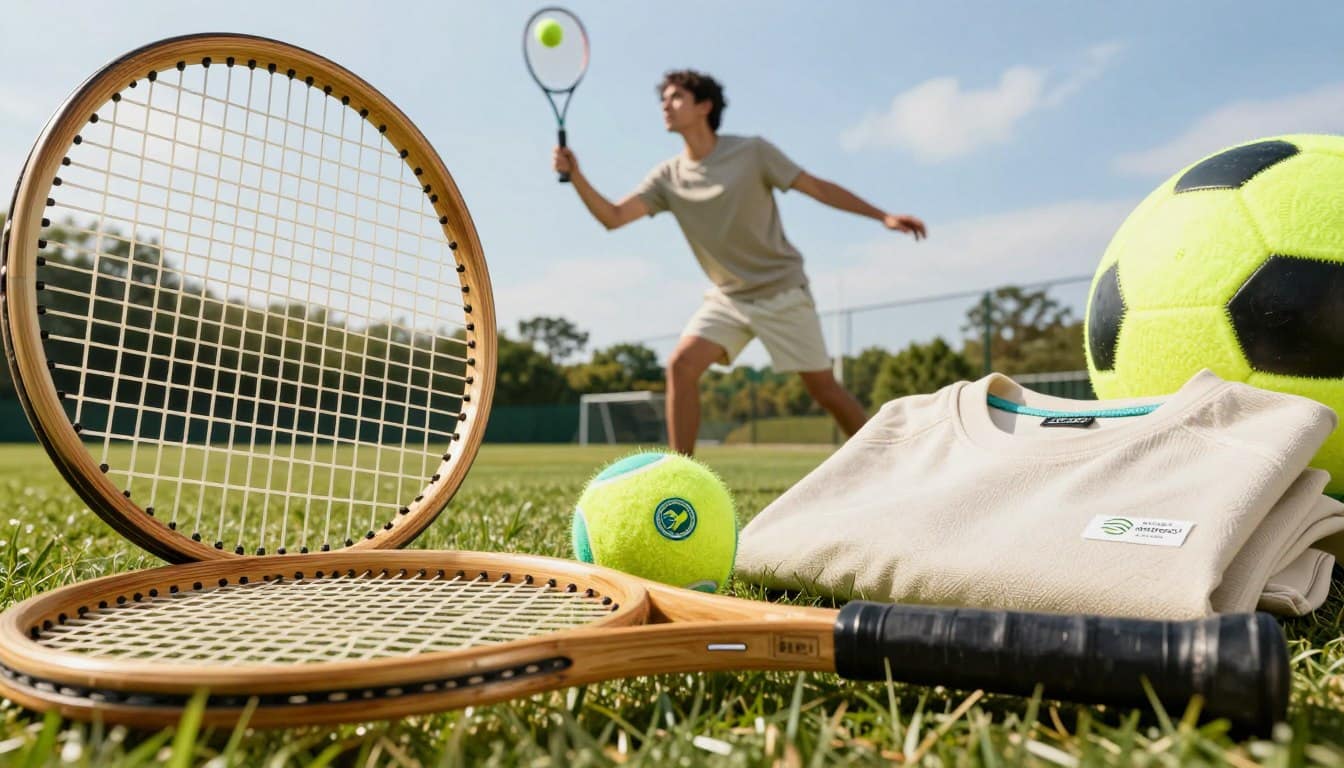
The sports world is changing, focusing more on being green. Athletes and teams are looking for ways to reduce their harm to the environment. They’re turning to green materials for their gear, which is better for the planet and helps them perform better.
Old-school sports gear often means plastic and metal, which harm our planet. But, a big change is happening. Now, we see algae-based running shoes and bamboo snowboards that are both tough and eco-friendly. Even sports jerseys made from recycled ocean plastics are outshining the old ones.
This change isn’t just about saving the Earth. It’s also about what it means to be the best in sports today. Now, everyone from casual players to Olympic athletes are using gear that’s good for the planet. It’s a new era in sports.
Overview of Sustainable Material Science
In the world of sports, sustainable material science is changing the game. Innovating sports equipment now means making it better for athletes and the planet. Designers aim to boost performance, ensure safety, and reduce harm to the environment.
Today’s top designers use the latest in materials science and digital tech. They work with the circular economy to create gear that pushes limits responsibly. The alchemy in labs today would amaze medieval wizards. We’re seeing a big shift in what sports equipment can be made from, with huge implications.
The old way was to use petroleum, make polymers, shape gear, and then throw it away. Now, we’re moving to plant-based composites. These new materials are strong, light, and better for the planet.
Materials like polylactic acid (PLA) and polyhydroxyalkanoates (PHA) break down naturally. Yet, they meet high performance standards that were once thought impossible. The circular economy is becoming a reality in sports equipment.
Companies like Haumann Technology are using recycled and sustainable materials in their products. This shows that “green” doesn’t mean “weak.” Material science now sees sustainability and performance as two sides of the same coin.
Are bio-based polymers ready for the Olympics? Not yet. But the path is clear, leading to a future where traditional materials seem old-fashioned. The journey into sustainable material science is just starting, and it will change sports equipment forever.
| Material Type | Source | Environmental Impact | Performance |
|---|---|---|---|
| Polylactic Acid (PLA) | Plant-based | Biodegradable | High strength |
| Polyhydroxyalkanoates (PHA) | Bacterial fermentation | Biodegradable | Durable |
| Carbon Fiber | Petroleum-based | Non-biodegradable | Exceptional strength-to-weight ratio |
For more insights on eco-friendly sports equipment, check out this detailed report.
Emerging Bio-based & Recycled Materials
Let’s explore the exciting world of bio-based and recycled materials in sports. Companies are using recycled plastics, sustainable wood, and plant-based fibers. These choices make sports gear eco-friendly and better for the planet. They also improve performance, making things lighter and more durable.
Adidas Futurecraft Loop is a great example. It’s a shoe made from one material, designed to be 100% recyclable. No adhesives or mixed polymers are used. This design keeps performance high while reducing landfill waste. It’s good for athletes and the planet.

Patagonia has also made a big change. They replaced neoprene with Yulex natural rubber in their surf gear. This shows that you can stay warm in cold water without using petrochemicals. The gear is just as durable and warm, proving biodegradable sports gear can be top-notch.
Nike’s Flyknit technology is another innovation. Introduced in 2012, it knits shoe uppers from a single thread. This reduces waste and boosts performance. It’s a smart way to make shoes, making us wonder why we used to cut and sew scraps together.
These advancements are not just about being green. They’re about making things better. By embracing these changes, we’re not just improving our gear. We’re also changing how we see our relationship with the environment. For more on how material science is changing sports equipment, check out this link.
Performance Impacts
Many think eco-friendly sports materials don’t perform well. But, the truth is they often match or beat traditional materials in strength and function.
Bamboo-based composites are a great example. They have a strength-to-weight ratio as good as carbon fiber. They also have a natural flex that boosts performance in snowboards and skateboards. That’s not just marketing fluff; it’s backed by materials science.
Algae-based foam midsoles also offer great performance. They return energy and absorb impacts like traditional EVA foams. Plus, they cut down on carbon emissions during production. The improvements in biomechanical optimization are truly remarkable.
Designers use 3D scanning and motion capture to make equipment fit each sport perfectly. Eco-friendly materials are keeping pace with these innovations.
Recycled carbon fiber composites are used in bikes and tennis rackets. They have the same stiffness and vibration damping as virgin carbon fiber.
The safety benefits are also significant. Bio-based foams and gels in helmets and gear reduce concussions. Phase-change materials from plants also manage temperature and moisture better than synthetic ones.
Here’s a hard truth for doubters: sustainable options are often better than expected. 3D printing and AI-driven design optimize these materials in ways traditional ones never were.
We spent years improving petroleum-based polymers. Now, we’re using that knowledge for materials that will last for generations. The gap in performance is narrowing fast. In some areas, sustainable options are already ahead.
Sourcing Challenges
Finding eco-friendly sports materials is like solving a puzzle with missing pieces. The search for sustainable options faces many hurdles, like rising raw material costs. As demand grows, so do prices. Manufacturers struggle to keep quality high, sustainability in check, and costs low.
Global supply chains make things even harder. Getting materials from different countries is complicated by logistics, trade rules, and unexpected events. The industry is growing plant-based composites, but it’s slow. When sports brands suddenly want these materials, the algae farming industry must quickly scale up. This can cause price swings and quality issues.
Recycled carbon fiber is more expensive than new materials in many places. This makes it hard for companies to be green and affordable. Bio-based polymers like PLA need crops, which can be affected by weather, pests, and land use. The question is, should we grow materials or food?
Getting certified is another big challenge. Proving materials are sustainably sourced involves a lot of paperwork. Ethical sourcing is not just a simple step; it’s a deep dive into the supply chain.
Companies like Haumann Technology are working to solve these problems. They’re using multiple suppliers and planning for supply chain issues. But, these are big hurdles. The good news is that these are problems that can be solved as demand grows and production improves.
We’ve seen this before with solar panels and electric cars. They were once expensive but became common. The question is not if plant-based composites and recycled materials can overcome their challenges. It’s how fast the industry can grow up.
| Challenge | Description | Impact on Sourcing |
|---|---|---|
| Rising Costs | Increased demand for eco-friendly materials drives up prices. | Higher production costs and possible price increases for consumers. |
| Global Supply Chains | Logistical issues and trade regulations complicate sourcing. | Inconsistent supply and longer lead times. |
| Certification Complexity | Proving sustainability requires extensive documentation. | Time-consuming processes and possible delays in production. |

Industry Adoption Trends
The sports equipment world is changing fast. Athletes are now big supporters of the environment. They push for sports gear that’s good for the planet, making brands change their ways.
Adidas is a great example. They work with Parley for the Oceans to make shoes from ocean trash. This shows that caring for the environment can also be good for business. Nike also makes a big impact with their Flyknit technology, which cuts down on waste and makes products better.
The future of sports gear that’s good for the planet looks bright. More companies are using the circular economy. They’re starting to take back old products and make new ones from them.
People are also making smarter choices when they shop. They want to buy things that match their values. Laws are getting stricter, making companies think more about how they make things.
Watching what athletes wear is more interesting than looking at company profits. To learn more about how sports and the environment are connected, check out this in-depth analysis.