

The U.S. sporting goods industry is a huge player, worth $25 billion. It works hard to make us faster, higher, and stronger. But, there’s a dark side. This industry uses a third of the world’s energy, making gear for outdoor fans.
This is ironic. We’re making products for nature lovers in ways that harm the environment. It’s a big problem.
But, there’s hope. The same industry that brought aerospace-grade carbon fiber to football pads is now looking to change. They want to make production as innovative as the products. Eco manufacturing is more than just a trend. It’s about making practices that are good for the planet and the economy.
Can an industry focused on performance also care for the Earth? Or is sustainable manufacturing sports just a marketing term? I think it’s possible, and the proof is growing.
Overview of Traditional vs. Green Processes
Imagine a sporting goods factory from 2005. It was all about making lots with little effort, without caring about the environment. Energy was cheap, and waste was someone else’s worry. The term green production was a joke back then. Now, we see a big change. The world wants change, and making things sustainably is now essential.
Factories use a lot of energy, about one-third of the world’s. As energy prices go up, it’s clear that saving money is key. Old ways focused on speed and cost, ignoring the planet. Now, making things green is a must, not just a nice thing to do.
- Energy Efficiency: Old factories thought energy was free. Green ones aim to use less, save money, and protect the planet.
- Waste Management: Old ways ignored waste. Green production focuses on managing waste well, recycling, and cutting waste.
- Material Sourcing: Old methods didn’t think about the environment. Green ones choose materials that are good for the planet.
- Product Lifecycle: Old ways didn’t think about a product’s whole life. Green production makes sure products can be recycled or break down easily.
Changing to green isn’t just a look; it’s a big change in thinking. Companies must make sustainability a core part of what they do. People want to know companies are doing the right thing, and laws are getting stricter. Going green is not just good for the planet; it’s also smart for business.
As the need for sustainability grows, companies can’t just tick a box. They must start making changes right away. The question is, will your favorite brand lead the way or follow? For more on this change, read this Deloitte blog on making things green.
Innovations in Energy, Waste, & Water Use
In the world of sports equipment, innovation is key. Manufacturers are now focusing on carbon neutral sports. Their new ways of managing energy and resources are changing the game.
Today, manufacturers are making big commitments. They’re signing 20-year power purchasing agreements for clean energy. Some are even setting up their own power plants with solar, wind, and geothermal systems. It’s like they’re ready for anything, but instead of food, they’re securing their energy.
Water and waste management are also getting a lot of attention. Digital tools give factory managers detailed insights into energy, water, and waste. Predictive maintenance helps machines run only when needed, saving energy and reducing waste.
Mondo, an Italian company known for hazelnuts, is leading in circular economy innovation. Their NINSOLA project turns hazelnut waste into sports flooring materials. It’s a game-changer, turning waste into valuable products.
Mondo also does Life Cycle Assessments to measure their environmental impact. They believe in real sustainability, not just saying it. This makes their efforts stand out from the rest.
| Innovation Type | Description | Impact |
|---|---|---|
| Renewable Energy Agreements | Long-term contracts for fixed-price renewable energy | Stabilizes energy costs and promotes sustainability |
| Digital Technology | Tools for monitoring energy, water, and waste | Enhances efficiency and reduces waste |
| Circular Economy Projects | Transforming waste into valuable materials | Reduces landfill waste and creates high-performance products |
These innovations show that sports manufacturing is evolving. It’s not just about performance anymore. It’s about being responsible. For more on customization and 3D printing in sports gear, read this article.
Automation & Material Optimization
In eco manufacturing, combining automation and material optimization is key. It’s not just about robots doing the work. It’s about changing how we make things and care for the planet.
Carbon-fiber composites have changed sports, making things stronger and lighter. They let engineers create complex shapes, reducing parts and weight. For example, a Tour de France bike now weighs just 15 pounds, down from 20 pounds 15 years ago.
Boeing and Russell Brands have turned 787 Dreamliner carbon fiber into football pads. These pads are thinner, stronger, and 10 percent lighter. Bauer Performance Sports has made hockey skates 30 percent lighter, saving players over 1,000 pounds per game.
Digital tech and lean processes have made production better, safer, and cheaper. Automation helps see how things are made, how long equipment lasts, and how much energy is used. This lets companies make better and fix things before they break.
Factories can now use less waste, water, and energy, and use more green power. This approach is not just good for the planet. It also saves money. Automation and material science together make eco manufacturing work.
| Material | Weight Reduction | Application |
|---|---|---|
| Carbon Fiber | 10% lighter than traditional | Football Shoulder Pads |
| Advanced Composites | 30% lighter | Hockey Skates |
| Carbon Fiber | 5 pounds lighter | Tour de France Bikes |
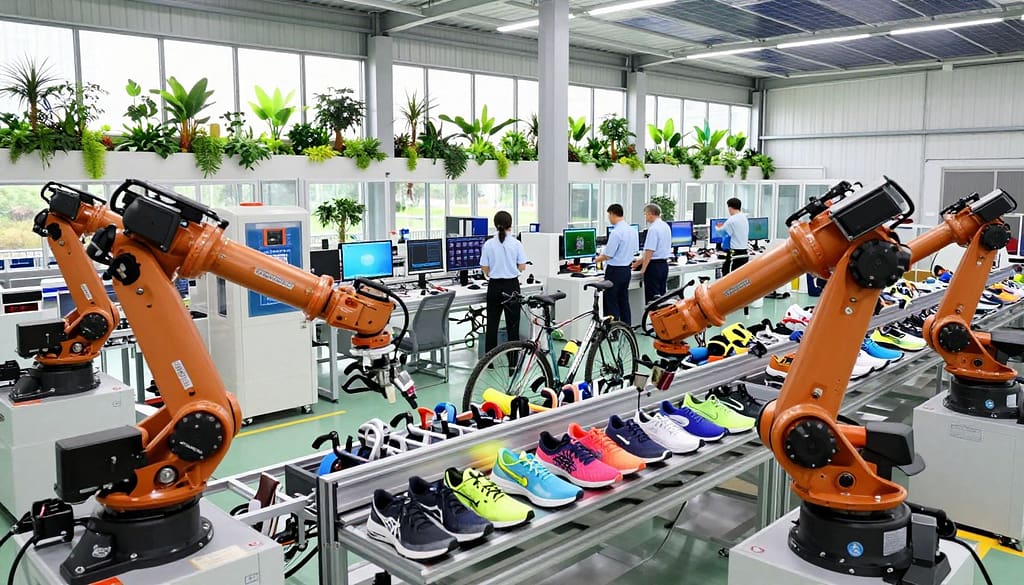
The future of making things looks bright, thanks to automation and smart materials. These changes help us make a more sustainable industry. For more details, see this in-depth look.
Certifications
Certifications are key in green production, adding credibility. They ensure claims are true, not just marketing tricks. As rules get stricter, the need for real proof grows.
Licensing bodies now demand energy savings before factories open. This isn’t a future plan; it’s today’s reality. Companies once saw green efforts as just for show are now racing to act.

The Life Cycle Assessment (LCA) is the top way to measure green efforts. Projects like Mondo’s NINSOLA focus on this, showing how products affect the environment. They believe sustainability isn’t declared, it’s measured.
Certifications do more than protect against greenwashing claims. They also help companies stand out. Today’s smart shoppers check labels and choose wisely. Companies that get this are investing in real checks, while others face tough questions.
Real change starts with leaders who truly care. It can’t be faked. Certifications prove a company’s dedication to being green. They show it’s ready for the future of production.
Cost & Quality Tradeoffs
In the world of carbon neutral sports, cost and quality are big concerns. The sporting goods industry has always been divided. There are cheap traditional materials and expensive, high-performance ones that promise strength and lightness. Sustainable manufacturing changes how we think about this.
Using renewable energy and new technologies might seem scary. But, the long-term savings are clear. Renewable energy deals can lock in prices for years, protecting against price swings. Adding solar panels or geothermal systems makes things even more stable.
Engineers have a tough job. They need to keep products strong and light while being green. Adding electronics to make things more efficient shouldn’t hurt the product’s quality. Carbon fiber composites are a great example. They’re pricier but stronger and easier to make. This can actually lower the overall cost.
Waiting to go green could be a big mistake for manufacturers. Those who don’t switch might face high energy costs. They could lose customers to companies that are green and get certifications. Plus, cleaner air and less pollution are nice bonuses.
Choosing carbon neutral sports isn’t just a moral choice. It’s also smart for business. Brands that go green will do well, while those that don’t might fall behind.