
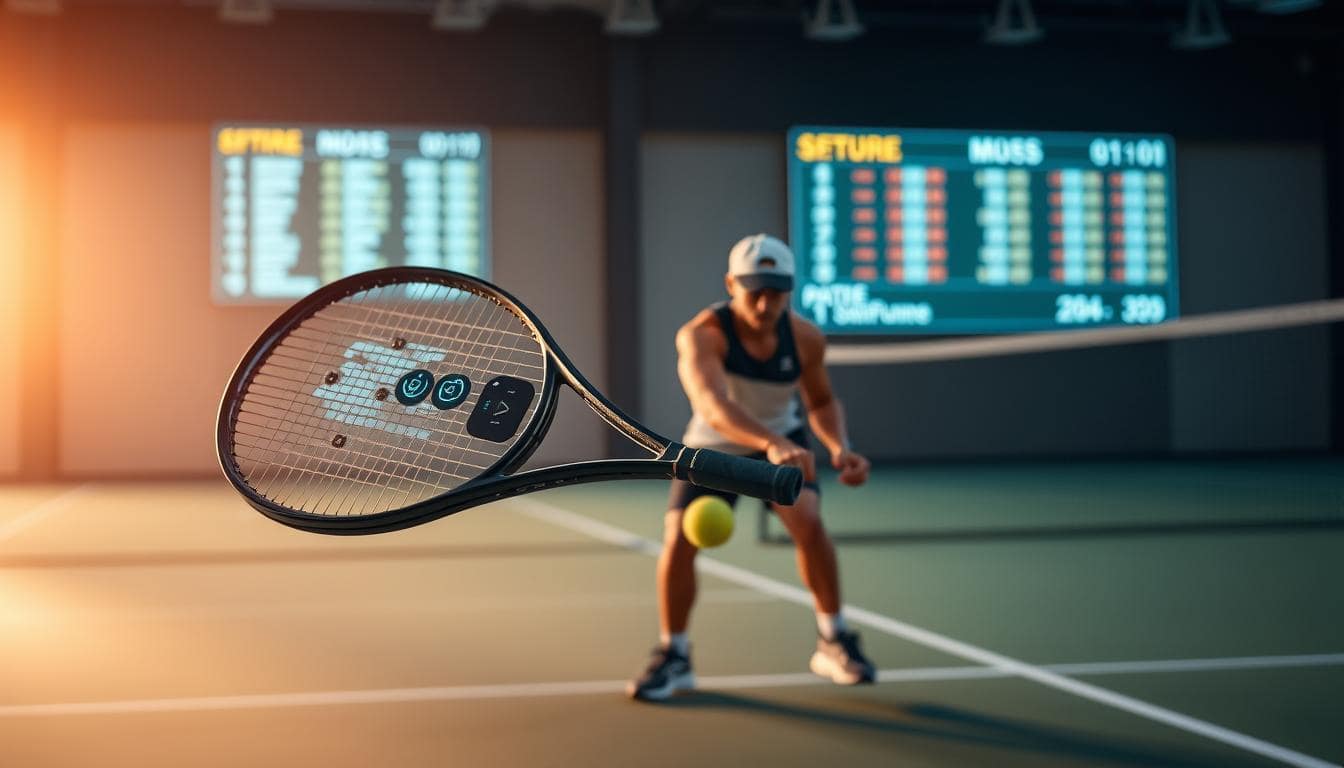
Do you remember the sound of iron plates and the smell of old leather? The old gym was filled with dumb iron and static weight. Now, we have devices with more power than the Apollo 11 computer.
This change is more than just an upgrade. It’s a complete shift. Your gear is now a data collector, like a lab on your wrist or shoe. It tracks more than just steps. It checks your form, fatigue, and technique.
This new gear is made possible by combining hardware and intelligence. Tiny sensors capture every detail of your movement. The firmware, or software, turns this data into useful information. But, we must handle this data responsibly.
Before adding sensors, we need to think about ethics. We must ask if we should build it, and for whom. Privacy by Design is key here. It ensures users have control over their data. The new standard is not just about what the gear can do. It’s about the ethics behind it.
This shift from old iron to smart gear is a journey. It involves embedded software, choosing the right parts, and rethinking our gear’s purpose. It’s not just about getting smarter gear. It’s about building a better relationship with our technology and personal data.
1. The New Frontier: The Rise of the Smart Gear Ecosystem
Remember when “smart” shoes just had cool colors? Those days are over. Now, we live in a world where all your gear talks to each other. Your shoes, racket, basketball, and headband share secrets about how you’re doing.
This is more than just a fitness tracker on your wrist. It’s a whole digital world. The firmware acts like a conductor, turning sensor data into useful information.
1.1 From Passive Gear to Active Partner
Your old gear was just a tool. Today, it’s a partner. It doesn’t just endure your workout; it analyzes it.
Your tennis racket is now a swing analyst. Your basketball is more than just a ball; it collects data on every shot.
This change makes athletes co-pilots. The gear is no longer just a tool but a coach in your corner. It guides you, saying, “Try this.”
1.2 The Core Triad: Hardware, Firmware, and Actionable Data
This ecosystem works on a core triad. Understanding this triad is key to the smart gear revolution.
The Hardware is the physical part, like sensors and battery. The Firmware is the brain, turning sensor data into something useful. And the Actionable Data is the insight, like how your backhand is weaker than usual.
The magic is making this triad seamless. The hardware must be strong, the firmware efficient, and the data clear. This is where the ecosystem comes alive, connecting with your health apps.
Here’s how this evolution works:
| Feature | Traditional Gear | Smart Gear |
|---|---|---|
| Primary Function | Passive use; no feedback. | Active analysis; provides real-time and post-activity feedback. |
| Data Output | None. | Raw sensor data processed into actionable metrics (e.g., form, power, efficiency). |
| User Role | Passive user of a tool. | Active collaborator with an intelligent partner. |
| Connectivity | None. | Integrated into a larger ecosystem via Bluetooth, Wi-Fi, and app integrations with platforms like Apple Health or Strava. |
The table shows the big change. The gear is now part of a network. It’s like the difference between a hammer and a smart hammer that shows your swing efficiency. That’s the new frontier, and it’s in your gym bag.
2. The Sensor Suite: The Sensory Organs of Smart Gear
Forget the five senses. Today, smart gear has a sixth sense. It can tell a running shoe when to adjust your step or a smart basketball when to check your shot. This is thanks to the sensor suite, the eyes, ears, and nerves of smart gear.
It turns raw physical data into useful information. This makes even simple gear into a smart, data-rich partner.
Inertial Measurement Units (IMUs): The Motion Core
At the heart of most smart gear is the Inertial Measurement Unit, or IMU. It’s like the gear’s inner ear and eye combined. A tiny, advanced black box that captures every movement.
An IMU isn’t just one sensor. It’s a mix of three, each focusing on a different type of movement.
Accelerometers: Tracking Linear Motion and Impact
The accelerometer is the gear’s sense of balance and movement. It tracks changes in speed along a straight line. In a smart basketball, it knows how hard you dribbled.
In a smart running shoe, it counts your steps. It also measures the force of impacts. When a smart helmet’s accelerometer detects a strong impact, it alerts you.
Gyroscopes: Measuring Rotation and Angular Velocity
The gyroscope is the spin expert. It tracks the rate of rotation around an axis. This tells a smart golf club the clubface’s exact angle at impact.
It knows when you did a 360 on your smart skateboard or a perfect pirouette on your smart yoga mat.
Magnetometers: Establishing True North
An accelerometer and gyroscope are powerful but can lose their sense of direction over time. This is where the magnetometer comes in. It senses the Earth’s magnetic field, giving a true direction.
It lets a smart golf putter know its direction and a smartwatch always know north, no matter how you move it.
The Supporting Sensor Ensemble
While the IMU is key, it’s not alone. The supporting sensor ensemble adds more context. It turns a simple motion tracker into a full sports analyst.
Force and Pressure Sensors for Load Analysis
Pressure sensors in smart gear map your weight distribution. In a smart baseball bat or hockey stick, they measure grip pressure and impact force. This data helps analyze a golf swing or a pitcher’s mechanics.
GPS/GNSS Modules for Geolocation and Speed
IMUs track small movements, but GPS/GNSS modules navigate the big picture. They provide exact position and speed. In a smart cycling computer or running watch, they track your route and pace.
When combined with IMU data, they create a precise picture of your movement.
Environmental Sensors: Altitude, Temperature, and Humidity
Performance is affected by the environment. An altimeter tracks elevation gain for hikers. Temperature and humidity sensors provide context. A 6-minute mile in 90°F is different from the same run in 60°F.
This data is key for smart gear in trail running, cycling, or mountaineering.
Sensor Suite Comparison
The table below shows the roles of key sensors in smart gear:
| Sensor Type | Primary Function | Example in Action | Key Data Output |
|---|---|---|---|
| Accelerometer | Measures linear acceleration and impact forces. | Tracking footstrike force in a smart running shoe. | G-force, step count, impact magnitude. |
| Gyroscope | Measures angular velocity and rotational movement. | Measuring club face angle in a smart golf club. | Rotation rate, spin, orientation. |
| Magnetometer | Detects Earth’s magnetic field for absolute orientation. | Providing a stable compass heading for a smartwatch. | Absolute orientation (yaw). |
| Force/Pressure | Mechanical force or pressure applied to a surface. | Measuring weight distribution on a smart yoga mat. | Pressure (PSI), force (Newtons). |
| GPS/GNSS | Determines global position and speed via satellite. | Mapping a run or bike ride with location and pace. | Latitude, Longitude, Speed, Elevation. |
| Barometer | Measures atmospheric pressure. | Calculating altitude gain for a hiker. | Altitude, barometric pressure. |
This fusion of data is where the magic happens. The IMU’s motion data, corrected by the magnetometer, is mixed with GPS and environmental data. This mix, processed by the firmware, turns raw data into a story about an athlete’s performance.
3. The Digital Brain: Firmware and Microcontroller Architecture
The sensors are like the nervous system of your smart gear. The firmware is the brain, and the microcontroller is its skull. It’s not just code; it’s about building a tiny, efficient brain that runs for months on a coin cell.
This brain must process data in real-time and sometimes send updates. It’s like a tiny drama on a silicon stage the size of your thumbnail.
3.1 Choosing the Right Microcontroller: From ARM Cortex-M to ESP32
Choosing a microcontroller isn’t just about specs. It’s like choosing a character for a play. You need to decide if you want a minimalist or a power-hungry device. The microcontroller is the stage, and your firmware is the play.
Picking the wrong one is like casting a mime in King Lear. It’s technically correct but misses the point.
3.1.1 Balancing Processing Power with Power Consumption
Embedded design is all about balancing brainpower and battery life. A powerful Cortex-M7 can do lots but drains batteries fast. On the other hand, a lowly Cortex-M0+ sips power but might struggle with complex tasks.
The trick is finding the right balance. An ESP32 might be too much for a simple step counter but perfect for Wi-Fi. It’s about choosing the right tool for the job.
3.1.2 Memory, I/O, and Peripheral Requirements
Memory is like the workspace of your firmware’s mind. Too little, and it forgets mid-calculation. Too little flash, and it can’t fit all its features.
You’re not just picking a chip; you’re choosing a home for your code. Does it have enough GPIO pins for sensors? Does it have the right buses for peripherals? This is where you ensure your device runs elegantly.
| MCU Family | Core Architecture | Power Profile | Ideal Use Case | Key Peripherals |
|---|---|---|---|---|
| ARM Cortex-M0+ | ARMv6-M (Cortex-M0+) | Ultra-Low Power (µA/MHz) | Simple sensors, wearables, always-on devices | Basic I/O, ADC, Low-Power Timers |
| ARM Cortex-M4/M7 | ARMv7-M (with FPU on M7) | Balanced Performance | Real-time sensor fusion, basic audio processing | Advanced Timers, DSP, FPU (M7) |
| ESP32 | Xtensa LX6 (Dual-Core) | High-Performance, Wi-Fi/BT | Connected devices, gateways, complex processing | Wi-Fi, Bluetooth, BT-LE, I2S, I2C, SPI |
| RP2040 (Raspberry Pi Pico) | ARM Cortex-M0+ Dual-Core | High-Performance, Low-Cost | Prototyping, education, complex I/O projects | PIO, USB, versatile I/O |
3.2 Real-Time Operating Systems (RTOS) and Firmware Logic
The MCU is the brain, and the RTOS is the hyper-organized assistant. Without it, your firmware is disorganized. With it, you have a conductor for your sensor symphony.
3.2.1 Sensor Fusion Algorithms and Real-Time Data Processing
Your IMU says you’re running, but the GPS says you’re standing. The firmware must decide. Sensor fusion algorithms, like Kalman filters, mediate this conflict.
They take noisy data and calculate a single truth. This is digital diplomacy. The firmware must do this continuously, with millisecond precision.
3.2.2 Task Scheduling and Interrupt-Driven Design
An RTOS like FreeRTOS or Zephyr is the maestro of this chaos. It schedules tasks and handles interrupts. When a button is pressed or a sensor threshold is crossed, it’s not a suggestion—it’s an interrupt.
The firmware drops everything to handle it immediately. This isn’t multi-tasking; it’s multi-juggling with a dozen flaming torches, and the RTOS is the juggler.
This foundation is what makes secure, reliable OTA updates possible. A well-designed firmware architecture with robust task scheduling is what allows new features to be beamed to a device in the field without a hitch. It’s the difference between a product and a platform.
4. The Connectivity Lifeline: BLE, Wi-Fi, and Data Transmission
Forget the cloud for a moment. The real magic of smart gear happens in the silent, invisible conversations between your wearable and your phone. This isn’t just about moving data; it’s about the nervous system of your smart equipment. It’s a digital dialogue, a constant, low-power negotiation between sensor and screen, with your smartphone as the primary translator. This section is about the unsung heroes of this conversation: the low-power whispers of BLE, the stadium-rock concert of Wi-Fi, and the smartphone app that makes it all make sense to you.
4.1 Bluetooth Low Energy (BLE): The Standard for Proximity and Low Power
BLE is like the quiet, efficient butler of the wireless world. Unlike Classic Bluetooth, it doesn’t use a lot of power. It’s perfect for sending small amounts of data, like your heart rate, to your phone. This low-power, short-range protocol is great for your gear, keeping your phone’s battery alive.
BLE’s genius is in its efficient communication. It sends data quickly and then goes back to sleep. For wearables, this is the golden standard for proximity and persistent, power-sipping data transfer.
4.2 Wi-Fi and Direct-to-Cloud for High-Bandwidth Applications
If BLE is a private conversation, Wi-Fi is the stadium PA system. Sometimes, your gear needs to shout, not whisper. When your smart goggles are capturing high-definition footage or your smart basketball is logging a complex motion path, BLE’s data rate is too slow.
Enter Wi-Fi. It’s the high-bandwidth workhorse for when you need to push large data packets. This direct-to-cloud approach is great for high-fidelity data, but it’s power-hungry. It gets the job done fast, but it’ll drain your battery if you’re not careful.
4.3 The Smartphone App as the Primary User Gateway
Your smartphone isn’t just a screen; it’s the Rosetta Stone of your smart gear. The raw data from your sensors is a foreign language of 1s and 0s. The companion app is the interpreter, the translator, and the storyteller.
It’s where the cryptic stream of numbers from your BLE-connected smart jump rope becomes a readable, visual story of your workout. This app is more than a dashboard; it’s the command center, the data aggregator, and the user’s primary touchpoint. It’s where the raw data from the BLE or Wi-Fi stream is transformed into actionable, human-readable insights, turning a stream of sensor pings into a narrative of your performance.
5. The Art of Power Management
If your smart gear uses a lot of power, you’re not doing it right. In the world of sports tech, it’s not about being fast. It’s about being smart and using power wisely.
This means your device should only work when it needs to. It should be like a cat, sleeping a lot but ready to act fast. This is what power management is all about.
It’s not just about saving battery. It’s about using power in a smart way. A good device lasts longer and works better because of this.
Microcontroller Sleep Modes and Duty Cycling
Your microcontroller should be like a smart intern, not a hyperactive one. It should only work when it needs to, saving power. Modern devices can do this by sleeping a lot and working a little.
This is called duty cycling. The device works hard for a short time, then sleeps. It’s like a martial artist, using power wisely.
Peripheral Power Gating and Intelligent Sensor Polling
Why use power when you don’t need to? Power gating turns things off when not in use. This saves a lot of power.
It’s like turning off lights in rooms you’re not in. This, combined with smart sensor use, makes devices even more efficient. It’s all about using power when it’s needed most.
Advanced Strategies: Energy Harvesting and Ultra-Low-Power Designs
But there’s more to power management than just saving power. It’s about finding new ways to use energy. This is where we get creative.
Energy harvesting uses the environment to get power. For example, a smart insole can get power from your steps. Ultra-low-power designs also play a big role here.
These designs use less power and can even get power from the environment. It’s about making devices that last longer and do more.
In the end, good power management makes devices better. It’s what makes a gadget reliable and useful. It’s all about making things work well without using too much power.
6. Intelligence on the Edge: Local Data Processing
For too long, “smart” gear has just been a data mule. It sends your data to a server for processing. But when the gear starts thinking for itself, that’s when the magic happens.
This is the frontier of edge computing in sports tech. It moves the brain into the device itself.
This shift from cloud-dependent to a “smart node” is a game-changer. It’s like the difference between a security camera that just records and one that alerts you. In sports, it’s the difference between a smartwatch that logs your heart rate and a smart racket that corrects your backhand in real-time.
6.1 On-Device Sensor Fusion and Data Filtering
Before any edge ML magic can happen, the raw data from sensors must be tamed. An IMU, a gyroscope, and a force sensor might all be talking at once. On-device sensor fusion is the process of synthesizing these disparate data streams into a single, coherent, and accurate picture of the physical world.
Think of it like a band. Each sensor is an instrument. Sensor fusion is the process of conducting them into a symphony, not a cacophony. This happens directly on the microcontroller, fusing accelerometer, gyroscope, and magnetometer data to create a stable, drift-corrected orientation. This “sensor fusion” is the first, critical step in turning raw, jittery data into a clean, actionable signal. It’s the proprioception of your smart gear—its innate sense of self-movement and position.
6.2 Edge Machine Learning for Real-Time Feedback
This is where the “intelligence” in “smart gear” earns its name. Edge ML models are the crown jewel of local data processing. Instead of shipping your golf swing data to a server and waiting for a verdict, a trained machine learning model runs directly on the device’s microcontroller.
Imagine a smart basketball with embedded sensors. An edge ML model, trained on thousands of shots, can analyze the release angle, spin, and force of a shot as it happens. It doesn’t need to ask a server for permission. It can provide instant, real-time feedback: “Shot too flat, increase arc.” This is the difference between a post-session analysis and an in-the-moment coach. The key advantage is privacy and speed: your biomechanical data never leaves the device, and the feedback is instantaneous.
6.3 Reducing the Cloud Bill (and Your Data Bill)
Let’s talk about the cloud. It’s not a magical, infinite resource. Every byte of raw sensor data you stream to it costs money in bandwidth, processing, and storage. By processing data on the edge, you transmit only what’s necessary: the insight, not the raw firehose of data.
Consider a smart jump rope counting reps. A naive design sends every single jump event to the cloud. The edge ML approach? The on-device processor counts the reps, timestamps them, and only sends a small summary packet: “30 reps completed in 2 minutes.” The data transmission cost is a fraction of the raw feed, the cloud compute cost plummets, and the user gets their stats instantly.
The table below highlights the operational shift:
| Processing Model | Latency | Data Cost | Privacy Posture | Use Case |
|---|---|---|---|---|
| Cloud-Centric | High (network + server lag) | Very High (raw data stream) | Data leaves device, higher risk. | Post-session analysis, complex model training. |
| Edge-Centric | Ultra-Low (on-device) | Minimal (summary data) | Data stays on-device, more private. | Real-time feedback, low-latency feedback loops. |
The financial and performance implications are stark. Edge processing turns a continuous, expensive data firehose into a trickle of meaningful, pre-digested information. It’s the difference between shipping a raw, 4K video of your workout and sending a single tweet summarizing your performance.
Summary: The Edge ML Advantage
Adopting edge ML isn’t just a technical upgrade; it’s a fundamental redesign of the product experience. The table below summarizes the core benefits that make edge processing a game-changer for smart sports equipment.
| Benefit | Description | User Impact |
|---|---|---|
| Real-Time Responsiveness | On-device processing eliminates network latency, enabling instant feedback and alerts. | Immediate form correction, injury prevention cues. |
| Enhanced Privacy | Biometric and motion data is processed locally, never leaving the device. | Increased user trust and data sovereignty. |
| Reduced Cloud Costs | Massively reduces data egress and cloud processing costs. | Lower operational costs, longer device battery life. |
| Offline Functionality | Core intelligence works without an internet connection. | Seamless experience anywhere, anytime. |
In the end, moving intelligence to the edge is what turns a connected dumbbell into a sentient training partner. It’s the final step in the evolution from passive gear to active, intelligent partner.
7. Firmware Over-the-Air (FOTA) Updates: The Heart Transplant on the Fly
Remember when products were static and never changed? Those days are gone. Now, the products you buy start a journey to get better. FOTA updates can turn your gear into a smarter, more capable partner. This happens without you needing to send it back to the factory.
A firmware over-the-air update is like a heart transplant while running a marathon. Your smart gear keeps working while its core software is updated. It’s a high-wire act of engineering that’s invisible to the user. It’s a promise of a product that gets better after you buy it.
7.1. Building a Secure and Robust Update Mechanism
An OTA update is a critical, high-stakes procedure. The update mechanism must be more secure and reliable than the systems it upgrades. It starts with a secure bootloader, the device’s digital conscience.
When an update package arrives, it’s not blindly accepted. It’s first authenticated with a cryptographic signature. This ensures it’s a legitimate update from the manufacturer, not an imposter.
The update package is delivered in a secure, encrypted channel. The process involves several key stages:
| Stage | Component | Function | Security Mechanism |
|---|---|---|---|
| 1. Discovery & Download | Update Server & Device Client | Securely fetches the encrypted firmware package and verifies the digital signature from the vendor. | HTTPS/TLS, Signed Manifests |
| 2. Validation & Authentication | On-Device Bootloader | Verifies the cryptographic signature of the update package before any write operation begins. | Cryptographic Signature Verification |
| 3. Installation | Update Client & Bootloader | Writes the new firmware to the device’s memory, typically to the inactive partition. | Atomic Writes, CRC Checks |
| 4. Verification & Rollback Check | Boot Manager | After installation, the system verifies the new firmware boots correctly; if not, it falls back to the previous version. | Health Checks, Boot Counters |
7.2. A/B Partitioning: The Magician’s Sleight of Hand
This is where the real magic happens. A/B partitioning is the secret. Your smart gear has two firmware sets: Partition A and Partition B. Partition A is active, and Partition B is inactive.
When an OTA update is delivered, it’s written to Partition B. The user is none the wiser. The device runs normally on Partition A. Only when the update is fully written and verified does the magic happen.
Upon reboot, the bootloader boots from Partition B, now with the new firmware. Partition A becomes the inactive, fallback slot. This is the core of a brick-proof update mechanism.
| Partition Slot | State During Update | Function During Update | Fallback Capability |
|---|---|---|---|
| Partition A (Active) | Running current firmware (v1.0) | Serves as the active, running system. | Becomes the fallback if Partition B fails. |
| Partition B (Inactive) | Receiving & verifying v1.1 update | Receives and validates the new firmware image. | Will become the active partition on next boot. |
| After Reboot | Roles Swap | B (v1.1) becomes active. A (v1.0) becomes inactive backup. | If B fails to boot, system can roll back to A. |
7.3. The OTA Pipeline: From Dev to Device, Seamlessly
The journey of an OTA update is a well-planned expedition. It moves from a developer’s code to millions of devices, safely and reliably.
It starts in the development environment, where the new firmware is built and signed. This “golden image” is then uploaded to a secure, highly-available content delivery network (CDN). The OTA pipeline manages the critical logistics, rolling out updates in stages. It monitors for any failure rates. If a critical bug is detected, the system can halt the rollout immediately.
| Pipeline Stage | Key Activities | Gate/Checkpoint | Outcome |
|---|---|---|---|
| 1. Development & Signing | Code commit, automated build, signing with secure keys. | Automated QA & Security Scan | Signed, encrypted firmware binary. |
| 2. Staging & Canary Release | Deploy to internal & beta testers. Monitor for crashes/errors. | Stability & Performance Metrics | Go/No-Go decision for wider release. |
| 3. Phased Rollout | Gradual release to 1% -> 10% -> 50% -> 100% of user base. | Continuous monitoring of failure & rollback rates. | Controlled, low-risk deployment. |
| 4. Full Deployment & Monitoring | Full user base receives the update. Rollback mechanism is kept on standby. | Aggregate health metrics, user feedback. | Successful, stable update deployed to all. |
This isn’t just about patching bugs. It’s about the FOTA mechanism enabling a living product. The smart gear you buy today isn’t just a tool; it’s a platform that can learn new tricks, adapt to new sports science, and fix its own flaws, all while you sleep. The heart transplant is complete, and the patient is not only alive but sprinting.
8. Calibration, Testing, and Data Validation
In the world of smart sports equipment, apps and metrics get all the attention. But behind the scenes, calibration and validation are key. They turn gadgets into tools that give you real, useful insights.
This process makes data reliable. It turns sensor readings into something you can use to improve your performance.
Factory Calibration and User-Initiated Recalibration
Every smart device starts with a NIST-traceable calibration in the factory. This is a precise setup, like a Swiss watchmaker’s work. But, the real world isn’t perfect.
Over time, sensors can drift. This is why recalibration is important. It’s a way to keep your device accurate.
Recalibration is easy and user-friendly. It’s like resetting your device to its best state. This is what makes smart gear more than just a toy.

Simulating Real-World Use Cases in Environmental Chambers
Your smart gear is meant to work anywhere, from hot Arizona trails to cold Nordic ski tracks. But can it really handle these conditions? That’s what environmental chambers test.
These chambers can change temperature and humidity quickly. They test if your device works well in extreme conditions.
We’re not just checking if devices work. We’re testing their limits. Does your smart basketball track your jump height accurately in heat? Does your smart racket stay precise after many swings in humidity?
This isn’t just about durability. It’s about keeping data accurate, even when it’s hard.
Validating Data Against Gold Standard Laboratory Equipment
This is the last test. Your smart gear says you did 850 watts on your last bike sprint. But is that true? The only way to know is to compare it to lab equipment.
Lab equipment like Vicon motion capture systems are the gold standard. They check if your device’s data is accurate.
This validation is essential. It shows if your device’s claims are real or just marketing. It turns smart gadgets into tools athletes can trust.
In the end, calibration and validation are heroes. They make smart gear reliable. When your device gives you a number, you can trust it.
9. Privacy by Design: A Non-Negotiable Foundation
In today’s world, personal data is as valuable as oil. Building smart sports gear without privacy by design is like building on quicksand. It’s not something you can add later. It must be the base.
This isn’t just about following rules. It’s a way of designing things. In a world full of data breaches, trust is everything. Let’s start building it from the beginning.
9.1 Data Minimization and Purpose Limitation
Don’t collect too much data. The first rule of data governance in smart gear is to only collect what you need. This isn’t about being stingy with data. It’s about being smart with it.
Collect only what you need for the user’s experience or the product’s function. If it doesn’t serve a purpose, don’t collect it.
This approach makes your system safer and easier to manage. Ask yourself if each piece of data is necessary. Does it need to be linked to the user’s identity? Can you keep some data anonymous?
- Collect with Intent: Know why you’re collecting each piece of data. “We need GPS for route tracking” is okay. “We’re collecting it just in case” isn’t.
- Limit Access: Control who can see what data. The motor control firmware doesn’t need to know the user’s email.
- Define Data Lifespan: How long does the data from a Tuesday morning run matter? If it’s not needed, delete it. Less data stored means less risk.
9.2 Anonymization, Pseudonymization, and the Power of the Edge
Now we focus on protecting the data. When you must collect data, aim to remove personal details quickly. This isn’t just a privacy feature; it’s a key part of data governance.
- Anonymization: The best way to protect data. It makes the data useless for identifying individuals. It’s like turning a detailed biography into a statistic.
- Pseudonymization: A good middle ground. It replaces personal details with a random token. The real details are kept safe, allowing for useful analytics without revealing identities.
Processing data on the device is the smartest move. On-device processing keeps sensitive data safe. Only share the insights, not the raw data.
9.3 Transparent Data Practices and Granular Consent
Transparency is key for user trust. “Privacy by Design” means nothing if it’s hard to understand.
Transparency is a conversation, not just a legal form. Explain how your data collection helps the user. Show them how to control their data.
Granular consent is the way to go. Don’t make users choose all or nothing. Offer clear choices for each type of data.
| Data Type | Purpose | Consent Required | User Control |
|---|---|---|---|
| Motion & Performance Data | Provide swing analysis and fatigue alerts | Opt-in (Default: On) | User can disable, but limits core features |
| Location Data | Map your running/cycling routes | Opt-in (Default: Off) | Can be toggled per session |
| Biometric Data (HR, SpO2) | Calculate effort zones and recovery | Opt-in (Default: On for health features) | Can be disabled, limits health insights |
| Data for R&D | Anonymized data for product improvement | Separate, explicit opt-in | Can be revoked anytime |
This approach is not just about following rules. It’s about building trust. It tells users, “You are in control.” In a world of data exploitation, that’s the most powerful thing you can offer. Privacy by design is not a barrier to innovation; it’s the foundation of a product people can trust.
10. Cybersecurity and Data Governance
If your smart basketball could talk, the last thing you’d want it to say is, “I’ve just been hacked.” In today’s world, your tennis racket knows your backhand is weakening. Your running shoes can even diagnose your form. This isn’t just about your step count; it’s about your location, heart rate, and performance peaks and valleys.
Treating this data with the highest level of cybersecurity is essential. It’s not just good practice—it’s the core of user trust. We’re not just protecting data; we’re protecting a person’s athletic identity. This is about building a digital Fort Knox around the most intimate details of a person’s physical performance.
The sensors are the senses, the firmware is the brain, and the cybersecurity layer is the immune system. Without it, the entire organism is vulnerable. This section isn’t about fear-mongering; it’s about architectural necessity. We’ll explore the non-negotiable layers of security that transform a connected device from a privacy liability into a trusted, intelligent partner.
10.1 End-to-End Encryption and Secure Booting: The Digital Immune System
Let’s start at the very beginning: the boot process. Secure booting is your device’s immune system. It’s the process that ensures only trusted, cryptographically signed firmware can run on the device. Think of it as a bouncer with a very, very specific guest list.
If a malicious actor tries to load an unauthorized firmware update, the secure bootloader stops it cold. This is your first, fundamental line of defense. It ensures that every time your smart gear powers on, it’s running the code you—and only you—authorized.
But what about the data in transit? This is where end-to-end encryption (E2EE) is non-negotiable. From the moment a sensor on your smart rowing machine captures your stroke power and heart rate, that data should be encrypted before it even leaves the device. It should travel to your phone, to the cloud, and to your coach’s dashboard as an unreadable jumble to anyone but the intended recipient.
This isn’t just about the cybersecurity of the data, but the sanctity of the user’s biometrics. We’re not just encrypting data; we’re encrypting effort, progress, and personal limits.
10.2 Hardware Roots of Trust and Secure Enclaves
Software security is a good start, but it’s a castle built on sand without hardware-level protection. This is where Trusted Execution Environments (TEEs) and Secure Elements (SE) come in. Imagine a vault within the main processor—a physically isolated, tamper-resistant area.
Within this hardware-secured enclave, the device can store the most sensitive data, like unique device IDs, encryption keys, and biometric templates. Even if the main application is compromised, this secure zone remains a black box to attackers. It’s the equivalent of a bank vault inside a bank vault.
For smart sports gear, this means the cryptographic keys that authenticate your device to the cloud, or the algorithm that processes your unique rowing stroke signature, are stored in a place that is, for all intents and purposes, impenetrable to software-based attacks. This is the hardware-backed cybersecurity that moves a product from “connected” to “trustworthy.”
10.3 The Rulebook: GDPR, CCPA, and Beyond
Compliance isn’t just a legal checkbox; it’s a design philosophy. Regulations like the EU’s General Data Protection Regulation (GDPR) and the California Consumer Privacy Act (CCPA) aren’t bureaucratic red tape—they’re a ready-made blueprint for ethical data stewardship. For a smart sports device, this means designing for principles like:
- Data Minimization: Don’t collect what you don’t need. Does your smart jump rope really need to know my location with GPS precision, or just that I made 1,000 jumps?
- Purpose Limitation: If I give you my heart rate to track my workout, you don’t get to use it to sell me a new brand of heart-rate-tracking underwear.
- User Consent & Control: This is the cornerstone. It’s not a one-time “I Agree” buried in a 50-page document. It’s granular, informed, and revocable. A user should be able to say, “Yes to performance analytics, no to sharing with third-party coaches, and delete all my data on request.”
Building for GDPR/CCPA from the ground up forces a cybersecurity mindset that is proactive, not reactive. It shifts the question from “Can we collect this data?” to “Should we, and for what explicit purpose?” This isn’t a legal burden; it’s a competitive advantage in a world where users are increasingly data-savvy and privacy-conscious.
| Security Layer | What It Protects | Implementation in Smart Gear | User Benefit |
|---|---|---|---|
| Secure Boot & Firmware Signing | Device Integrity | Only manufacturer-signed firmware can run, blocking malware. | Guarantees the device is genuine and unaltered. |
| End-to-End Encryption (E2EE) | Data in Transit/At Rest | Data is encrypted from sensor to cloud. Even the service provider can’t read it. | Personal biometric data remains private, even from the service provider. |
| Hardware Security Module (HSM) | Encryption Keys & Identity | Keys are generated and stored in a secure chip, never exposed to the main OS. | Keys cannot be stolen via software; device cannot be cloned. |
| Data Minimization & Anonymization | User Privacy | Only necessary data is collected locally, and is anonymized before aggregation. | User activity is private and cannot be traced back to an individual. |
| Granular User Consent | User Autonomy | App provides clear, toggled consent for each data type (e.g., GPS, heart rate, sharing). | User controls their data destiny, building deep trust in the brand. |
Ultimately, robust cybersecurity and data governance are not features; they are the foundational bedrock of any smart sports product. They are the reason a user will trust their most personal performance data to a device. It transforms a clever gadget into a trusted coach and a guardian of your most personal data. In the race to build the smartest gear, the winner won’t just be the one with the best sensors, but the one that secures them the best.
11. The Smart Sports Equipment Ecosystem
In the world of smart gear, a single device is just a gadget. The real magic happens when your equipment works together. Your smart basketball talks to your shoes, which then tell your smartwatch to remind you to drink water.
This is more than just one device. It’s a symphony of connected data. The true value of your gear is in how it works with other devices, not just its own data.
Think of it as digital diplomacy. Your gear isn’t just collecting data; it’s negotiating with other devices. Your heart rate monitor talks to your phone, which then talks to a cloud analytics service.
This ecosystem isn’t a luxury; it’s essential. It turns raw sensor data into a story of your performance. For more on this, see the latest smart sports equipment market analysis.
11.1 API Design: The Digital Handshake
If your smart gear were a country, its API is its foreign policy. It’s not just a technical spec; it’s a protocol for peace and trade with other digital nations. A well-designed API is your ambassador to the outside world.
Good API design is less about the code and more about diplomacy. It requires clear rules (endpoints) for how third-party apps can request data or send commands. It needs robust security to exchange credentials safely.
The goal is to be a good neighbor in the digital ecosystem, not a walled garden. This means having good documentation and a versioning strategy that doesn’t break existing app integrations.
11.2 Seamless Synchronization with Health Platforms
Your smart gear’s data is only as good as its reach. The most elegant data is useless if it’s trapped in a proprietary app. This is where synchronization with universal platforms like Apple Health, Google Fit, and Strava becomes critical.
Syncing isn’t just a data dump. It’s a translation job. Your gear might measure “power output” in Newton-meters, but Apple Health speaks in terms of “active calories.” A smart ecosystem translates your proprietary metrics into a common language (like FHIR for health data) that platforms understand.
This isn’t just a technical handoff; it’s a value proposition. By feeding data into these central hubs, your gear becomes a first-class citizen in the user’s broader health and fitness narrative. The user gets a unified dashboard of their health, and your gear becomes an indispensable, connected piece of that puzzle.
| Platform | Primary Data Types | Key Integration Consideration |
|---|---|---|
| Apple Health | Workouts, Heart Rate, Sleep, Steps | Requires strict privacy permissions and HKWorkoutSession for background data. |
| Google Fit | Activity, Heart Points, Move Minutes | Leverages Google’s Activity Recognition API for automatic activity detection. |
| Strava | GPS Routes, Power, Heart Rate, Cadence | Requires OAuth 2.0 for secure, token-based API access for uploads. |
11.3 The Cohesive Multi-Device Experience
Imagine a real-world play. You take a jump shot with a smart basketball. The ball’s IMU senses the arc and spin, while your smart shoes measure your vertical leap and force distribution.
This isn’t a series of isolated events. In a cohesive ecosystem, the basketball’s data on release angle is instantly cross-referenced with the force data from your shoes to analyze your jump mechanics. Your smartwatch, monitoring your heart rate and fatigue, might even suggest a substitution.
This requires more than just Bluetooth. It needs a common language (like a shared data schema), a local hub (like a phone or a smart home hub) to coordinate, and a user-centric design that makes the multi-device handoff feel like magic, not a tech support nightmare. The experience is the product, not the individual sensor.
Ultimately, the ecosystem is the product. A smart shoe is a clever gadget. A smart shoe that talks to your smart basketball, your smart backboard, and your health profile to give you a full-court analysis of your game? That’s a revolution.
The companies that build not just great devices, but the most open, secure, and seamless app integrations will be the ones that define the next era of athletic performance. The gear is smart, but the ecosystem is wise.
12. The Future of Smart Sports Equipment
Tomorrow’s sports gear will be more than just tools. It will be your coach, therapist, and biggest fan all in one. This gear will understand you, adapt to your needs, and even have a personality. It’s not just about tracking data; it’s about improving your game together.
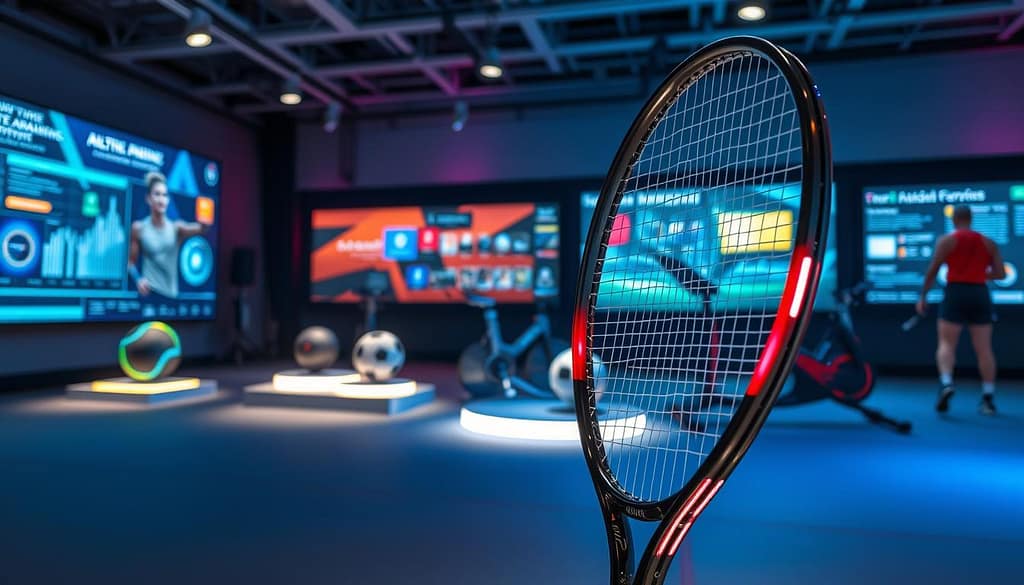
12.1 Advanced Materials, Haptic Feedback, and New Form Factors
Old materials are out; new, smart ones are in. Imagine a basketball that changes its feel based on how wet your hands are. Or a hockey stick that gets stiffer or softer as needed. The whole gear will be the sensor, not just parts of it.
Haptic feedback will be key. Instead of screens, smart gear will vibrate to guide you. A rowing machine might pulse to help you row better. Smart fabrics will turn your clothes into a full-body sensor network.
12.2 AI-Powered Real-Time Coaching and Form Correction
AI will turn your gear into a personal coach. It won’t just tell you what you did wrong. It will tell you why and how to fix it right away. Your smart shoes might whisper tips to improve your running.
This isn’t fantasy. AI can now analyze your movements and offer tips on the spot. Your baseball bat might help you swing better with a subtle nudge.
12.3 The Role of Smart Equipment in Professional and Amateur Athletics
Smart gear will change the game for pros and amateurs alike. For pros, it’s about tiny improvements. A smart golf club can spot a small swing change that could win you the game. For amateurs, it’s about safety and getting better without spending a lot.
Pros will have gear that feels like an extension of their body. For amateurs, it’s a chance to have a personal coach in every piece of gear. This isn’t just about new gear; it’s about new standards. We need common data protocols and safety standards for all gear to work together.
| Feature | Current Generation (Smart Gear 1.0) | Next-Generation (Intelligent Gear) |
|---|---|---|
| Material Science | Embedded sensors in standard materials (e.g., smart fabrics with basic sensors). | Programmable materials (e.g., shape-memory alloys, reactive polymers) that adapt to conditions. |
| Data Use | Records data for post-session analysis (e.g., “You ran 5 miles at a 7:30 pace”). | Real-time, on-device AI analysis with instant, actionable feedback (e.g., form correction via haptics). |
| Power Source | Dedicated, non-replaceable batteries requiring frequent charging. | Energy-harvesting (kinetic, thermal, solar) for indefinite or extended use. |
| Connectivity & Interoperability | Proprietary apps, limited device-to-device communication. | Open standards for seamless device-to-device data sharing and unified ecosystem control. |
| Coaching Function | Passive data logging and historical trend analysis. | Proactive, real-time coaching with predictive injury prevention alerts. |
The future of sports isn’t just about who has the best gear. It’s about who has the smartest. The goal is to evolve with the game, not just play it.
Conclusion
We’ve made our gear smarter with digital brains. These brains talk in BLE and process data fast. But the real measure isn’t just in tech specs. It’s in how much time we save, how well we perform, and how we avoid getting hurt.
The athlete is the real hero, not the gear. Building smart devices is like solving a puzzle. It involves sensors, software, and keeping it powered up. But making a true partner for athletes is about design, not just tech.
It’s about creating tools that give us real insights, not just data. A smart device is only good if it helps us understand our performance. If it doesn’t, or if it runs out of battery, it’s not doing its job.
The ultimate goal is to make this tech an extension of us, not just a gadget. This dream relies on one key thing: ethical data governance. Good data governance builds trust, not just meets rules.
It’s about respecting our privacy and giving us control over our data. Following laws like GDPR is just the beginning. It’s about being transparent and honest with how we use our data.
The future of smart gear is about giving us useful feedback, not just more data. It’s about turning raw data into advice we can act on. The best tech isn’t about collecting data; it’s about helping us perform better.
The ultimate goal is to empower athletes, not just collect data. It’s about telling a better story of human achievement, one secure, well-managed data point at a time.