

Forget Silicon Valley garages for a moment. The real magic of innovation often happens in unexpected places. I’ve seen it in university labs where chance conversations lead to breakthroughs.
It’s where the prototype meets the real world. The ISPO Award honors more than just a design. It shows a product’s ability to withstand tough conditions.
So, what makes these designs stand out? It’s not just a cool logo or fancy fabric. It’s a mix of university research and real-world athlete needs. This blend leads to products that win an ISPO Award.
Let’s look beyond the marketing to find true innovation. It’s not just about winning awards. It’s about learning from the winning process.
Partnership Models: From First Date to Moving In Together
Remember that awkward middle school dance where everyone clung to the walls, waiting for someone else to make the first move? That’s what industry–academia collaboration looked like without a defined partnership framework. Today, the emphasis is on building innovation ecosystems, not merely funding isolated research projects. Let’s explore the three primary partnership models that can move an idea from a lab notebook sketch to a Red Dot award–winning design.
For a deeper look at how structured collaboration accelerates commercialization, see our industry–academia innovation roadmap
.
Each model represents a different level of commitment and integration, from a casual project to a full-blown, cohabiting R&D powerhouse. Choosing the right one is less about the money and more about the mission alignment and desired outcome.
The Strategic Flings: Sponsored Research
Sponsored research is like a well-defined, project-based fling. It’s the classic model: a company has a specific problem and funds a university lab to solve it. The company gets a solution; the university gets funding and publishes a paper. It’s a clean, low-commitment arrangement.
The company writes a check for a specific deliverable—like a new polymer for a bike helmet or a new algorithm for wearable sensors. The Red Dot focus here is high. You get exactly what you pay for, but the relationship often ends with the final report. It’s the “no strings attached” of R&D, perfect for testing the waters or solving a discrete technical challenge.
The Power of the Potluck: Consortia
If sponsored research is a dinner date, a consortium is a massive, industry-wide potluck. Picture this: three competing bike manufacturers, a materials supplier, and a biomechanics lab all sitting at the same table. This is the consortia model.
Multiple companies, often competitors, pool resources to fund pre-competitive research. The goal? Tackle a common, foundational challenge that’s too big for any one company to solve alone. Everyone brings a ‘dish’ to the table—funding, data, equipment, or specialized knowledge. The Red Dot ideas here often emerge from the friction of these collaborations, creating standards and foundational tech that lifts all boats. It’s a group project where the A+ grade is an industry-wide breakthrough.
The “Moving In Together” Model: Joint Labs
This is the academic-corporate equivalent of moving in together. A company and a university lab don’t just share a project; they share a space, a vision, and a long-term roadmap. A joint lab is a dedicated, co-managed entity, often with a multi-year commitment.
The company embeds its engineers with the university’s researchers. The university gets a direct pipeline to real-world problems and funding; the company gets a deep, foundational research partner. This is where Red Dot-level innovation is baked into the process. It’s high-commitment, high-trust, and high-reward, yielding the kind of deep, systemic innovation that changes product categories.
| Partnership Model | Commitment Level | Company Involvement | Ideal For | Red Dot |
|---|---|---|---|---|
| Sponsored Research | Project-Based (Months) | Hands-off, results-driven | Solving a specific, well-defined technical challenge. | High (for targeted component innovation) |
| Consortia | Strategic (1-3 Years) | Collaborative, shared-resource | Pre-competitive, foundational research with multiple stakeholders. | Moderate to High (sets new industry standards) |
| Joint Lab | Long-Term (3-5+ Years) | Deeply integrated, co-located teams | Building a sustainable, disruptive innovation pipeline. | Highest (systemic, platform-level innovation) |
So, which model is the right fit? It’s not about which is best, but which is right for the problem. The path from a napkin sketch to a Red Dot award isn’t a straight line. It’s a series of strategic choices, starting with the partnership model that matches your ambition. The most innovative companies don’t just fund research; they build ecosystems. They understand that the right partnership isn’t a cost on a P&L—it’s the R&D engine for the next decade.
Navigating Tech Transfer & IP: The Art of the Deal
You’ve had the breakthrough. The prototype works, the data is beautiful, and the iF Design judges would be impressed. Now, it’s time to turn that ‘Eureka!’ into an equity event. This is where research meets commercial reality.
Welcome to the high-stakes poker game of tech transfer and intellectual property. The hand you’re dealt with option agreements and royalty streams can define a product’s future.
The lab is a temple of discovery, but the patent office is a different kind of temple. Tech transfer isn’t just paperwork; it’s the alchemy of turning ‘Eureka!’ into an asset. Think of it as the business model for your brainchild.
The goal isn’t just to patent an idea, but to build a framework where innovation can scale. This is where brilliant ideas either become commercially viable products or get lost in a purgatory of legal clauses and forgotten file cabinets.
At the heart of this process are two critical, and often misunderstood, tools: the option agreement and the royalty structure. An option agreement is your prenup. It’s not the final marriage of a company to a technology, but a formal handshake—a paid, exclusive window to decide if a long-term relationship is viable.
It’s the due diligence phase, where a company pays a fee for the exclusive right to negotiate a full license later. It’s a low-risk, high-potential move for them, and a vital source of non-dilutive funding for your lab.
Then come the royalties, the “alimony” of the innovation world. This is where you decide how the spoils of your genius are shared. Is it a percentage of net sales? A flat fee per unit? A tiered structure that scales with sales volume?
The key is to structure a deal that incentivizes performance. A deal that’s too one-sided can kill a product before it launches. The sweet spot is an agreement that makes everyone feel like they won—the university gets a return on its research investment, the company gets a competitive edge, and the inventors see their work have real-world impact (and maybe a nice bonus).
This isn’t just legal boilerplate. A well-crafted agreement is as critical to a product’s success as its engineering. In fact, a poorly structured IP deal can sink a product faster than a flawed prototype. The most iF Design-worthy products often come from agreements that are themselves well-designed.
They balance risk, reward, and access, ensuring that a brilliant idea doesn’t just win awards, but also thrives in the marketplace. For a foundational look at these principles in action, the WIPO’s guide to managing intellectual property offers a solid primer on the global framework.
Ultimately, navigating tech transfer isn’t about lawyers winning and losing. It’s about designing a system—a contract—that is as elegant and functional as the product it protects. It’s about ensuring that the ‘golden ticket’ of discovery is a ticket for everyone at the table, funding the next round of brilliant, beautiful, and iF Design-worthy ideas.
Human Subjects & Ethics: The Bedrock of Trustworthy Innovation
Forget the sleek demos. The real innovation starts with a 30-page IRB application. A CES Innovation Award celebrates the end product, but the real innovation happens in IRB committee rooms. This is where your idea meets the reality check of human ethics.
An IRB isn’t just a hurdle; it’s your first honest focus group. It’s the moment when your wearable is questioned, “But what about the human wearing it?” This isn’t about checkboxes; it’s about creating a product people trust with their personal data.
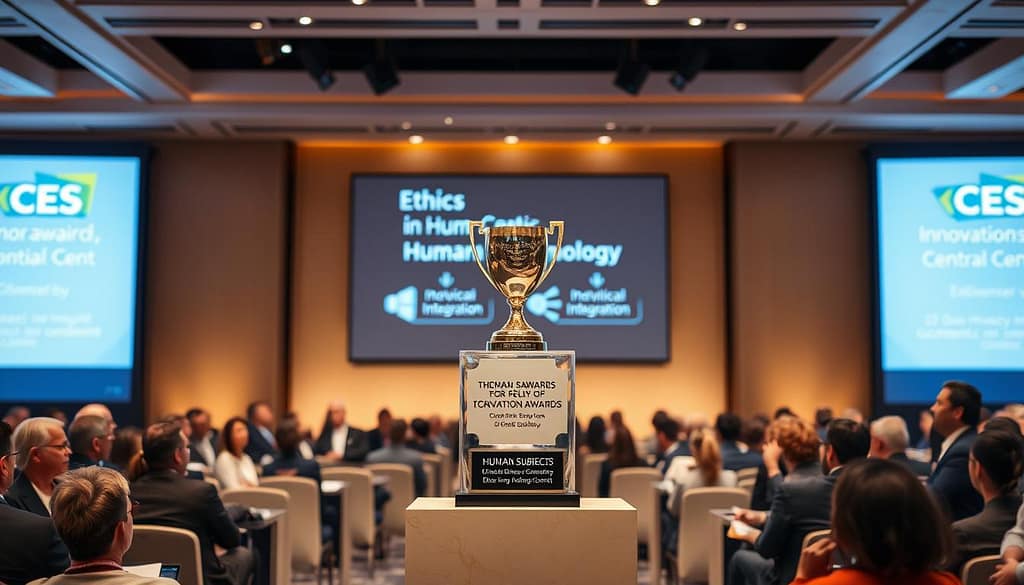
True innovation respects the human, not just data. That’s where the real CES Innovation Awards contenders stand out. It’s the difference between a gadget and a trusted health partner. The consent form is your first user experience.
This is where CES Innovation Awards and IRB protocols align. Both demand technology serves people, not the other way around. It’s about solving problems without creating new ethical ones. Data privacy is the foundation of consumer trust in the Internet of Bodies.
So, before you pitch your prototype at CES, pitch it to an ethics board. The most innovative feature you can build is trust. And that’s the only award that truly matters in the long run.
Accessing Core Facilities: Your Golden Ticket to the Willy Wonka Factory of Research
Finding your way through university core facilities is like discovering a golden ticket. It opens the door to a world of advanced research. Here, the tools are not just for fun but for creating the future.
Imagine having access to top-notch 3D printers and motion capture studios. These are not just tools; they are gateways to innovation. PhDs and postdocs use them to shape the future.
Motion capture studios are like something out of Hollywood. They track even the smallest movements. EMG rigs, on the other hand, can read muscle signals like a polygraph. This level of detail is like mind-reading.
The additive manufacturing lab is a dream come true for prototyping. CAD files turn into real parts in hours. The materials lab is where new materials are created and tested.
The real magic happens when you combine these tools. A new smart fabric made in the materials lab can change a mocap suit into something more. This is the power of core facilities.
Getting into these facilities is more than just using a machine. It’s about joining a community. It’s where ideas become reality. The question is, what will you create?
Building Valid Protocols: The Unsexy Foundation of Breakthrough Science
If your groundbreaking discovery can’t be replicated, it’s not science—it’s just a story. The foundation of breakthrough science is building a valid protocol. It’s not about proving you’re right once. It’s about creating a process that works in real-world conditions.
Forget the flashy “Eureka!” for a moment. The true “Aha!” moment is when your protocol works everywhere, not just in your lab. The difference between a statistical fluke and a breakthrough is a protocol designed for real people.
The Replication Imperative
We’ve all heard about the “replication crisis” in science. The solution isn’t more complex stats or bigger grants. It’s focusing on the basics: sample size, repeatability, and standards. Your new foam composite might be efficient in your lab, but if it can’t be replicated, it’s just a story.
Beyond the “N of 1”: The Sample Size Dilemma
Let’s talk numbers. Using just one person for your study might give you a good story, but it’s not meaningful. Valid protocols need enough data to account for human variability. This is human factors engineering at its core.
The table below shows the difference between a weak protocol and a strong one:
| Protocol Element | Anecdotal/Weak Protocol | Statistically Sound Protocol |
|---|---|---|
| Sample Size & Power | Uses a small, convenient sample (e.g., 5 undergrads from Psych 101). | Calculates and justifies sample size a priori using power analysis; uses G*Power or similar to determine N. |
| Recruitment & Blinding | Relies on self-selected volunteers or a single, non-representative group. | Uses randomization, blinding of subjects and/or testers, and clear inclusion/exclusion criteria. |
| Control & Standardization | Conditions vary between trials; no control for environmental or human factors. | Controls for variables (time of day, tester, equipment) and uses a standardized, documented SOP. |
| Data & Replicability | Data analysis is an afterthought; raw data and code are not shared. | Full protocol, anonymized data, and analysis code are made available for peer scrutiny. |
The Repeatability Mandate
A valid protocol is one that can be repeated. It’s not just about doing it twice. It means anyone, anywhere, should get the same results. This is where most “breakthroughs” in human factors research fail.
The human factors—fatigue, motivation, individual biomechanics—aren’t noise. They’re the signal. A good protocol anticipates and measures them.
Standards: The Invisible Infrastructure
Ignoring established standards is like building a skyscraper without a foundation. You might get a few floors up before it all comes crashing down. Adhering to standards from bodies like ASTM or ISO isn’t bureaucratic red tape—it’s a shared language.
Your human factors protocol should cite the standards it follows. This isn’t about stifling creativity; it’s about ensuring your ‘innovation’ can be understood, vetted, and built upon by others.
In the end, a valid protocol is your research’s immune system. It’s the unsexy, unglamorous work of defining, standardizing, and controlling for variables. It’s what turns a “Eureka!” into a discovery that can withstand the test of time, replication, and the glorious, messy unpredictability of human performance. It’s not just good science; it’s the only kind of science that builds a foundation for the next breakthrough, instead of becoming a footnote in the replication crisis.
Funding Paths: SBIR, Foundations, and the Corporate Ladder
Getting research funding is like an Olympic sport, with the grant application being the toughest part. The journey from a great idea to a funded project is full of obstacles. You need a strategy to navigate this complex landscape.
It’s not just about getting money. It’s about making sure the flow of funds supports your vision. This means designing a system that minimizes obstacles and maximizes support.
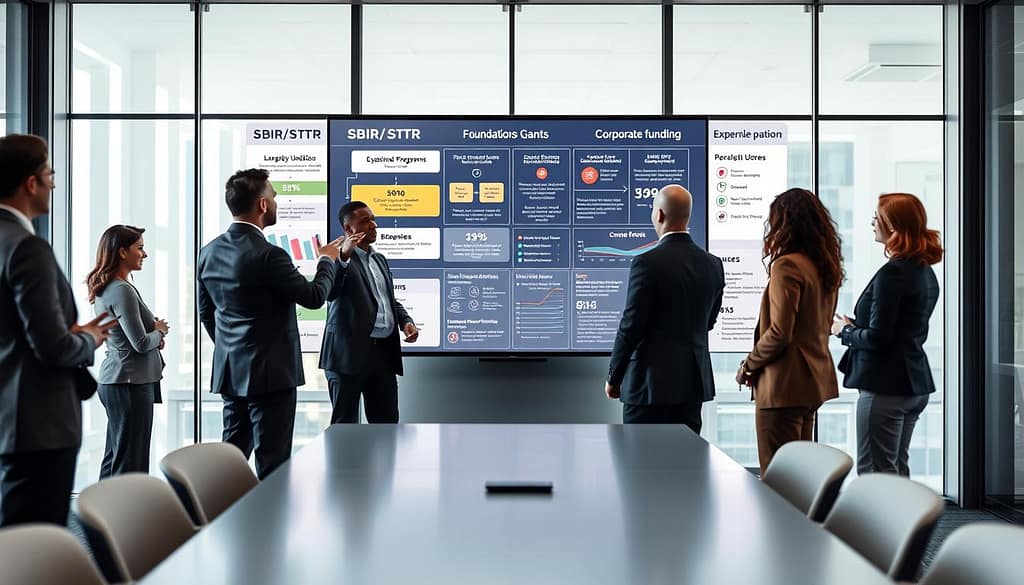
The SBIR (Small Business Innovation Research) and STTR (Small Business Technology Transfer) programs are the government’s way of saying, “Prove it.” They’re not just grants; they’re a multi-stage vetting process. Phase I is the “show us your math” stage—a relatively small grant to prove feasibility.
Phase II is the “alright, now do it for real” round, where the real ergonomics of your research design are tested. The key is to frame your project not just as science, but as a solution to a very specific, agency-level problem. Think of it as convincing a very skeptical, very data-driven investor.
Foundations, on the other hand, aren’t just looking for a return on investment; they’re looking for a return on impact. They want to change the world, but they demand the metrics to prove you can. Your proposal isn’t just a budget; it’s a theory of change.
You’re not just asking for money to study a new material; you’re proposing a new material that will revolutionize protective gear for frontline workers. The ergonomics here are about alignment: your project’s mission must become the foundation’s mission.
Corporate partnerships are a different beast entirely. This is where the ergonomics of finance become a tangible negotiation. A corporation isn’t a grant-making body; it’s a partner with its own R&D roadmap and quarterly reports.
The deal must be mutually ergonomic—it should support your research without contorting your project to fit a product launch cycle. The ideal is a win-win where your innovation fuels their pipeline, and their capital fuels your lab.
The table below sketches the distinct ergonomics of each primary funding path:
| Funding Source | Mindset | Key Requirement | Timeline & Scale |
|---|---|---|---|
| SBIR/STTR Grants | High-risk, high-reward. Proving a novel concept’s technical and commercial feasibility. | Scientific merit and commercial | Phased (I, II, III). Funds research, not overhead. |
| Private Foundations | Mission-driven. Changing the world, but with data. | Alignment with foundation mission and clear impact metrics. | Varies. Often project-based with annual cycles. |
| Corporate R&D | Strategic partnership. Seeking innovation that fits a product roadmap. | Strategic fit, IP agreement, and clear path to application. | Project-based or long-term, often with IP-sharing terms. |
So, which path is right? The SBIR/STTR route is a marathon, testing both your science and your stamina for bureaucracy. Foundations demand a compelling story and a theory of change you can measure. Corporate partners offer deep pockets and market access, but you’ll be dancing with a giant—you must be clear on who leads.
The ergonomics of your funding—how well the source of capital fits the shape of your work—can mean the difference between a project that thrives and one that merely survives.
Ultimately, the right funding path is the one that supports your science without contorting it. It’s about finding the backer whose chair fits your project’s posture perfectly.
Case Studies: Lab Bench to Market
Innovation often fails not in the lab, but in the journey from prototype to product. The “valley of death” isn’t a lack of ideas, but a failure to design for beyond the lab. This is where DfX turns a prototype into a market hit. It’s the leap from a lab curiosity to a product shipped by the millions.
Imagine a brilliant engineer creating a sports wearable in the lab. It tracks 20 biometrics with lab-grade accuracy. The prototype works perfectly for the engineer. But the first factory laughs at the custom-machined housing and proprietary sensor array.
This is the chasm DfX aims to bridge. It’s not just a task, but a mindset shift from the first sketch. The “X” is the variable you design for from day one:
- Design for Manufacturing (DfM): Can we injection mold this in one piece instead of assembling 12? Can it be assembled without a robotics engineer on the line?
- Design for Assembly (DfA): Can it be put together by a human (or robot) in under 30 seconds without a manual?
- Design for Cost (DfC): Does that carbon-fiber part provide $200 of user value, or can a polymer composite do the job for $0.50?
- Design for Sustainability (DfS): Can it be disassembled for repair or recycling, or is it destined for a landfill?
A university lab developed a novel foam for athletic shoe midsoles. Lab tests showed 15% better energy return than the market leader. But the foam required a 7-stage chemical curing process that took 72 hours. At scale, this meant a single midsole would cost $200 to produce.
The winning teams flip the script. They start with the DfX questions at the first brainstorming session. They don’t ask, “Can we build a working prototype?” They ask: “Can we manufacture 100,000 of these, at a target cost, with a consistent failure rate below 0.1%?” This table shows the DfX pivot in action:
| Lab-First Approach | DfX-First Approach | Market Impact |
|---|---|---|
| Optimize for peak performance in lab conditions. | Optimize for performance and assembly in a high-volume factory. | Product can be scaled to meet demand. |
| Select exotic, high-performance materials. | Select materials that meet spec and are available from multiple suppliers. | Lower, stable unit cost and supply chain resilience. |
| Assume skilled technicians for assembly. | Design for snap-fits, guides, and error-proof assembly. | Faster assembly, lower labor cost, higher quality control. |
The real-world case studies that succeed are those that move from a single benchtop prototype to a product on shelves. They prove that the most elegant engineering solution is worthless if you can’t build it reliably, at cost, and at scale. The takeaway isn’t to avoid innovation, but to innovate with the factory, the budget, and the end-user’s wallet in mind from the very first sketch. That’s the DfX mindset: designing for the real world, not just the lab report.
The Collaboration Playbook: SOWs, Milestones, and Data as Your Legal Team
Most partnerships fail slowly, not with a big bang. The main reason is unclear agreements and handshake deals. The difference between a successful partnership and a legal battle often comes down to three key documents: a detailed Statement of Work (SOW), clear milestones, and a strong data management plan.
Think of your SOW as a prenup for your professional relationship. It outlines who does what, when, and for how much, before any money is exchanged. A good SOW is like a good prenup: it’s not about anticipating failure, but about defining success so clearly that there’s no room for a messy “divorce” over IP later.
Here’s a breakdown of how a traditional SOW differs from a truly collaborative one:
| Component | Traditional SOW (The “Legacy” Model) | Collaborative SOW (The “Playbook” Model) |
|---|---|---|
| Objective | Deliver a defined output, often in a silo. | Achieve a shared strategic goal with built-in flexibility. |
| Milestones | Vague deadlines tied to payments. | Knowledge-sharing checkpoints that inform the next phase. |
| Data & IP | Whoever pays, owns. Period. | Pre-negotiated, with clear paths for licensing and joint development. |
| Success Metric | Project delivered on time/on budget. | Shared IP created and a clear path to commercialization. |
Milestones are the relationship check-ins that keep the partnership healthy. They shouldn’t just be “Project Phase 1 Complete.” They should be specific, measurable, and, most importantly, actionable. A milestone like “Complete Phase 1 Research” is weak. “Deliver preliminary test data and a 10-page analysis on material stress tests by Q3” is a milestone that means something.
Now, let’s talk data. In the age of AI and big data, your data management plan is your single source of truth. It’s the prenup, pre-marital counseling, and couples therapy all rolled into one. It dictates how data is collected, stored, shared, and—critically—owned. A solid data management plan prevents the “he-said, she-said” of research. It makes sustainable claims about a product’s environmental impact, for instance, more than just marketing. It bakes verifiable, data-backed sustainable claims right into the SOW from day one.
Without this, your sustainable claims are just greenwashing. With it, they’re a marketable, defensible asset. Here’s how to structure it:
- Ownership: Who owns the raw data? The analyzed datasets? The insights?
- Access: Who can see the data, and when? In real-time or post-analysis?
- Storage & Security: Where does it live? Who is the custodian?
- Publication Rights: Who gets to publish, when, and with whose name on it?
This isn’t just bureaucracy. This is the playbook for turning a risky collaboration into a repeatable, scalable, and profitable innovation engine. It’s how you move from a one-off project to a sustainable, long-term partnership that can withstand the pressure of real-world deadlines, shifting priorities, and the ever-present lure of greener intellectual pastures.
Publishing vs. Secrecy: The Disclosure Dilemma
For researchers, deciding whether to publish or patent can be tough. It’s like choosing between two paths, each with its own risks and rewards. The choice is not just about paperwork; it’s a strategic move that can impact your career.
Publishing in a top journal can boost your career and credibility. But, once your research is out, you might lose the chance to patent it. This is because the law requires your invention to be new and not known before.
To solve this, you need a smart approach. Think of it like a movie trailer. You show the exciting parts but keep the best part secret. In research, this means sharing the problem and the solution’s promise, but not how you solved it.
It’s important to manage both the publication and patent clocks carefully. A provisional patent application can help. It gives you a head start and lets you publish without losing your patent rights.
Here’s a look at the main choices and their trade-offs:
| Aspect | Path of Publishing First | Path of Patenting First |
|---|---|---|
| Primary Goal | Establish priority, gain academic credit, and disseminate knowledge. | Secure commercial rights, create a temporary monopoly, and enable licensing. |
| Immediate Benefit | Rapid recognition, career advancement, and citation impact. | Legal protection, licensing revenue, and commercial leverage. |
| Key Risk | Immediately creates prior art, destroying novelty for patents in most countries. | Slow, expensive, and requires non-public disclosure to a patent attorney. |
| Ideal For | Fundamental research, building academic reputation, open science. | Applied research with clear commercial value and a defined market. |
The best strategy is to file first and publish second. This order is key. Here’s how it works:
- File a provisional patent application. This is your “patent pending” safety net.
- Submit your paper to a journal. Many journals now coordinate with the USPTO’s “Patent 2.0” pilot, allowing for concurrent filing and publication.
- Use journal embargoes. Reputable journals often honor embargoes, giving you a defined publication date in the future, which you can use to finalize patent claims.
- Consider a defensive publication. If you decide not to patent, a defensive publication (like a technical report or a non-peer-reviewed preprint) can establish prior art that blocks others from patenting your idea, keeping the field open for all.
Let’s see how this works in real scenarios:
| Strategy | Action Taken | Outcome |
|---|---|---|
| Publish-First Gambit | Researcher presents full findings at a major conference and publishes in a high-impact journal before filing. | Paper gets high citations. But, public disclosure before filing invalidates patent rights in Europe and most countries, killing commercial value. |
| Patent-First, Publish-Later | Files a provisional patent, then submits paper to a journal with a 6-month embargo. | Patent priority secured. Paper published 9 months later, establishing academic credit without sacrificing IP. |
| Strategic Disclosure | Publishes a theory or a problem statement in a review article, while filing a patent on the specific engineered solution. | Establishes thought leadership in the field while protecting the core, patentable innovation. |
The strategic disclosure is your most powerful tool. You can share the problem and its significance in the academic world. But, keep the specific solution secret in your patent application. This way, you can publish your findings and protect your invention’s commercial value. The goal is not to choose between publishing and patenting. It’s to do both well.
Toolkit: RFP Templates, MOUs, Validation Checklists
Let’s be honest. The words “RFP template” or “MOU” don’t spark joy. They sound like boring paperwork that kills great ideas. But what if we saw them differently? These documents are like the rules of the game, not the game itself.
Imagine a university lab with a new foam polymer and a sports brand wanting the next big shoe. A clear RFP template is more than just a project outline. It sets the stage, defines the problem, and the dream. It’s the first move in a high-stakes game.
The MOU that follows isn’t just a legal form. It’s like the prenup for your innovation marriage. It sets the rules for the beginning and the end, before anyone gets paid.
The validation checklist is your secret ally. It’s the hero that prevents mistakes. It’s the last check before you go from prototype to production. It’s not about stopping creativity; it’s about making sure it works.
This toolkit isn’t just a box to check. It’s the base of your innovation. It turns chaos into a process that works. The RFP sets the race, the MOU sets the rules, and the checklist is the final check before you start. Without them, you’re just hoping for luck. With them, you’re making it happen.