
The “dumb jock” stereotype is outdated. Today’s top athletes are like data scientists, using smart fabrics as their lab coats.
In the locker room, a change is happening. Your equipment is now a smart partner, not just a tool. It’s getting a brain, from the gym to the golf course.
This is the time of adaptive sports gear. Think of AI tools like Amp or Eleiko’s Prestera rack, which coach your workout. On the field, TrackMan and Rapsodo launch monitors turn guesses into facts.
It’s not about gadgets replacing hard work. It’s about giving that hard work real-time, smart advice. The old idea of one-size-fits-all is gone. Now, it’s all about finding what fits you now.
This guide is your introduction to the smart upgrade. Welcome to a world where every workout is a chance to learn, and every piece of gear is getting smarter.
Adaptive Technology Principles
The secret behind smart athletic equipment is not magic. It’s based on four key principles. These principles make the difference between a simple tool and a smart one that learns from you. Let’s explore these principles.
Your gear is now more than just along for the ride. It’s an active partner, following new rules.
Real-time Responsiveness
This principle is the foundation. Your AI strength trainer, like Amp’s, doesn’t wait for you to fail. It anticipates your needs. It adjusts resistance based on sensor data, even before you feel tired.
It’s like having a spotter with super-fast reflexes. The goal is to remove any delay between your effort and the machine’s response. This is a fast conversation happening in seconds.
Performance Optimization
Optimization here is ongoing, not just a review. It’s a constant, fast negotiation between you and the machine. It’s a team effort, not a solo performance.
AI-driven analytics assess your performance in real-time. They adjust your workout to improve your efficiency. This turns your effort into precise progress.
Environmental Adaptation
True intelligence understands its surroundings. The Ottobock C-Leg microprocessor knee is a great example. It adjusts to walking speed, slope, and step pattern for safer movement.
For smart athletic equipment, this means adapting to different environments. The equipment adjusts to the climate, grip, and material’s flexibility. The environment is part of the performance equation, not a barrier.
User-Centric Design
The “user” in the equation is not just an operator. You’re a co-pilot. The system learns from your preferences, biomechanics, and habits.
It’s not about a one-size-fits-all approach. It’s about creating a feedback loop that makes sense to you. This ensures the technology works for you, not against you. The best gear feels like a natural part of you.
These four principles—responsiveness, optimization, environmental adaptation, and user focus—form the core of the next generation of gear. It’s a shift from passive tool to active partner.
Sensor Integration Systems
The magic of responsive sports technology is in feeling, thanks to a network of sensors. These sensors are like the gear’s eyes, ears, and skin. They turn guesses about your form into clear facts.
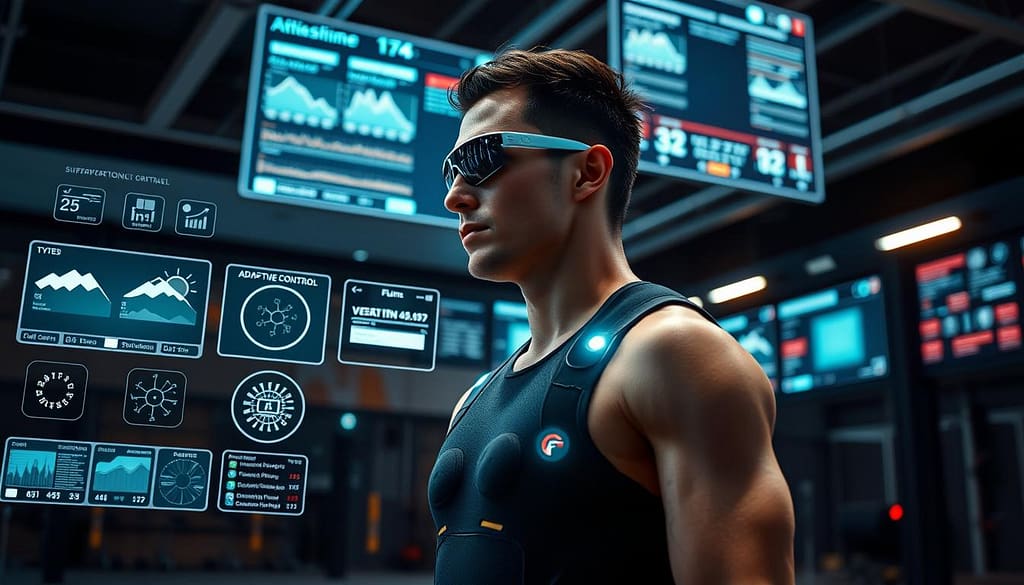
Performance Monitoring: The Unblinking Eye
This is the relentless data hawk. It’s like a TrackMan launch monitor, dissecting a golf swing with precision. It uses Doppler radar to capture ball speed, spin, and trajectory.
Wearable Inertial Measurement Units (IMUs) are like tiny spies on your body. They report on cadence, ground contact time, and power output. It’s not just about counting steps anymore. It’s about measuring the quality of every single motion.
Environmental Sensing: The Gear’s Skin
Your equipment needs to feel the world around it. A smart grip senses rising humidity and subtly adjusts its texture to prevent slips. A running shoe with embedded sensors gauges the firmness of the trail and tells its midsole to soften or stiffen.
This isn’t science fiction. It’s the logical next step for gear that doesn’t just exist in an environment but actively adapts to it.
User Feedback: The Two-Way Street
Here’s where it gets interesting. The flow of information isn’t just one-way, from you to the machine. The machine talks back. A haptic pulse in your smartwatch tells you your heart rate zone.
A heads-up display on your ski goggles shows your lean angle in real time. This constant dialogue transforms training from a guessing game into a guided conversation. You’re no longer flying blind.
Adaptive Control: The Decision-Making Cortex
All that sensory data floods into a central processor—the adaptive control system. This is where the magic happens. Algorithms analyze the stream and make split-second commands.
“Increase lumbar support stiffness now.” “Ease up on the elliptical resistance.” It’s the moment perception sparks reaction. The gear doesn’t just know; it does.
System: The Closed-Loop Reality
Individually, these components are clever. Together, they form a closed-loop system of perception and reaction. Performance monitoring feeds environmental sensing, which informs user feedback, which guides adaptive control.
It’s a continuous, self-optimizing cycle. This integrated system is what separates a gadget from genuine responsive sports technology. It turns subjective “feel” into objective, actionable fact.
To understand how these sensory layers work together, consider the breakdown below:
| Sensor Type | Primary Function | Real-World Example | Data Output |
|---|---|---|---|
| Doppler Radar / Camera | High-speed motion & trajectory analysis | TrackMan, Rapsodo launch monitors | Ball speed, spin rate, launch angle |
| Inertial Measurement Unit (IMU) | Body movement & orientation tracking | WHOOP strap, smart insoles | Cadence, stride symmetry, muscle engagement |
| Environmental Sensor | Ambient condition monitoring | Smart fabric with humidity sensing | Temperature, humidity, surface pressure |
| Biofeedback Sensor | Physiological status tracking | Polar H10 heart rate monitor | Heart rate, breathing rate, exertion level |
| Haptic Actuator | Tactile user communication | Apple Watch Taptic Engine | Vibration patterns for alerts & guidance |
The table isn’t just a spec sheet. It’s a blueprint for how modern athletic gear perceives the world. Each sensor type plays a specific role in building a complete picture. The future isn’t about adding more sensors blindly. It’s about smarter integration—making these systems talk to each other seamlessly. That’s when responsive sports technology truly becomes an extension of the athlete.
Material Science Applications
The real magic of performance-adaptive equipment lies in its materials. These materials have a memory and can change. Gone are the days of simple plastic and metal.
Today’s gear is made from smart materials that help you perform better. This innovation comes from various fields, including aerospace and medicine.
Smart Materials: The New Athletic Partner
Smart materials are the brain of your gear. They’re not just for sensors; they are the sensors and actuators. Carbon fiber composites, for example, can monitor stress.
Smart textiles can cool you down by using your sweat. They’re inspired by outdoor gear to keep you at the right temperature. Designers are now focusing on modularity.
Imagine a base layer that can change with different sensor modules. It’s not just a fixed suit; it’s something you can upgrade.
Shape-Memory Alloys: The Contortionists
These metals can change shape with heat. They’re like Houdinis. They’re great for impact protection.
A helmet or shin guard can bend to absorb shock, then go back to its original shape. It’s like having a reset button.
Variable Stiffness: The Mood Rings of Gear
Why should your knee brace be the same when walking or sprinting? It shouldn’t. Variable stiffness materials change as needed.
They go from soft to stiff based on what you need. It’s like having an exoskeleton in your clothes.
Responsive Polymers: The Sweat-Savvy Skin
Responsive polymers are like chemistry sets for your gear. They can change with moisture. This includes density, porosity, or texture.
A shoe’s interior might get more breathable as you sweat. Another might harden to absorb impact. It’s all about adapting to your needs.
Adaptive Systems: The Composite Organism
The goal is to combine materials for better performance. It’s like a symphony of smart materials working together.
Shape-memory alloys, variable stiffness composites, and responsive polymers all work together. They react in milliseconds, making your gear computational.
| Material Type | Key Property | Athletic Application | Innovation Source |
|---|---|---|---|
| Shape-Memory Alloys | Returns to pre-set shape with heat | Reformable helmets, impact-absorbing pads | Medical stents, aerospace actuators |
| Variable Stiffness Composites | Alters rigidity on command | Adaptive braces, responsive footwear midsoles | Robotics, architectural dampers |
| Responsive Polymers | Changes state with moisture/force | Self-ventilating fabrics, dynamic cushioning | Biomedical engineering, smart coatings |
| Smart Textiles | Conductive, temperature-regulating | Biometric sensing shirts, climate-control base layers | High-performance outdoor gear, wearable tech |
The next generation of performance-adaptive equipment will change with you. It’s not just a tool; it’s a teammate made of advanced materials.
Control System Design
Designing the control system for adaptive gear is like programming a self-driving car for your bicep curl. It needs precision, foresight, and an emergency brake. This is the heart of your intelligent sports gear, turning raw data into action. It’s the difference between a gadget that just records and a partner that responds.
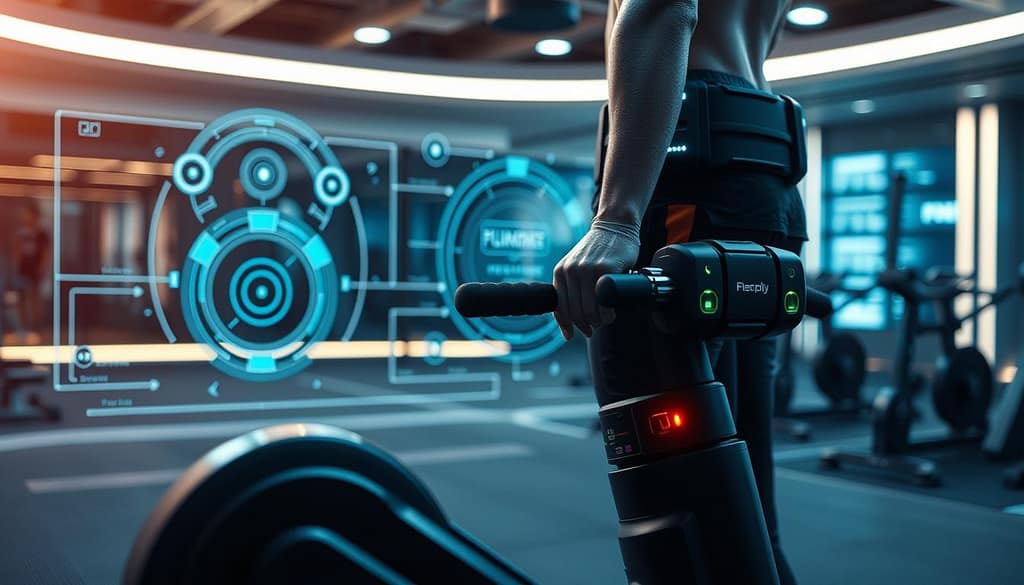
Let’s break down the five non-negotiable components that separate a clever widget from a truly adaptive partner.
Feedback Loops
This is the continuous conversation. You push, the gear measures. Its sensors report, and the system pushes back—all in real-time. Think of a microprocessor knee for amputee athletes. Its onboard software doesn’t just read joint angle and load; it creates a dynamic dialogue, adjusting resistance millisecond by millisecond to mimic a biological gait cycle. Without this loop, the gear is deaf to your performance.
Adaptation Algorithms
If feedback is the conversation, the algorithm is the learned wisdom. This is where machine intelligence shines. Systems like the AI in Amp-powered gear don’t just react; they recalibrate based on long-term trends. Is that wobble a one-off mistake or a sign of fatigue? The algorithm analyzes patterns, optimizing not just for this rep, but for your entire progression curve. It’s the coach that remembers your last ten workouts.
Response Timing
In adaptation, timing is everything. A correction that arrives a second late is worse than useless—it can throw you off balance. Consider advanced exoskeletons like Ekso or Indego. Their AI-assisted control isn’t just about applying force; it’s about applying it at the exact micro-moment in your stride where it maximizes efficiency. The system’s latency must be near-zero. It’s the difference between a dance partner who leads and one who steps on your toes.
Safety Protocols
This is the gear’s conscience. Before any algorithm gets too creative, it must obey a hard-coded “prime directive”: do no harm. Safety protocols are the immutable rules that prevent the system from helping you hurt yourself. They set absolute limits on range of motion, force output, and adjustment speed. In a smart knee brace, this might mean physically preventing hyperextension, no matter what the performance data suggests. Autonomy needs guardrails.
User Override
The final, critical authority must always be you. The big red “STOP” button. A true partnership in intelligent sports gear requires a seamless, intuitive way for the athlete to take manual control. Maybe it’s a physical switch, a voice command, or a specific gesture. This override isn’t a failure of the system; it’s a feature that respects human intuition and situational awareness. After all, sometimes you just need to grab the wheel.
Together, these elements perform a delicate dance. The control system grants autonomy but is bound by safety. It learns but can be overridden. It’s what turns a collection of sensors and polymers into a responsive, trustworthy athletic companion.
Customization Capabilities
Adaptive technology is special because it becomes uniquely yours. Gone are the days of just adjusting straps or sizes. Now, gear learns, remembers, and grows with you. It’s like the difference between a rented tuxedo and a custom-made suit.
The promise is to create dynamic equipment systems that match your unique fingerprint.
Not all products are made for everyone. The best tech is tailored to the athlete, not the other way around. Let’s explore how this tech works.
Individual Adaptation
Your body is unique, and so are your strengths and weaknesses. Traditional gear doesn’t know this. But, individual adaptation does.
It uses sensors to learn about your body’s mechanics. It knows your imbalances and how you fatigue.
Imagine your gear talking to your body. A smart shoe might adjust its support to fix your pronation. It’s a custom fix for you.
Performance Profiling
This tech gives you an athletic profile, like a NASA engineer’s notes. It creates a detailed map of your abilities.
It tracks your power, speed, and even muscle use. Your profile changes as you improve. This lets coaches create precise training plans for you.
| Feature | Traditional Equipment | Customized Dynamic System |
|---|---|---|
| Data Source | Generic size charts | Real-time biometric & motion data |
| Adjustment Method | Manual (straps, laces) | Automatic, algorithmic |
| Learning Capacity | None | Continuously refines user profile |
| Goal | Universal fit | Personalized performance optimization |
Preference Learning
The gear remembers what you like. It learns your preferences over time. Do you prefer softer vibrations or specific feedback? It adapts to your likes.
This tech becomes so intuitive, you start to trust it. It anticipates your needs, making your experience seamless.
Automatic Adjustment
All that learning leads to automatic adjustments. The system makes subtle changes without you needing to do anything. It adapts to your fatigue and the terrain.
This creates a partnership between you and your gear. It’s training that grows with you, thanks to AI. It’s truly dynamic equipment systems.
The result is gear that anticipates your performance. It respects your body while pushing you to be better. In a world of generic solutions, that’s luxury.
Power & Electronics Management
Power management is the real hero in adaptive sports gear. It keeps everything running smoothly. Without it, all the fancy tech is useless.
This isn’t just about finding a place to charge your gear. It’s about creating a system that works well in tough conditions.
Energy Efficiency
Energy efficiency is like a financial advisor for your gear. It makes every bit of energy count. This means your gear can last longer, even when you’re not using it.
For adaptive sports gear, being efficient is key. It lets the gear adapt in real-time, which is essential.
Battery Optimization
Battery optimization is all about making your charge last longer. It’s not just about using a bigger battery. It’s about smart charging and learning how you use your gear.
For example, your gear might use less power when you’re walking slowly. This helps your battery last longer. The challenge is making it small and light without sacrificing power.
Here’s a quick look at the key trade-offs in modern power systems for smart gear:
| Component | Primary Goal | Common Challenge |
|---|---|---|
| Battery | Maximize energy density | Balancing size, weight, and safety |
| Processor | Execute complex algorithms | Minimizing power draw during computation |
| Wireless Module | Stable data transmission | High energy cost of constant broadcasting |
| Power Circuitry | Regulate and distribute power | Minimizing energy loss as heat |
Wireless Systems
Your gear needs to communicate without dropping the signal. Wireless systems in adaptive sports gear must handle lots of data while moving around. They also need to be careful with power.
Technologies like Bluetooth Low Energy (BLE) have helped a lot. But we need even smarter systems that know when to send data and when to save it.
Security is also key. Your gear’s wireless connection must be secure. This means no broadcasting your personal data to the world.
Environmental Protection
Protecting your gear from the environment is important. It’s not just about being water-resistant. It’s about defending against many things:
- Impact & Shock: Circuit boards need protection from sudden impacts.
- Moisture & Sweat: Sweat can damage your gear. Seals and coatings help.
- Temperature Extremes: Your gear must work well in cold and hot conditions.
- Electromagnetic Interference: The gym is full of signals. Your gear needs shielding.
This protection adds cost and complexity. But it’s necessary to make your gear durable and reliable.
In the end, power and electronics management are the backbone of adaptive sports gear. They make the difference between a great product and a disappointing one. A dead battery can ruin your experience.
User Experience Design
Forget about specs and sensor counts. If using the smart athletic equipment feels like a chore, it’s not worth it. The UI is the product. It’s what makes tech empowering or annoying.
Great design makes the tech fade into the background. You focus on the game, not the gear. This leads to real improvement, thanks to data and feedback.
Seamless Operation
Seamless means the tech works with you, not against you. It’s like a good caddie—always ready, never in the way. The best adaptive gear starts up easily, connects without hassle, and adjusts smoothly.
Intuitive Control
If it’s hard to use, you’ve lost. Control should be natural and easy.
- A tap or swipe on a sweat-resistant surface.
- A voice command that works over heavy breathing.
- A simple gesture that doesn’t break your stride.
The goal is to use it without thinking. You say “turn up the resistance,” and it happens. This makes it a daily habit.
Performance Feedback
Raw data is just noise. Athletes need clear, actionable feedback.
It’s not about showing 27 graphs. It’s about saying, “Your stride symmetry dropped 5% at mile 8. Try shortening your left step.” This feedback drives real improvement. It makes training more engaging and turns solo effort into shared progress.
Comfort Optimization
Comfort is non-negotiable. The best sensor is useless if it’s uncomfortable. Comfort is the key to using the device.
Smart athletic equipment must feel like a second skin. It should breathe, move, and conform. If it’s not comfortable, you won’t use it. And if you don’t use it, its value is zero.
Ease of Use
Ease of use is essential. It’s about making your athletic life easier. Does the tech make your life better?
Charging should be simple. Syncing should be automatic. Updates should be seamless. The whole system should feel cohesive. When you achieve this, the intelligent equipment becomes an extension of you.
That’s the peak of user experience design. You forget the tech is there. Your mind is free to focus on your performance.
Testing & Validation: The Gauntlet for Smart Gear
Before responsive sports technology makes it into an athlete’s gear, it faces a tough test. This phase is where marketing meets science. It’s the key step that turns a great idea into a reliable tool.
Adaptation Effectiveness: The “Does It Actually Work?” Test
An adaptive shoe is just a fancy shoe until it proves it works. Labs test if it really improves running. Studies show real changes in how athletes move and perform.
The real question is, “Does it make a real difference?” We need clear methods and data, not just fancy ads.
Safety Verification: The Million-Cycle Stress Test
Safety is non-negotiable for gear that moves or applies force. It must pass extreme tests. What if the motor fails? Does it have a backup?
Imagine drop tests, extreme temperatures, and software checks. It’s like a tough drill for engineers. This is the standard for any professional gear.
Performance Impact: Quantifying the Edge
Does the gear make athletes faster or stronger? More importantly, does it do so every time? Performance tests look at real numbers, not just how it feels.
It compares athletes with and without the tech. The goal is to show a clear, measurable benefit. Without it, you’re just carrying extra weight.
Durability Assessment: Built for the Grind
A demo unit that works in a showroom is useless. Durability tests see if it can handle real athletic life. Can it handle mud, sweat, and constant use?
Can seals keep moisture out? Will materials wear out after many uses? This phase turns a prototype into a durable product.
User Testing: The Final and Most Important Lab
The best tech is useless if athletes don’t like it. User testing is like a real-world “sniff test.” Does it feel right, or is it a hassle?
This phase gets feedback from athletes, trainers, and physios. It often finds flaws in comfort and usability that labs miss. It shows if the tech is more than a gadget—it’s a seamless part of the athlete.
In the end, testing and validation is the bridge. It connects the promise of smart tech to the proof needed for trust. It’s what turns a headline into a lasting legacy.
Market Potential & Barriers
We’ve created amazing performance-adaptive equipment. Our dream is to see it in every gym bag and locker. But, the journey from prototype to product is full of challenges.
Adoption Challenges
Getting the sports world to accept our tech is tough. Coaches and athletes might be hesitant. They worry about the complexity and data security.
Also, making sure all devices work together is a big problem. And, keeping personal data safe is a major concern.
Cost Considerations
The cost of our high-end gear is a big issue. The market for portable tech is growing fast. But, it’s expensive for most people.
Insurance coverage is also a problem. It makes our tech hard to access for many.
Regulatory Requirements
When our gear becomes medical devices, rules change. The FDA and insurance companies play a big role. Their approval process is slow and costly.
This affects who can use our products and how they’re marketed.
Technology Maturity
Not all smart gear is the same. Some is reliable, like Nike’s tech. Others are buggy and need work.
We need to make tech that’s affordable, trustworthy, and useful. The future of our equipment depends on it.