
Strapping gadgets to athletes feels old-fashioned. It’s like adding cybernetic ornaments and calling it advanced science.
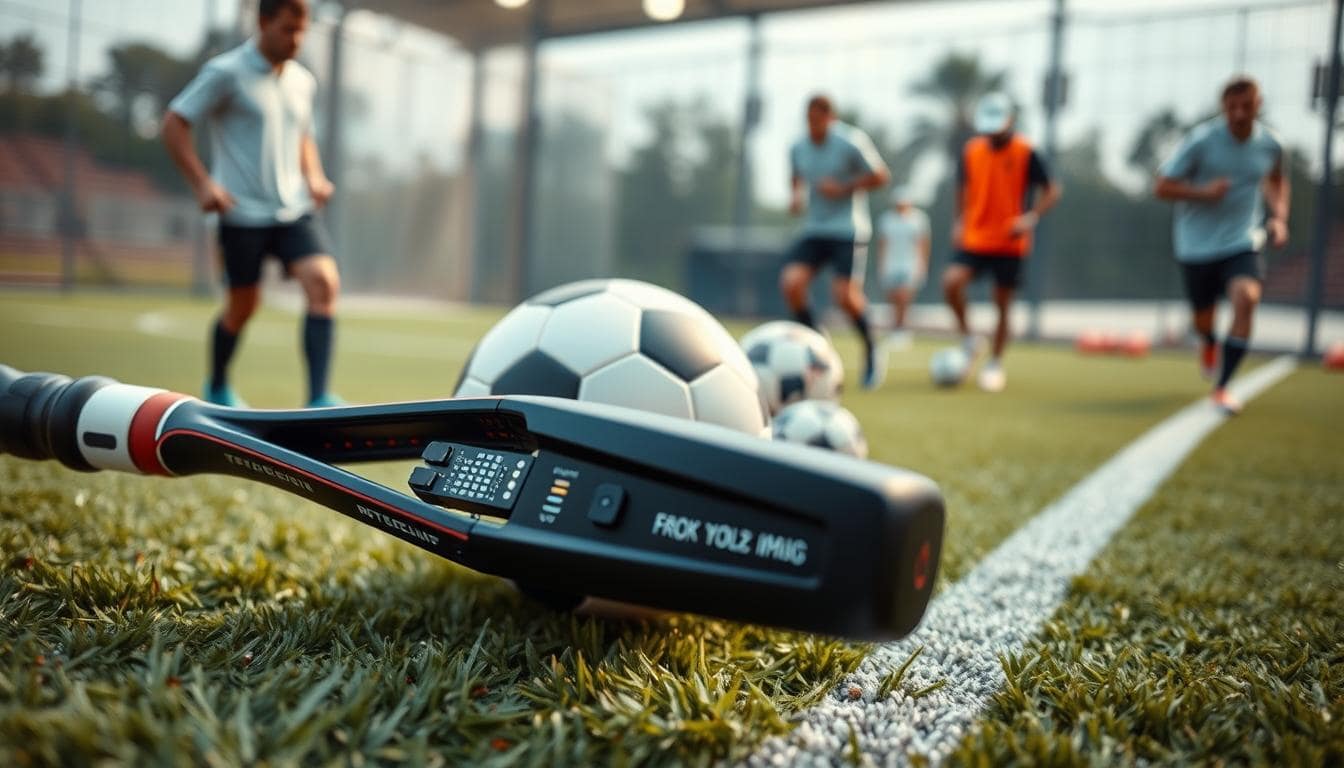
What if the real smarts are in the gear? Imagine a baseball bat that checks your swing. Picture a hockey stick that warns you about over-rotation.
This isn’t fantasy. It’s the next step in using data. With over 3.5 million sports injuries yearly, we need better methods.
The aim is to monitor athletes in real-time to prevent injuries. Using the equipment as a reference point helps. It reduces the impact of skin and sweat issues.
We’re not just tracking athletes anymore. We’re tuning into the conversation between force and form. This lets the gear speak up about performance and safety.
This move to smart sports equipment with embedded sensors offers a portable solution. It makes every practice a chance to learn from biomechanical data.
Why Instrument the Equipment (Not Just Athletes)
Putting a gadget on an athlete is like trying to understand a concert from the parking lot. You get the vibe, but miss the full symphony. The real music happens in the gear itself.
Measuring athletes tells us about their output. But measuring the equipment shows us the physical input and the structural conversation. It’s like knowing a quarterback threw a pass versus knowing how the laces bit into his fingers. This is the real story.
This direct line is important. It cuts through the noise. Human movement is messy, but the equipment experiences forces directly. A force plate in a shoe reports the ground truth, without caring about your running style.
This data is gold for analyzing performance, preventing injuries, and true product innovation.
Think of it as moving from biography to physics. We’re not just tracking the dancer; we’re measuring the floor.
Sensor Taxonomy and Selection: Building Your Toolkit
Before we start, we need to curate. You’re not picking one tool; you’re assembling a team for a specific job. Each sensor type is a specialist with unique skills. Picking the wrong one is like bringing a safecracker to a surveillance job.
The taxonomy breaks down by what they measure and how they work. You have inertial, capacitive, piezoresistive, piezoelectric, and even flexoelectric mechanisms. Your choice depends on the question you’re asking.
The Movement Maestro: The IMU (Inertial Measurement Unit). This is your lead investigator. It combines accelerometers, gyroscopes, and magnetometers to track orientation, acceleration, and rotation in 3D space. Perfect for mapping a baseball bat’s swing path or a ski’s carve. Source 1 uses IMUs for joint angle estimation, showing their power in biomechanics.
The Stress Whisperer: Strain and Force Gauges (Piezoresistive). These are your forensic analysts, feeling the subtle bends and loads. Glue a strain gauge onto a tennis racket throat, and it will tell you exactly where and how the frame flexes on a topspin shot. They measure deformation, which translates directly to applied force.
The Pressure Cartographer: Pressure Sensors (Often Capacitive or Piezoresistive). Think of these as creating a topographical map of contact. They excel in smart shoes for gait analysis or in basketballs to map grip patterns. They answer “where” and “how much” force is applied across a surface.
The Directional Guide: Magnetometers. The compass of the crew. When GPS drops out indoors—in a gym or arena—a magnetometer provides heading reference. It keeps your orientation data grounded in the real world, not just a spinning, relative one.
Selection isn’t about picking the “best” sensor. It’s about the right ensemble. As Source 2 outlines, the sensing mechanism—whether it’s capacitive for touch or piezoelectric for vibration—dictates its native language. Your job is to translate the physical story you need into that language.
A solo accelerometer on a skateboard deck might register a hard landing. But fuse that with strain data from the truck, and you’ll predict which bearing is about to fail. That’s the power of a well-chosen sensor suite in smart sports equipment. You move from monitoring events to diagnosing systems.
Placement strategies and structural integration
Forget duct tape and wishful thinking. Adding sensors to sports gear is like doing microsurgery. You can’t just stick a sensor on a carbon fiber bike frame and expect good results. The data will be as useful as yesterday’s weather forecast.
This is where gadgeteering fails and real engineering starts. The goal is not to attach a sensor. It’s to make the sensor disappear—to blend in like the resin in the fiber. We’re talking about embedded sensors that are unnoticed but essential to the system’s smarts.
The Philosophy of Invisibility
Think of a tennis racket. Slapping an IMU on the outside tells you it moved. But embedding a strain gauge inside tells you how it flexed during a serve. The difference is huge.
This means we must think like structural engineers. Every choice is a balance between getting good data and keeping the material strong. Are we creating a weak spot? Is the sensor itself a stress point that could fail?
There are two main paths, and choosing wrong is like bringing a knife to a gunfight.
- Laminate Embedding: The sensor is placed during the composite lay-up process, cured right into the part. It’s born with the equipment. This offers superb protection and minimal disruption.
- Post-Cure Cavity Machining: A pocket is carefully milled into the finished component, the sensor is placed, and the cavity is sealed. This is for retrofits or when the sensor can’t survive the cure cycle’s heat and pressure.
Listening at the Right Spot
Placement is everything. It’s the difference between hearing the engine roar and isolating the sound of a single faulty wheel bearing. A poorly placed sensor is like a microphone in a dishwasher: you’ll get data, but it’s just noise.
You must ask the fundamental questions. Is the sensor on the neutral axis to measure pure bending moment? Or is it placed eccentrically to capture twisting forces? On a bike frame, a sensor near the bottom bracket feels the world differently than one on the seat stay.
This is beyond just sticking an IMU on an athlete’s knee. Embedding within the equipment itself means you’re measuring the forces the structure experiences. You’re listening to the equipment’s story, not just the athlete’s biography.
The ultimate success of embedded sensors hinges on this marriage of data science and mechanical design. Get the placement and integration right, and the equipment starts talking. Get it wrong, and you’re just adding expensive weight and a very complicated point of failure.
Packaging, Sealing, and Survivability (IP, Impact, Sweat)
The real test for any smart sports equipment isn’t in the data sheet—it’s in the mud, sweat, and hard landings. You’ve moved from the cleanroom to the locker room. This is where prototypes meet their demise.
If your sensor array can’t survive a full season of abuse, you haven’t built sports tech. You’ve built a very expensive, very fragile paperweight.
We’re not engineering for a climate-controlled server rack. We’re engineering for the seventh-inning stretch in a monsoon. For the fifth-set tiebreaker on a sun-baked clay court. For the crash into the boards at 20 mph.
This is Mars rover-level problem-solving, but for a soccer cleat.
The Baseline: IP Ratings and Why They’re Not Enough
An IP67 rating? Consider that your entry ticket. It means dust-tight and protected against temporary immersion. Good. But sports don’t happen in temporary, controlled immersion.
Sweat isn’t just water; it’s a corrosive brine of salts, acids, and oils that eats away at seals and circuitry over time.
Think of it as chemical warfare for electronics. A rating like IP67 or IP68 is a static test. It doesn’t account for the cyclic fatigue of thousands of micro-flexes, impacts, and temperature swings that slowly compromise seals.
The Corrosive Cocktail: Sweat and Chemical Resistance
Your packaging material must laugh in the face of human perspiration. Standard epoxies and silicones can degrade. You need materials specially formulated for chemical resistance.
Encapsulation is key. It’s not just about keeping water out. It’s about creating a stable, inert environment around your delicate components, isolating them from the harsh world outside their armored shell.
Taking a Hit: Impact and Cyclic Fatigue
This is where lab validation meets the real world. Consider the instrumented mouthguards validated for impact reliability. They don’t just sit there. They get smashed by hockey pucks, elbows, and falls onto hard turf.
Your packaging must absorb and dissipate energy. It’s not enough to be hard; it must be tough. A rigid case can transmit shock to the components inside. A well-designed package uses strategic damping materials and structural geometry to isolate the electronics from the blow.
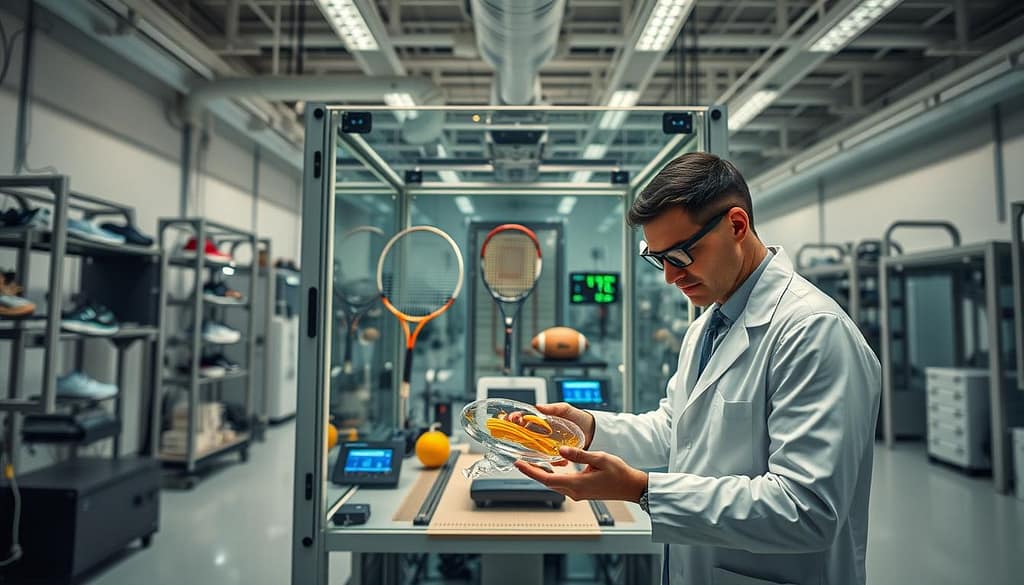
The goal is to design for the thousands of sub-failure impacts—the dribbles, kicks, and drops—that cause cumulative damage. This is the cyclic fatigue that breaks things slowly, silently, and inevitably.
Materials and Armor: Building the Suit
The packaging is the suit of armor. It’s a multi-layered defense system. Often, it involves a hard outer shell for abrasion resistance, a middle layer of impact-absorbing material, and an inner encapsulation that fully potts the electronics.
Integration with the equipment itself is critical. The best armor is the one you don’t notice. Sensors should be molded into the sole of a shoe, cast into a helmet liner, or laminated within a carbon fiber racket. The host equipment becomes part of the protective system.
The Invisible Enemy: UV and Thermal Degradation
Don’t forget the sun. UV radiation breaks down polymers, making seals brittle and plastics discolored. Then there are temperature swings—from the trunk of a car in summer to a snowy ski slope. These cycles cause materials to expand and contract, testing the integrity of every bond and seal.
Your material selection must account for a wide operating temperature range and include UV stabilizers if the equipment will see daylight. This isn’t optional. It’s what separates a toy from a tool.
To make sense of these threats, let’s break them down. The following table maps the common enemies of smart sports equipment to the required defensive strategies.
| Environmental Threat | Real-World Example | Required Protection Strategy | Common Failure Point |
|---|---|---|---|
| Moisture & Immersion | Rain-soaked football game, sweat saturation | IP67/IP68 sealing, hydrophobic coatings, hermetic encapsulation | Gasket failure at cable pass-throughs, compromised adhesive bonds |
| Impact & Vibration | Hockey puck strike, repeated ball impacts on a bat | Energy-absorbing materials (silicones, foams), strategic component placement, strain relief | Solder joint fatigue, cracked PCBs, disconnected internal connectors |
| Sweat & Chemical Exposure | Prolonged contact with athlete’s skin and sweat | Chemical-resistant potting compounds (e.g., polyurethane, specialized epoxies), sealed interfaces | Corrosion of exposed metal, degradation of plasticizers, seal swelling |
| UV & Thermal Cycling | Equipment left in direct sun, winter to summer storage | UV-stabilized plastics, materials with matched coefficients of thermal expansion | Brittle seals, discoloration, delamination of layered materials |
So, where does this leave us? Survivability isn’t a feature you add later. It’s the first principle. You must bake resilience into the DNA of your smart sports equipment from the first sketch. Ask the hard questions early. Can it survive a season? Can it handle the unknown? If the answer is anything but a confident “yes,” go back to the drawing board. The field of play has no mercy for fragile tech.
Signal conditioning and calibration rigs
Forget the glamour of AI predictions; the real magic is in the basement lab. Here, signals are cleaned up and sensors learn their ABCs. It’s not about making insights. It’s about building a solid foundation for insights to stand on.
Without this foundation, your data science is shaky. It’s like building a house of cards.
Signal Conditioning and Calibration Rigs
Signal conditioning is like a master translator for a world full of noise. Your sensor landscape is buzzing with info, but most is just noise. A strain gauge whispers a micro-volt plea, while the 60Hz lighting screams.
Conditioning amplifies the whisper and filters out the scream. It also compensates for changes over time. This turns electrical chaos into a clean signal the processor can understand.
A clean signal is useless without a dictionary. Enter the calibration rig: the system’s truth-teller. This “truth machine” applies known forces and angles. It teaches the sensor what reality actually feels like.
Is your load cell reading 10.2 Newtons when it should read 10.0? The rig knows. Your IMU thinks 90 degrees is 89.5? The rig isn’t having it.
This rigorous schooling creates a calibration curve. It maps the sensor’s raw output to real-world units. Without this, your smart baseball bat is just guessing. It can’t tell a bunt from a home run.
Modern systems take this further. A multi-stage optimization algorithm tunes sensor calibration and computational latency. The goal is to minimize prediction error. It’s a continuous, intelligent adjustment for real-time sensor fusion.
Skip these steps, and you’ve built a brilliant system to analyze garbage. The fanciest machine learning model is worthless if its foundational data is a lie. Your equipment remains dumb, dressed in smart clothing.
In the end, signal conditioning and calibration are the unsung priests of precision. They convert analog screams into digital poetry. They provide the ground truth that makes all subsequent analysis valid.
This pristine, verified data stream is the only legitimate currency for sensor fusion and on-device machine learning.
Sensor fusion and on-device ML
When an IMU, a strain gauge, and a pressure sensor talk to each other, magic happens. They’re like talented but stubborn musicians, each playing their own tune. The accelerometer shouts about movement, the strain gauge murmurs about bend, and the pressure pad whispers of contact. Sensor fusion is the virtuoso conductor who harmonizes them into a symphony of insight.
This isn’t just adding numbers. It’s a sophisticated algorithmic dance that weights, filters, and aligns data streams in time and space. The result? Your instrumented baseball bat doesn’t just report “swing.” It declares, “inside pitch, swing plane 12 degrees off, with a torsional load of 18 Newton-meters.” That’s the full story.
Consider the research. One study achieved a 92.3% accuracy for injury-risk classification by fusing data from inertial measurement units (IMUs) and surface electromyography (sEMG) sensors. The hybrid model saw what individual sensors couldn’t: the subtle neuromuscular patterns preceding a strain. This is the concierge service for athletic data, piecing together clues to prevent disaster.
The Edge of Intelligence: On-Device Machine Learning
Now, imagine that concierge doesn’t need to phone headquarters for every decision. That’s the promise of on-device machine learning. Instead of blasting gigabytes of raw sensor data to the cloud—a process slower than a dial-up modem and fraught with dropout fears—the intelligence lives right in the gear.
This is edge computing in its most literal sense. The “edge” is the sweat-drenched handle of a tennis racket or the carbon-fiber blade of a hockey stick. Here, a tiny microcontroller can run a trained model that recognizes movement signatures in real-time. Is that a slap shot or a wrist shot? The stick knows before the puck leaves the ice.
Another project used ML directly on a shoe-mounted sensor pod to classify running surfaces (asphalt, trail, track) and estimate stride length. No cloud needed. The analysis happened in milliseconds, enabling instant feedback. This shifts the paradigm from “record now, understand later” to “understand now, act now.”
The benefits are profound. Latency vanishes. Privacy improves because personal biomechanical data never leaves your possession. And you’re free from the tyranny of spotty Wi-Fi. Of course, this demands smart hardware choices—processors with enough muscle for matrix math but sipping power like a fine wine.
| Feature | Traditional Cloud ML | On-Device ML (Edge) |
|---|---|---|
| Latency | High (100ms – seconds) | Ultra-low (<10ms) |
| Data Privacy | Data transmitted externally | Data stays on device |
| Power Consumption | High (radio transmission) | Optimized (local compute) |
| Network Dependency | Absolute requirement | None for inference |
| Use Case Example | Post-game analytics report | Real-shot type detection |
The table above isn’t just academic. It’s the playbook for designing the next generation of smart equipment. Do you want a historian or a coach? The cloud is great for deep historical analysis and model retraining. But for the split-second decisions and private feedback loops of training, edge computing is the undisputed champion.
So, where does this leave us? We’ve moved from dumb tools to sensing tools, and now to thinking tools. The fusion of multiple sensor truths, married to localized artificial intelligence, creates a feedback loop so tight it feels like intuition. Your gear isn’t just measuring you anymore. It’s starting to understand you.
Wireless options: BLE, UWB, NFC; antenna design in composites
BLE, UWB, and NFC meet in a bar made of conductive composite. Only the smartly designed antenna gets a signal out. This isn’t a joke—it’s the challenge of getting data from smart gear.
Wires are old news, causing trouble for athletes and engineers. For embedded sensors to work, they must send their data wirelessly. They need to do this smoothly and reliably.
The twist is that materials like carbon fiber, which make equipment strong and light, block radio waves. You’re not just picking a wireless protocol. You’re finding a way to break free.
The Protocol Trio: Choosing Your Data’s Personality
Each wireless standard has its own unique traits. Think of them as special members of a communications team.
- Bluetooth Low Energy (BLE) is your go-to for steady, low-energy data. It’s great for embedded sensors like accelerometers in sports gear. It sends data to coaches or gateways continuously.
- Ultra-Wideband (UWB) is all about precision. It offers real-time, accurate location tracking. Imagine tracking a player’s exact position or a golf club’s swing path in 3D. It’s for when you need exact location, not just activity.
- Near Field Communication (NFC) is the quiet helper. It doesn’t stream data. Instead, it waits for a tap to start. A simple touch can pair devices, update firmware, or access logs. It’s the low-power way to configure and diagnose.
The Antenna Conundrum: Whispering Through a Shield
Try putting a standard antenna in a carbon fiber bike or hockey stick. It’s like trying to use a walkie-talkie in a Faraday cage. The conductive composite mesh blocks your signal.
This is where RF engineering gets tricky. You can’t just add a chip antenna and expect it to work. You need clever solutions.
Engineers might create custom slot antennas in non-conductive layers of the composite. They might use patch antennas in areas without conductive fibers. The goal is to find a way for your signal to escape.
Antenna placement is a 3D chess game. It’s about finding the right spots in the material or using the equipment’s geometry to help the signal. The choice of protocol also matters, as different signals behave differently.
Deploying embedded sensors wirelessly is a two-part challenge. First, choose the right protocol for your data. Second, design an antenna that can send your signal through the composite material. Get it right, and your equipment will talk. Get it wrong, and you’ll have a pricey, silent brick.
Power budgeting and maintenance strategy
If your smart basketball needs a weekly battery swap, you’ve already lost the game of product design. Power isn’t just a technical detail; it’s the fundamental pact between athlete and gear. A disposable battery turns a brilliant piece of smart sports equipment into a high-tech chore. Our mission? Make the power source as invisible as the performance insights it enables.
Think of it like a team’s salary cap. Every microamp of current is a player on your roster. You need stars, role players, and a deep bench of sleep modes. Wasting energy on constant radio transmission is like paying your MVP to sit on the bench. This is where the strategic genius of edge computing enters the playbook.
Crafting the Invisible Engine
Processing data locally on the device—right in the shoe, racket, or helmet—saves the massive energy cost of blasting raw sensor streams to the cloud. It’s the difference between a whisper and a shout. This local intelligence is the first, and most critical, line of defense in the power war.
But even the most efficient processor needs fuel. The answer isn’t a bigger battery. It’s harvesting energy from the sport itself. We’re talking about piezoelectric films that capture the flex of a ski, kinetic generators that thrive on the impact of a baseball bat, or even slim solar cells soaking up ambient light on a cycling helmet.
Each sport presents a unique energy landscape. The table below breaks down the primary tactics.
| Harvesting Method | Ideal Energy Source | Key Design Consideration |
|---|---|---|
| Piezoelectric | Recurring flex & vibration (e.g., ski, rowing oar) | Durability under constant mechanical stress |
| Kinetic / Impact | Sharp, high-force events (e.g., bat swing, foot strike) | Managing peak forces to protect electronics |
| Photovoltaic (Solar) | Ambient or direct light (e.g., helmet, field equipment) | Efficiency in variable and indoor lighting conditions |
Aggressive sleep and wake cycles are the final piece. The sensor system should be a catnap champion, waking for milliseconds to sample data, then diving back into a deep, power-saving slumber. The goal is to make the active duty cycle a tiny fraction of the total time.
So, you’ve built a self-sustaining power system. Great. Now, how do you maintain it without handing the athlete a screwdriver? The maintenance strategy must be as seamless as the data collection.
Imagine a wireless charging puck built into the equipment bag. Drop the smart shin guard in at night, and it powers up without a thought. Or use an NFC tap from a coach’s tablet to run diagnostics and check battery health. The athlete should forget the tech is there—until it delivers that critical piece of advice mid-game.
This holistic approach to power—budgeting like a strategist, harvesting like a scavenger, and maintaining like a ghost—is what separates a gimmick from genuine innovation. It ensures the smart sports equipment enhances the experience without ever becoming the experience itself.
Data integrity, timestamping, and video sync
We spend a lot on precise sensors, but often use a smartphone’s clock to combine their data. This is like using a sundial for a Formula 1 pit stop. The result is not data, but digital confetti.
If your smart baseball glove’s clock is off by just a few milliseconds, linking a late swing with muscle load is hard. True analysis needs a single, reliable source of truth.
You need a hardware timestamping system that marks every data point with nanosecond accuracy. Without it, sensor fusion is just a confusing puzzle.
The Synchronization Imperative
Syncing data with video is essential. It’s what makes analysis clear. Think of a soccer goalkeeper’s dive.
A coach can freeze the video at the exact millisecond of impact. With synchronized data, they can see the exact load on the knee and the orientation of the torso at that exact moment.
This turns “your landing looked awkward” into “the lateral force on your right foot peaked 10ms early, indicating a collapse.” Video shows the truth. Synchronized sensor data explains why.
Choosing your timing source is key. Not all clocks are the same, and the wrong one adds noise. The table below shows the common options.
| Timestamping Method | Typical Accuracy | Pros | Cons | Best For |
|---|---|---|---|---|
| Software System Clock | >10 milliseconds | Ubiquitous, zero extra hardware cost. | Drifts significantly, jittery, easily skewed by OS tasks. | Non-critical logging, basic activity tracking. |
| Network Time Protocol (NTP) | 1-10 milliseconds | Good for syncing multiple devices over a network. | Requires network connectivity, latency varies, vulnerable to packet delay. | Lab environments with stable Wi-Fi/Ethernet. |
| Hardware Timestamping Unit (TSU) | Extreme precision, immune to software lag, creates a single truth for all on-board sensors. | Adds component cost and design complexity. | Professional sports equipment, biomechanical research, any multi-sensor fusion application. |
A dedicated Hardware TSU is the best for instrumented gear. It ensures all sensors work together perfectly. This makes sensor fusion strong.
The result is a clear story. A quarterback’s throw is more than just an IMU spike. It’s a story of grip pressure, shoulder strap strain, arm acceleration, and ball release, all in sync with the video.
This level of integrity turns raw data into useful insights. It makes equipment more than just a tool; it becomes a diagnostic partner.
In short, precise timestamping is essential for a sophisticated sensor system. It keeps your expensive data capture rig from producing useless data. Get the timing right, and your analysis will fall into place.
Privacy, ownership, and compliance
The most complex circuit in smart sports gear isn’t on the PCB. It’s the tangled web of privacy laws, ownership disputes, and compliance nightmares. We’ve built the perfect sensor fusion pipeline, but we forgot to hire the lawyer.
Every dribble, swing, and stride captured is biometric data. This isn’t just metrics. It’s a digital fingerprint of an athlete’s performance, fatigue, and vulnerability. Treating it like any other log file is a great way to meet your corporate counsel in a deposition room.
So, let’s untangle this ethical maze. We need to answer three loaded questions.
The Unholy Trinity of Data Ethics
Privacy: Who gets to see the raw, unfiltered feed of a player’s biomechanics? The coaching staff? The front office? The equipment manufacturer? Privacy by design isn’t a checkbox. It’s a architectural mandate. It means asking if data should be anonymized right at the sensor, before it ever hits the cloud.
This is where edge computing shifts from a technical perk to an ethical shield. Processing data locally on the device can strip out personally identifiable information before transmission. It turns “Player X has a 43% load on their ACL” into “Equipment ID 7B reports a 43% strain threshold.”

Ownership: This is the billion-dollar question. If a team buys the smart shoes, but the player wears them, who owns the movement symphony? The player’s union? The franchise? The chip manufacturer who provided the IMU?
This data directly influences contract value, trade decisions, and insurance premiums. Without clear ownership defined, you’re not building a tech stack. You’re building a litigation factory.
Compliance: Welcome to the alphabet soup of regulations. GDPR in Europe. CCPA in California. A growing patchwork of biometric privacy laws. Your slick, global product must navigate them all. Even a vague nod toward contributing to UN Sustainable Development Goals around health and well-being doesn’t absolve you from the gritty details of consent and data minimization.
Navigating this requires a new kind of product team. You need a lawyer who understands RF protocols. A philosopher who can debate data personhood. And an engineer who can implement their conclusions in firmware.
Here’s a starter list of questions your unlikely trio must answer before production:
- Is consent revocable? Can an athlete opt-out mid-season?
- Does data ownership transfer with the equipment (e.g., if a bat is traded)?
- What is our data retention and auto-deletion policy?
- How do we audit and prove compliance to a regulator?
The goal isn’t to paralyze innovation. It’s to bake ethics into the silicon. Because the most valuable insight your smart equipment provides might just be the legal framework you should have built first.
Lab-to-field validation protocol
If your sensor works great in a lab but fails in a muddy field, it’s a costly mistake. Moving from a clean lab to the messy world of sports is a huge leap. Your validation process is more than just a checklist; it’s a complex journey.
This journey has two parts. First, you need to prove your sensor’s accuracy. Then, you must gain the trust of users. Both steps are essential to succeed.
Act One: The Lab Bench Crucible
In the lab, you’re in control. Every factor is set. Your embedded sensors are tested in a perfect setup, facing known forces and movements. Your goal is to match your system’s output with the perfect standard.
You use force plates for ground reaction forces and high-speed optical motion capture for movement. A recent study compared inertial data to these systems, setting important error limits.
You’re not just looking for a match. You’re creating a map of accuracy. How does your sensor fusion algorithm handle known interference? This phase answers that with precision.
Act Two: The Field Trial Gauntlet
Now, it’s time to leave the lab coat behind. This is the real test of how your system performs in the wild. Does it work in cold rain? When the athlete is tired and moving unpredictably?
One field test took 50 athletes to a stadium, testing their equipment against portable standards. The focus shifted from just accuracy to how well it survives and works in real life.
Your embedded sensors must handle impact, vibration, and moisture. The sensor fusion logic must filter out real-world noise. This phase values practical, usable data over perfect precision.
The table below shows the main differences between lab and field validation. It’s your guide from prototype to trusted tool.
| Validation Parameter | Lab Environment | Field Environment | Primary Success Metric |
|---|---|---|---|
| Control Level | High (isolated variables) | Low (chaotic, unpredictable) | Repeatability vs. Robustness |
| Reference System | Force plates, optical mocap | Portable references, expert observation | Statistical correlation |
| Data Integrity Focus | Pure signal accuracy | Signal reliability under stress | Uptime & consistency |
| Key Challenge | Calibration and alignment | Environmental noise and user variability | Practical usability |
| End Goal | Prove technical feasibility | Earn user and coach trust | Actionable decision-making |
The field trial is the only question that matters: Can a coach make a critical call based on this data? If not, it’s back to the drawing board. Success isn’t just about error rates; it’s about the trust it inspires on the sidelines.
Reference designs and BOM
Enough theory. Let’s get our hands dirty. Moving from a validated concept to a tangible product is the final boss fight. It demands a concrete blueprint and a realistic shopping list.
The Blueprint: Reference Designs
A reference design is the complete open-source recipe for a smart sports equipment module. Think schematics from Cadence or Altium, PCB layouts that minimize EMI in a carbon fiber jungle, and firmware architecture for sensor fusion. This is where edge computing gets physical.
The enclosure isn’t an afterthought; it’s a survivability spec sheet. Your firmware, perhaps on an ESP32 or an nRF5340 from Nordic Semiconductor, must manage data streams efficiently. It’s the difference between a prototype and a product.
The Shopping List: Bill of Materials
The BOM is where engineering dreams meet supply chain reality. Can you source that Texas Instruments MSP430 ultra-low-power MCU for 10,000 units? Is the Vishay strain gauge available before the next season?
Cost, performance, and manufacturability perform a constant tug-of-war. Selecting the right MEMS IMU from Bosch or TDK can make or break your power budget. Every resistor, every antenna embedded in the composite, is a line item with consequences.
This stage separates the curious from the committed. Building real smart sports equipment requires this gritty pragmatism. The game isn’t just analyzed; it’s upgraded. Your move.