
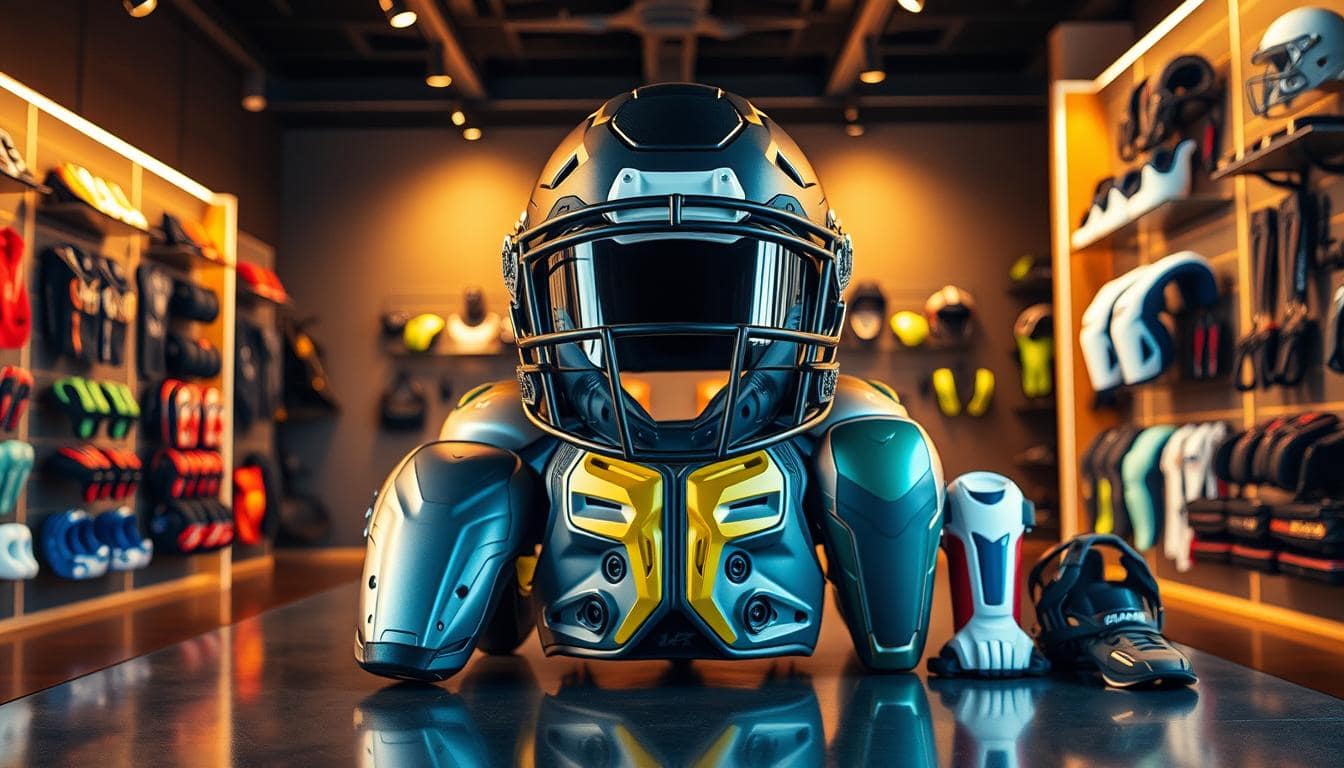
Your grandfather’s leather football helmet wouldn’t stop a rogue tennis ball today. We’ve entered the Iron Age 2.0 for athletes. Now, foam meets fractal geometry and sensors outthink concussions. Imagine padding that laughs at Newton’s third law – CU Boulder engineers already built it using 3D-printed lattices that boost impact absorption by 25%. That’s like swapping tissue paper for Kevlar in your shoulder pads.
Cricket’s 2014 Phillip Hughes tragedy sparked a safety revolution faster than a 90mph bouncer. Today’s neck guards use materials originally designed for military body armor. This shows that sports tech often borrows from life-or-death industries. SYZMIK’s flag football gear makes Tony Stark’s workshop look like a kindergarten craft table – complete with liquid metal alloys that flow like mercury but harden on impact.
Modern concussion prevention gear isn’t just smarter – it’s downright clairvoyant. Embedded sensors now track impact forces in real time. They whisper warnings through smartphone apps before your brain realizes it’s in trouble. This isn’t just padding evolution; it’s a materials science mutiny against the limits of human durability.
From gridirons to cricket pitches, the arms race against G-forces has turned equipment labs into modern-day alchemy workshops. The question isn’t what’s next – it’s how soon until our gear starts fixing injuries before they happen?
Innovations in Protective Gear: Advancing Helmets, Padding, and Beyond
Imagine protective gear that changes as fast as Taylor Swift’s music tours. We’re not just making padding thicker anymore. We’re using new materials and designs that are smarter than TikTok.
CU Boulder has created a new padding design. It’s made with 3D-printed lattices that absorb energy like a Tesla’s crumple zone. This padding can handle six times more energy than old foam and spreads the force evenly.
Sports equipment science is now ahead of traditional padding. New materials stiffen on impact like RoboCop’s armor. Graphene layers are so thin they offer protection without losing flexibility. Athletes can now change their gear like Lego blocks, thanks to modular protection.
Adidas has made sneakers that analyze foot strikes in real time. This makes your shoes smarter than your first phone. Wearable technology in sports gear is turning equipment into biofeedback labs.
SYZMIK’s shirts track how much you sweat, and smart insoles map pressure points with high accuracy. Your helmet’s sensors could outsmart a chess grandmaster soon. Your shin guards might even suggest physical therapy. The era of dumb padding is over, thanks to advanced testing.