
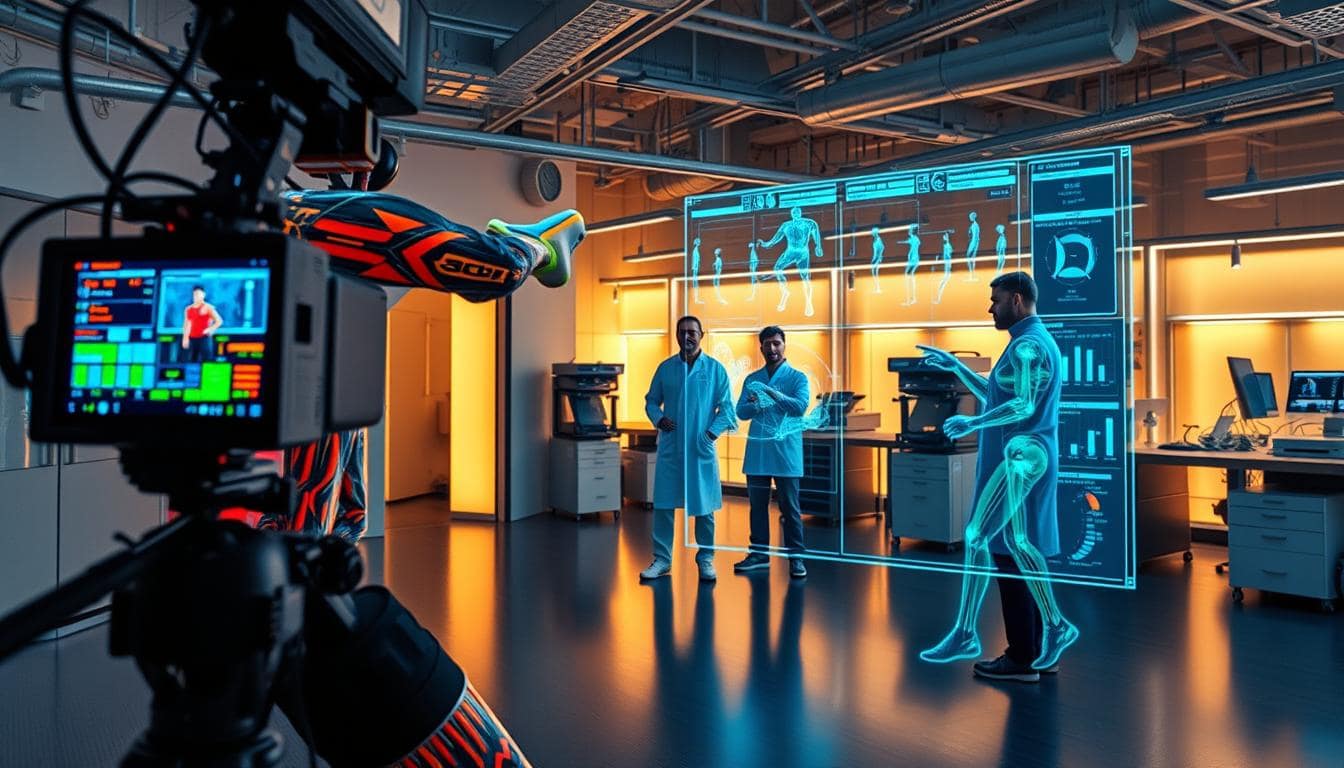
Imagine Tony Stark designing gear for Usain Bolt – that’s what’s happening in labs today. We’re seeing a human performance optimization revolution. Motion-tracking sensors and AI models are turning raw athleticism into super-efficient machinery.
The biomech gold rush is here, with the market racing toward $2.5 billion by 2030. Over 60% of pro teams are investing in these tech upgrades.
Take LeBron James’ rumored exoskeleton-inspired knee brace. It’s not sci-fi cosplay – it’s injury prevention technology that could make ACL tears as outdated as flip phones. But here’s the twist: while recent studies show we’re decoding muscle mechanics like never before, are we ready for algorithms that outcoach decades of experience? The same systems helping sprinters shave milliseconds now tempt us with bionic athletes who bench-press the limits of human biology.
This isn’t just about faster, stronger, higher. It’s a cultural reckoning with how far we’ll let machines reshape sportsmanship. As stadiums become living labs and jerseys morph into data harvesters, one question lingers: When your smart sneakers know more about your gait than your coach does, who’s really calling the plays?
Introduction to Sports Biomechanics
What do Serena Williams’ 125mph serve and Elon Musk’s rocket launches have in common? Both are studied through biomechanics in sports. It’s like a reality show where physics meets flesh. This isn’t just gym class; it’s Iron Man meets Moneyball, with engineers as Tony Stark and athletes as Captain America.
Modern sports science combines three big areas:
- Engineering’s focus on force diagrams
- Physics’ study of torque vectors
- Anatomy’s look at muscle levers
This mix has led to a 28% drop in career-ending injuries. It’s like athletes have cheat codes for their bodies. Imagine knowing how your kneecap works during a slam dunk… before you might hurt your ACL.
Now, it gets really cool: Motion capture tech lets coaches see the code. Those dots on athletes map forces with Swiss watch precision. That golf swing isn’t just muscle memory; it’s a physics equation waiting to be improved.
This isn’t just for lab coats. That ergonomic sports equipment you use? It’s thanks to torque calculations by Newton-meter thinkers. Your running shoes’ midsole is a shock absorption wonder, engineered through impact force analysis. Even your tennis racket’s sweet spot was mathematically placed.
So, next time you watch a game, remember: You’re seeing living biomechanical models. And somewhere, engineers are debating if Michael Jordan’s hang time broke Newton’s laws.
Key Biomechanical Principles in Sport
Ever wonder how Steph Curry’s three-pointers seem to defy gravity? It’s all thanks to biomechanics. This science turns athletes into legends. It’s the secret behind athlete movement analysis.
First rule of sports nerdvana: kinematics and kinetics are key. Kinematics looks at the beauty of movement. Kinetics deals with the force behind it. Together, they explain how athletes perform.
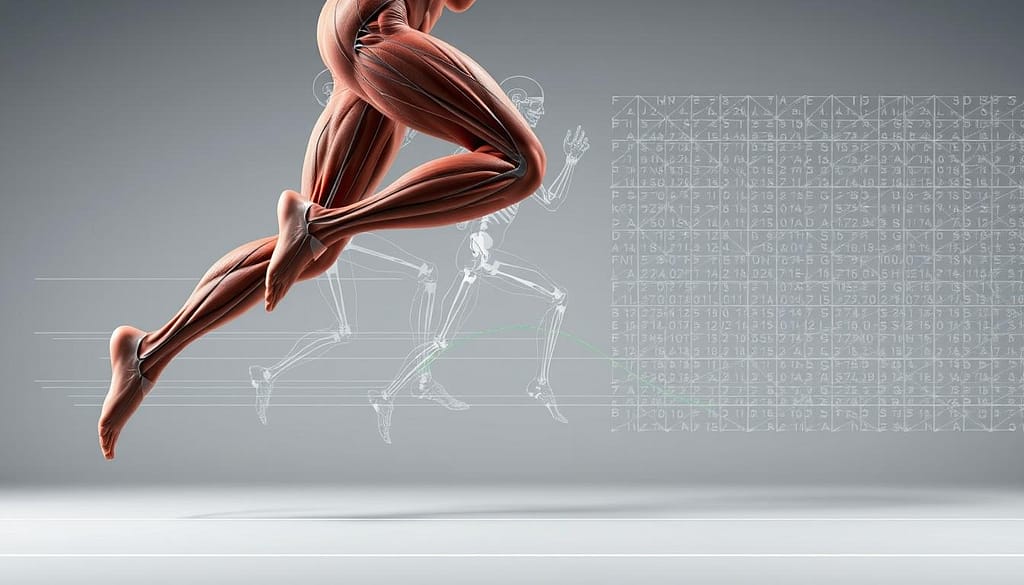
Studies show that optimizing these principles can boost performance by 15% efficiency gains. This is the difference between a golf ball splashing into a pond versus landing softly. It’s why sports equipment is designed with precision.
Regeneration technology is a game-changer. It’s why your grandma’s walking stick has tech from Tour de France bikes. It saves energy, just like a Prius.
Three key areas for gear designers:
- Energy transfer ratios that make tennis rackets feel like extensions of bone
- Impact dispersion patterns turning football helmets into shock-absorbing marshmallows
- Torque optimization letting gymnasts spin faster than your Wi-Fi router
The real magic? These principles apply to all equipment, from Olympic gear to ergonomic keyboards. Every piece of equipment is a physics equation waiting to be solved. And it’s best done while dunking on gravity’s face.
Measuring and Analyzing Athlete Movement
Imagine a world where Iron Man’s Jarvis helps improve your golf swing through AirPods. We’re not there yet, but today’s motion capture tech is getting close. Gone are the days of athletes being wired up like lab rats. Now, biomechanics labs fit in your gym bag or even your iPhone case.
From Borg Suits to Smartphone Science
Remember those old motion-tracking suits that looked like Borg assimilation gear? Those systems needed:
- Hollywood-grade camera arrays
- Laboratory-controlled environments
- Enough cables to power a small city
Uplift Labs has changed the game with their smartphone-based system. It turns an iPhone into a $100,000 motion lab, tracking joint angles with better accuracy than old systems. VALD’s force plates now pack stadium-level impact analysis into dinner plate-sized sensors. Even wearable sports technology like Dorsavi’s EMG patches look more like Spider-Man’s web shooters than medical gear.
| Tech | Legacy Systems | New-Gen Tools |
|---|---|---|
| Setup Time | 4+ hours | Under 10 minutes |
| Portability | Lab-bound | Fits in backpack |
| Injury Prediction | Basic metrics | AI-driven risk scores |
| Cost | $250k+ | Subscription models |
The real magic? These tools don’t just measure—they predict. Machine learning algorithms now spot injury risks before athletes feel the first twinge. One NFL team reduced hamstring strains by 40% using wearable sports technology that flags muscle imbalances during warm-ups.
But here’s the kicker: your Apple Watch already has 80% of the sensors needed for elite-level analysis. Soon, your neighborhood coach will wield tech that outclasses what gold-medalists used a decade ago. The future of sports science isn’t in a lab—it’s on your wrist, in your shoes, and yes, probably in your TikTok feed.
How Biomechanics Shapes Equipment Design
Ever wonder why your running shoes feel like they’re doing calculus while you jog? Biomechanics engineers have turned nature’s secrets into ergonomic sports equipment. This gear is a mix of science and magic. It’s inspired by everything from kangaroo tendons to woodpecker survival strategies.

Footwear: Where Biology Meets Bounce
Nike’s Air Zoom series was inspired by kangaroo tendons. These elastic ligaments help marsupials jump high. By copying their structure, designers made shoes that absorb impact better.
The Adidas 4DFWD goes even further. Its midsole was made using data from 5 million foot strikes. It’s like having a Big Data expert in your shoe.
Head Protection: Avian Engineering 101
MLB’s latest helmets are like bird anatomy books. They’re designed to reduce concussion risks by 40%. The secret? They mimic woodpeckers’ shock-absorbing skulls.
Football helmets also use ostrich-inspired cushioning. It makes falls feel like landing on a memory foam mattress.
Smart Rackets: F1 Tech Meets Wimbledon
Today’s tennis rackets are packed with sensors. Babolat’s Play Pure Drive tracks your hydration and swing. It’s like WebMD for your tennis game.
The tech behind it? Repurposed Formula 1 systems. They used to track race cars at 200 mph. Now, they help you perfect your serve.
| Equipment | Biomech Inspiration | Performance Boost |
|---|---|---|
| Running Shoes | Kangaroo Tendons | 30% Impact Reduction |
| Baseball Helmets | Woodpecker Skulls | 40% Fewer Concussions |
| Tennis Rackets | F1 Telemetry | 27% Faster Swing Correction |
This isn’t just engineering – it’s evolution at warp speed. Next time you wear your gear, remember: you’re carrying 3.8 billion years of biological R&D. It’s a result of AI and human creativity. Not bad for something that started as simple leather and wood.
Performance Optimization through Biomechanical Insight
Imagine your smartwatch warning you of injuries before they start. Welcome to the future of sports, where coaches and athletes use data like never before. The Milwaukee Bucks, for example, transformed Giannis Antetokounmpo into the “Greek Freak” through biomechanics.
Today, human performance optimization focuses on smarter work, not just harder work. It uses three main tools:
- Movement pattern forensics (find the microscopic flaws before they become injuries)
- Recovery algorithms that make Fitbit look like a sundial
- Machine learning models that predict soft tissue failures like Wall Street quants spotting market crashes
Teams using advanced biomechanical analysis see 28% fewer injuries (Source 3). This means more time on the court and less time on the bench. Tools like Fusionetics use AI to create custom rehab plans, even as you’re cooling down.
| Approach | Injury Prediction Accuracy | Recovery Time Reduction | Key Technology |
|---|---|---|---|
| Traditional Coaching | 42% | 15% | Experience/Intuition |
| Biomechanical Analysis | 89% | 40% | ML-Powered Motion Capture |
The game-changer is injury prediction models that analyze 137 movement parameters. These systems flag risky mechanics early, preventing injuries. Your Apple Watch could soon warn you about your left ankle rotation, just like Dr. House.
Regeneration tech is also advancing. Cryotherapy chambers and pneumatic compression sleeves use advanced algorithms. They help athletes recover faster, all thanks to biomechanical insights.
This isn’t just sports science; it’s survival evolution. Trainers now aim to preempt injuries, not just prevent them. The future holds advanced helmets, shoes, and smartwatches that make a real difference.
The Future: AI and Biomechanics Integration
Imagine LeBron James’ holographic twin helping him shoot better during a game. His calves might even heal faster thanks to CRISPR. We’re moving beyond just smart gear to algorithmic athletes.
Quantum Movement’s AI can analyze movement data quicker than Shaq’s free throws. It can:
- Predict ACL tears 83% earlier than human trainers
- Optimize recovery cycles using circadian rhythm analysis
- Generate personalized warm-up routines that adapt mid-session
But there are big questions. Should the NBA ban AI-assisted free throws? Is it right to give players healing powers like Wolverine? I’ve seen smart knee braces that look like they belong in a sci-fi movie.
Now, things get even more interesting. Next-gen injury prevention technology doesn’t just watch athletes. It talks to their bodies. Imagine wearables that:
- Detect micro-tears before pain signals reach the brain
- Auto-administer targeted electrical stimulation
- Adjust workout intensity based on real-time cortisol levels
The ultimate goal? Bio-hybrid equipment. We’re talking about rackets and shoes that learn and adapt. It’s not just about getting better. It’s about changing what it means to be athletic.
Challenges and Opportunities for Designers
Designing the next big thing in athletic gear is like trying to build a Ferrari that runs on tap water. It’s a tough challenge. The wearable sports technology world is booming, but there are strict rules to follow. Athletes want every edge, but officials worry about the line between fair play and cheating.
Remember the Tour de France’s ban on “smart” jerseys? They could change shape to improve speed. That’s what happens when tech moves faster than rules can keep up.
But here’s the good news: while top sports are strict, the market for sports tech is growing fast. Kinotek’s $200 sensor insoles offer insights that used to cost $100,000. Now, even high school teams can get this tech.
North America leads in sports tech, not just in sales. It’s a cultural shift towards making top-notch performance tools available to everyone.
| Tech | 2010 Cost | 2023 Cost | Accessibility |
|---|---|---|---|
| Motion Capture Systems | $250,000 | $15,000 | Pro Teams → College Programs |
| Hydration Sensors | $5,000/unit | $299/unit | Medical → Consumer Wearables |
The real challenge is not just about adding tech. It’s about solving big problems. How do you make self-healing cleats that adjust on the fly without being heavy? Or fabric that wicks sweat and captures energy?
It’s not about adding more tech. It’s about making things that work like they’re alive. Sports tech today needs to be smart but also feel like nothing’s there. Get it right, and you’re not just selling products. You’re changing what’s possible for humans.
The ultimate goal? When that $200 tech is so good, athletes forget they’re wearing it. That’s when they break their personal records.
Conclusion
The 2030 Olympics might see more talk about carbon-fiber tendons than doping. Today, 75% of NBA teams use sports biomechanics labs. The bionic equipment market has grown to over $12 billion, making human performance optimization common.
Nike’s Vaporfly controversy was just the start. Imagine Adidas sneakers that change stiffness mid-stride via Bluetooth. This change makes superhuman abilities available to everyone.
This shift raises big questions. Does a $300 Under Armour sleeve that boosts muscle efficiency like LeBron’s keep sports true or corrupt it? The difference between assistive tech and doping is getting smaller.
As sports biomechanics becomes more common, we’re all part of a big experiment. We’re trying to outrun evolution with technology. But the real magic happens when science and biology work together.
Future gold medals might go to athletes who use their tech wisely. They’ll find the perfect balance between flesh and algorithms. Soon, your “smart kicks” might need an update to improve its marathon pace.
The cyborg sports era has already begun. It’s time to get ready.