

As of October 13, 2026, USMNT Roster Decisions around the October friendlies need a careful frame. The research packet for this assignment did not include verified roster, opponent, venue, kickoff, injury, or result data, so this analysis does not name players or treat any match as confirmed. That is not a small limitation. In national-team coverage, a missing date or unverified call-up can turn a performance read into a false premise.
The safest approach is to treat the October window as an audit question: what should a performance staff, coach, and technical director evaluate before deciding who travels, who starts, and who is protected from avoidable load? Any match staged before October 13, 2026, has already happened and should be covered in the past tense. Any match after that date needs confirmation from official sources before it is framed as scheduled. For roster and match verification, the first stop should be the official U.S. Soccer team page, not social media fragments or rumor accounts.
Why USMNT Roster Decisions Need Verification
A Roster Is A Performance Document
A national-team roster is often discussed as a list of names, but it is really a performance document. It tells us which player profiles the staff values for a specific camp: recovery speed, pressing repeatability, set-piece utility, positional coverage, goalkeeper distribution, or late-game defensive control. Without the actual roster, the fair analysis is limited to process. A staff can only make sound choices if its information chain is clean: club minutes, travel demands, wellness reporting, training availability, and medical clearance where officially disclosed.
The October context matters because friendlies can serve different functions. They can test partnerships, reduce risk for heavily used players, expose younger players to senior camp standards, or give coaches a controlled setting for tactical work. Yet those are possible functions, not confirmed aims, unless the federation, staff, or official match materials say so. That distinction keeps the analysis honest.
What The Missing Data Changes
Because the supplied research did not include opponents or venues, it is not responsible to infer tactical needs. A high-possession opponent would create one selection problem; a transition-heavy opponent would create another. A domestic venue could reduce travel stress for some players; a foreign venue could change recovery planning. Even altitude, surface type, and climate can alter substitution planning and equipment choices, but none of those details can be asserted here.
There is still a useful standard. Analysts should separate verified facts from reasonable questions. A verified fact would be an official roster release. A reasonable question would be whether a player’s club workload made a full 90-minute friendly appearance prudent. The same caution applies to broader pathway coverage, including youth integration. Related development questions appear in CadCamNet’s piece on USMNT youth depth, where access and workload concerns sit beside performance upside.
Performance Signals Beyond The Call-Up Sheet
USMNT Roster Decisions And Load Data
USMNT Roster Decisions should not be judged only by form debates. The better question is whether the staff used the best available performance evidence. Wearables can help here, though they are not magic. GPS units and heart-rate systems can identify distance bands, acceleration patterns, deceleration load, and recovery trends. In a short national-team camp, that information can shape training intensity and substitution plans. It cannot, on its own, prove tactical fit or mental readiness.
The equipment analyst’s view is cautious: wearable data is most valuable when it reduces uncertainty without pretending to remove judgment. If a winger is arriving after heavy club minutes, load data may support a reduced training dose. If a center back has not played regularly, training outputs may help staff judge match sharpness. Still, data privacy, device consistency, and club-to-country data sharing all need clear governance. The performance benefit is real only if the information is reliable, comparable, and used by qualified staff.
Equipment, Wearables, And Selection Risk
Selection risk is not just about picking the wrong player. It includes the risk of asking the right player to do the wrong physical job. Boots, recovery tools, compression garments, hydration monitoring, sleep tracking, and training-surface planning all sit inside that risk model. In friendlies, the staff can test systems without the competitive penalty of a qualifier, but the athlete still absorbs the workload.
This is where USMNT Roster Decisions intersect with sustainability. Repeated emergency shipments of gear, duplicate equipment loads, and single-use camp supplies carry environmental costs. Better planning can reduce waste while also supporting athletes. A camp that knows its surface conditions, climate needs, and likely training load can pack fewer redundant items and still protect performance. The goal is not austerity. The goal is precision.
Sustainability In Camp Design And Equipment
Travel Load Has A Football Cost
International soccer cannot avoid travel, but it can measure it more honestly. Travel load affects sleep, meal timing, soft-tissue readiness, and training quality. It also creates emissions, especially when camps move between distant markets. Without verified October venues, no claim can be made about the footprint of this specific window. The broader principle is still sound: performance planning and sustainability planning often point in the same direction. Fewer unnecessary movements can mean better recovery and lower operational impact.
FIFA’s published international match calendars provide the official structure around national-team windows. Within that structure, federations still make choices about venue clustering, equipment freight, staffing numbers, and recovery logistics. Those choices shape both match preparation and environmental cost. For a program trying to improve marginal gains, ignoring travel design would be a performance mistake as well as a sustainability miss.
Gear Choices Should Match The Use Case
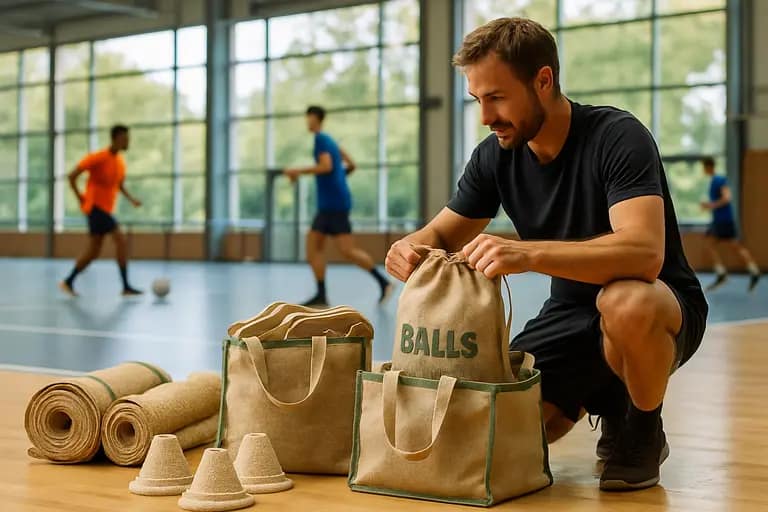
Soccer equipment has a lifecycle. Training tops, boots, GPS vests, cones, recovery bands, bottles, and medical supplies all come from supply chains and eventually leave camp. Sustainable materials management, as described by the U.S. Environmental Protection Agency, starts by considering impacts across a product’s life rather than treating disposal as the only issue. In a national-team setting, that means buying durable items, repairing what can be repaired, and avoiding low-value promotional waste.
For readers interested in the intersection of sports equipment and eco-friendly practices, SCAR Sports offers related coverage in the same network. The key for a national team is not to make sustainability a separate department. It should be part of camp design: how much is shipped, what is reused, which devices are standardized, and whether athletes get reliable gear without excess.
USMNT Roster Decisions For October Friendlies
USMNT Roster Decisions for the October friendlies should be assessed only after the verified roster, match dates, venues, and results are available. Until then, the strongest analysis is a checklist rather than a verdict. Did the staff balance club workload with national-team needs? Did call-ups match the tactical problem presented by the opponent? Were younger players given a development purpose rather than a symbolic place? Did equipment and wearable systems support the athletes without collecting data that had no clear use?
Those questions keep the discussion grounded. They also prevent the common mistake of treating every omission as controversy and every call-up as proof of a long-term hierarchy. Friendly windows can inform selection, but they rarely settle it alone. A cautious read protects the athlete, respects the evidence, and leaves room for the next verified roster release to change the evaluation.
The performance standard is simple: USMNT Roster Decisions should improve team capability without adding needless physical, logistical, or environmental strain. That is the point where roster building, sports technology, and sustainability meet. Until official information fills the gaps, any sharper claim would be guesswork.