
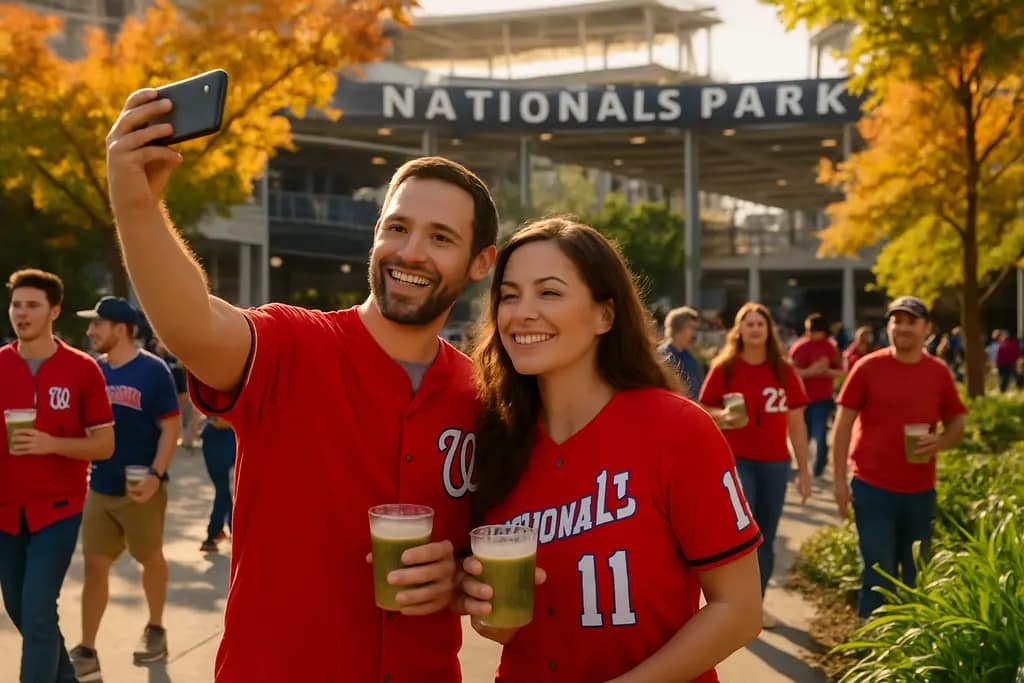
Nationals Park improvements now sit at the center of a familiar sports-business question: how much public spending is justified to keep a major venue economically useful, environmentally credible, and competitive for fans? The District’s plan is not about building a new ballpark. It is about preserving a 2008 venue that anchors baseball activity, nearby restaurants, hotels, apartments, transit trips, and non-game-day foot traffic around Navy Yard.
That distinction matters. A maintenance project can sound less dramatic than a stadium relocation fight, but deferred repairs can become expensive fast. For a ballpark that already carries a sustainability identity, the economic test is whether public capital keeps the venue working efficiently rather than funding cosmetic upgrades with weak public return.
Why Nationals Park Improvements Matter
The economic case starts with asset preservation. The research record provided for this analysis says the Ballpark Preservation and Improvement Fund has a total estimated cost of $320 million, with money intended for critical infrastructure replacement, modernization, and exterior work at Nationals Park. The District’s capital materials describe the preservation and improvement need in that range, tied to maintaining the public facility over a multi-year period through FY2031 District capital plan.
That is a large public commitment, but the spending category is worth separating from luxury development. Replacing worn systems, protecting building envelopes, and keeping the fan environment functional can reduce the risk of sudden closures, costly emergency repairs, and weakened event operations. In sports economics, the least visible investment can be the most defensible if it prevents higher costs later.
Nationals Park Improvements And Revenue Timing
The Nationals Park improvements also intersect with debt timing. The research notes say the Ballpark Fee was set to be renamed the Sports Facilities Fee, with dedicated revenue streams supporting both Nationals Park’s preservation fund and RFK Campus infrastructure after the ballpark bonds were fully paid, which the fiscal impact document expected by the end of FY2026 fiscal impact statement. Because today is October 8, 2026, that timing has just passed; without a newer debt-service confirmation in the research set, it is safer to describe the payoff as a budgeted expectation rather than a verified completed event.
This timing issue matters because sports-facility funding depends on trust. If a fee once tied to one venue becomes a broader sports infrastructure tool, taxpayers and businesses deserve clear accounting. The case for reinvestment improves when dedicated revenues are easy to trace, when maintenance spending is separated from team operating expenses, and when the public can see which repairs reduce risk or improve long-term utility.
Sustainability As Economic Risk Control
Nationals Park’s sustainability record gives the preservation plan a clearer benchmark than many older venues have. The ballpark has been identified in the research notes as the first major professional stadium in the United States to earn LEED Silver certification. The same notes cite water savings of about 3.6 million gallons per year, a roughly 30 percent reduction in water consumption, and field lighting that uses about 21 percent less energy than typical field lighting. Those claims should remain tied to documented facility performance, not treated as proof that every future upgrade is sustainable by default.
For a sports venue, sustainability is not just branding. Water systems, lighting, stormwater controls, low-emission materials, and transit access affect operating costs and local environmental burden. If the planned work protects those systems or updates them without raising energy demand, it can support both the budget and the surrounding neighborhood. If the work adds consumption without public reporting, the sustainability case weakens.
Water, Energy, And Ballpark Value
The research notes also identify a 6,300-square-foot green roof, recycled and regionally sourced construction materials, low-VOC interiors, and stormwater filtration intended to protect the nearby Anacostia River. These features are not separate from the economic discussion. In a riverfront district, stormwater control can reduce environmental strain. In a warm-weather baseball venue, efficient water and lighting systems can reduce utility exposure. In a dense neighborhood, lower-impact operations can support public acceptance of high event volume.
That is why the next phase should be measured against practical outcomes: fewer emergency repairs, stable operating performance, efficient systems, and documented environmental results. A sustainability claim attached to a capital project should answer a basic question: will the work reduce resource waste or simply extend the building’s life? The best answer may be both, but the evidence needs to be published in plain terms.
Local Business Effects Around Navy Yard
The first Nationals Park project changed the area around the ballpark. The research set links the stadium to substantial public and private investment under the Anacostia Waterfront Initiative and identifies the Capitol Riverfront as a district with tens of thousands of residents, a large daytime workforce, and millions of square feet of development. Those figures show why the venue’s condition matters beyond baseball.
A functioning ballpark supports predictable event calendars, and predictable calendars help restaurants, bars, parking operators, hotels, transit services, and retail tenants plan staffing and inventory. Baseball’s home schedule is unusually valuable because it brings repeated foot traffic across spring, summer, and early fall. That rhythm is different from an NFL venue with fewer home dates, or an arena with a denser mix of concerts and winter sports.
Spillover Benefits Need Careful Accounting
Still, spillover claims deserve caution. Stadium districts can shift spending from one part of a city to another rather than creating entirely new regional activity. Some spending comes from local fans who might otherwise spend elsewhere in Washington. Some benefits flow to property owners rather than workers. A credible review of Nationals Park improvements should separate direct ballpark operations from broader real estate appreciation, visitor spending, and fiscal gains that would have occurred through Navy Yard growth anyway.
This is where D.C.’s wider venue policy becomes relevant. The same funding discussion touches RFK Campus redevelopment, and readers comparing the public-cost question across venues may find our analysis of the Commanders stadium impact at RFK useful. Additionally, for insights into another sport within the same network, Dashers Hockey provides relevant coverage on venue and team issues beyond baseball.
Public Funding Tests For Baseball Venues

The strongest argument for public participation is that the District owns an asset that must be maintained. Public ownership changes the frame. If the venue deteriorates, the public still carries risk. If core systems fail, event revenue, neighborhood activity, and facility value can suffer. In that sense, planned capital work may be more responsible than waiting for failure.
The weaker argument is that any sports venue spending automatically pays for itself. That claim needs more proof. The research notes identify long-term lease stability through 2059 and a dedicated preservation funding structure, but long leases and dedicated fees do not guarantee efficient spending. They create a platform for accountability. The District should be able to show how each major project supports safety, durability, accessibility, energy performance, water performance, or revenue protection.
- Project transparency: publish categories for repairs, modernization, exterior work, and sustainability-related upgrades.
- Performance tracking: report water, energy, maintenance, and event-use metrics before and after major work.
- Public-return analysis: separate neighborhood growth from ballpark-specific tax and job effects.
- Lifecycle discipline: prioritize systems that reduce repair risk and operating waste over short-term presentation upgrades.
For fans, the visible result may be a cleaner, more reliable ballpark. For the city, the better result would be a venue that costs less to keep functional over time, supports event activity without heavier environmental strain, and protects the investment already made in Navy Yard.
What Nationals Park Improvements Need To Prove
The central question is not whether a Major League Baseball park should be maintained. It should. The question is whether the Nationals Park improvements can show a clear public return through avoided repair costs, stable event operations, neighborhood economic support, and measurable sustainability performance.
That standard is fair to taxpayers and fair to the team. Baseball venues are long-life civic assets only if they are managed with public evidence. A capital plan that protects infrastructure, preserves water and energy gains, and keeps the Navy Yard event economy active can be defensible. A plan that relies only on broad claims about growth would be harder to justify. D.C.’s next task is to make the numbers visible enough for residents, fans, and local businesses to judge the project on results.