
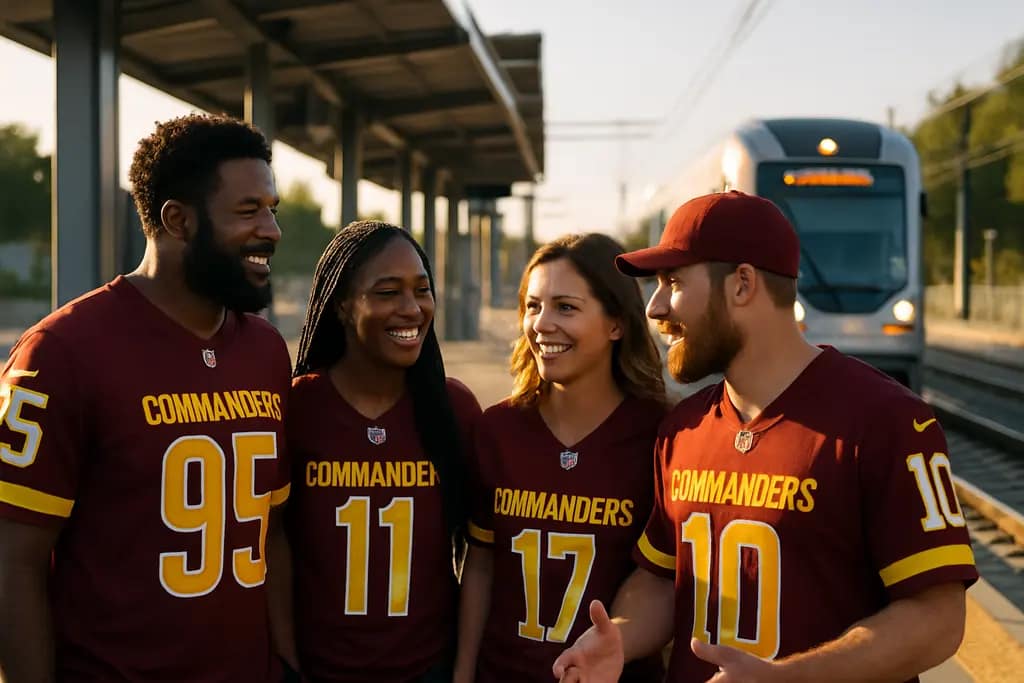
The Commanders transit upgrades approved by the D.C. Council on October 6, 2026, put a measurable sustainability question at the center of Washington’s planned return to the RFK campus: can a 65,000-seat football stadium move event crowds without rebuilding the old car-first model around it?
The answer is not settled. The funding package is substantial, with $305 million directed toward transit access near the future stadium site. Yet most of that money is concentrated in one place: Stadium-Armory Metro station. That may be the correct priority, because rail clearance after NFL games, concerts, and other large events will likely decide whether the campus works as a lower-emission sports district or simply shifts congestion onto nearby streets.
An insightful resource for sports infrastructure news in their network, Sports Wire News provides in-depth coverage of stadium and event-related topics. In this scenario, the pivotal question is whether transit funding, event operations, and parking limitations align before the anticipated 2030 stadium opening.
What Commanders transit upgrades fund
Stadium-Armory Gets The Main Allocation
On October 6, 2026, the D.C. Council approved $305 million in transit-focused funding tied to the planned stadium near the former RFK Stadium site. According to The Washington Post, $300 million is allocated to Stadium-Armory Metro station upgrades, while $5 million is directed to planning for the Gold Line bus rapid transit corridor connecting the stadium area with Union Station.
The station work is expected to include mezzanine expansions, added or improved escalators, elevators, fare gates, entrances, and street-level connections. Those are not glamour items in stadium design, but they are the parts of the building-adjacent system that determine whether 30,000-plus transit riders can leave a night game without a long queue becoming a safety and service problem.
The timing is central. The station improvements are aimed at completion by the planned stadium opening in 2030. That gives planners roughly four years from the October 2026 approval to deliver a major access project before football crowds, concerts, and other large events begin using the site at full scale.
Why Commanders transit upgrades matter for egress
Metro planning staff estimated that, without station upgrades, post-event clearance at Stadium-Armory could take more than two hours. For a sports venue, that is more than an inconvenience. It affects public safety, neighborhood traffic exposure, rider confidence, and the practical appeal of transit for future games.
A long clearance window can also undercut sustainability goals. If riders expect a two-hour exit, some will choose private vehicles even if rail is available. That decision multiplies across NFL crowds, concerts, college games, and other events. The environmental value of a rail-served stadium depends not only on station proximity, but also on whether the station can absorb peak demand after the final whistle or encore.
Transit Mode Share And Stadium Sustainability
A 65,000-Seat Venue Needs More Than Proximity
The proposed stadium is expected to seat approximately 65,000 people. The planning assumption cited in the approved transit discussion is that more than half of that capacity, or over 30,000 attendees, would arrive by public transit through rail or bus. That is the strongest sustainability argument for the site: a large sports crowd concentrated near existing and expanded transit can reduce private car dependence if the service performs under stress.
For Commanders transit upgrades, the phrase “more than half” carries a lot of weight. If the eventual event-day share falls below that mark, parking demand and curb pressure will rise. If it is met or exceeded, the stadium could avoid some of the land consumption, idling emissions, and neighborhood congestion common around suburban stadium models.
The plan also calls for a limited parking footprint. Research for the RFK campus indicates about 6,000 parking spaces planned for the broader complex, a number that signals an intent to discourage routine car-heavy attendance. That restraint only works if the rail and bus alternatives are reliable, legible, and available after late events.
Reduced Parking Is A Land-Use Choice
Parking supply is an environmental decision as much as a transportation decision. Large surface lots can lock valuable urban land into low-productivity use, worsen heat exposure, and push foot traffic away from transit. The RFK campus materials point toward fewer and less obtrusive parking garages, some underground or hidden, with parking kept outside residential zones, park-and-ride strategies, event-day traffic management, spillover lots, and green-space protection, as outlined in the RFK campus submission materials.
That approach is promising, but it is not self-executing. A stadium can be drawn with constrained parking and still generate traffic problems if transit service is underbuilt, if rideshare staging is poorly managed, or if event schedules stack demand in the same evening window. The sustainability gain sits in the operating details.
A related analysis of fan mobility in Commanders stadium plans examines why Metro upgrades, bus design, and parking limits have to be judged together rather than as separate commitments.
The Gold Line Funding Gap
Planning Money Is Not The Same As Service
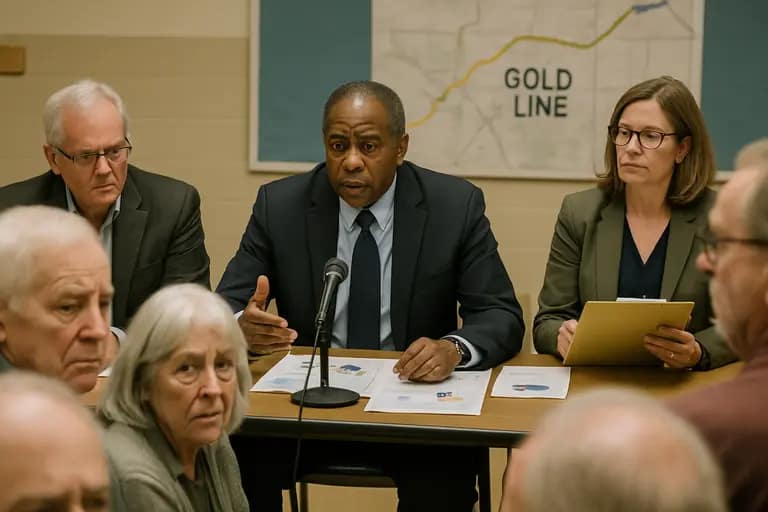
The $5 million for Gold Line planning matters because east-west bus capacity could spread access beyond the rail station and make the stadium less dependent on a single post-event funnel. The proposed corridor would connect the stadium area with Union Station, which could help riders transfer between regional rail, Metro, bus, and walking routes.
Still, planning money is not construction funding. The research record for this project indicates that the Gold Line’s full buildout has a far higher cost estimate than the amount approved for planning and design, and construction was not expected to be finished by the 2030 stadium opening. That makes the bus element a sustainability risk rather than a guaranteed benefit.
The sustainability case for Commanders transit upgrades is therefore strongest on the Metro station side and weaker on the bus rapid transit side. A completed Stadium-Armory upgrade can improve crowd processing. A planned but unfinished Gold Line cannot carry event passengers at scale. That distinction should shape public expectations before the first kickoff at the new venue.
Event Operations Will Decide The Real Result
Even with capital upgrades, operations will decide whether the project reaches its transit goals. Late-night train frequency, bus staging, fare-gate throughput, elevator reliability, crowd control, pedestrian routes, bikeshare access, remote parking, and shuttle coordination all affect mode choice. A fan does not experience a funding package; a fan experiences the trip home.
Concerts and special events also complicate the test. NFL games have a relatively predictable calendar and crowd profile. Concerts may end later, draw different travel patterns, and create heavier rideshare demand. If the station and street network are designed only around football Sundays, the sustainability performance could weaken across the full event calendar.
For Commanders transit upgrades, the fairest benchmark will not be whether the station looks better in 2030. It will be whether post-event queues shrink, transit mode share stays above the target, and nearby neighborhoods avoid routine traffic spillover.
The 2030 Commanders Stadium Event Test
What Success Should Look Like
By the planned 2030 opening, success should be measured in practical outcomes. Can more than 30,000 attendees arrive by rail or bus without severe crowding? Can Stadium-Armory clear post-event passengers in a reasonable window? Are elevators and escalators reliable enough for people with mobility needs? Does limited parking remain politically durable once high-demand events begin?
The strongest part of the plan is its basic hierarchy: fund the main Metro station first, limit parking, and use bus planning to widen access. That aligns with lower-emission event travel, land-use efficiency, and protection of green space. The risk is that the hierarchy becomes incomplete if the Gold Line remains in planning while the stadium opens and event demand arrives.
The public investment is large enough to require clear reporting before 2030. D.C. officials, Metro, and stadium planners should be judged against dates, capacity targets, accessibility performance, and neighborhood traffic outcomes. Without those measures, sustainability claims will be too easy to state and too hard to verify.
The Commanders transit upgrades can support a more sustainable stadium model at RFK, but only if the funded station work is delivered on time and the unfunded pieces do not quietly shift the burden back to cars. The project’s environmental value will be proven after events, on platforms, sidewalks, bus lanes, and residential streets.