
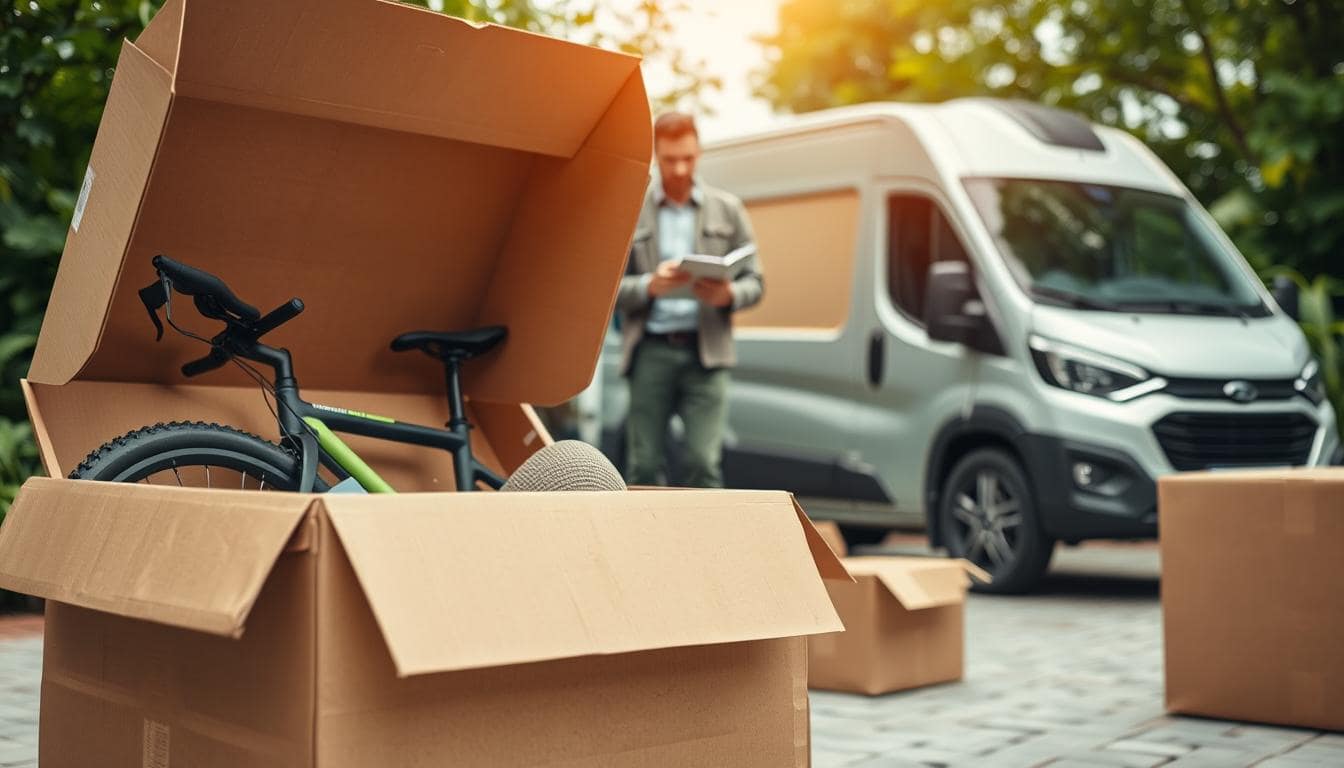
Most of us have seen the Russian doll of shipping. A small bike pump is wrapped in a shoebox, then in a bigger box. It’s all filled with air pillows, like a bouncy castle. It’s funny, but it’s also very wasteful.
We’re starting a deep dive into how we ship things. We’re not just looking for eco-friendly packaging. We’re doing a detailed check of every item, layer, and padding. It’s like a “bill of materials” for unboxing.
Is that extra layer of cardboard really protecting our packages? Or is it just making a nervous fulfillment manager feel better? We aim to uncover the hidden carbon costs on your doorstep.
We’ll connect the physical world of shipping with the numbers on a sustainability report. This is the start of a big change in logistics. It’s like a Marie Kondo moment for the planet.
Right sizing simulations crush strength and parcel girth rules
If you think all boxes are the same, you’re in for a surprise. In the world of logistics, right sizing is key. Using the same box for a light jersey and a heavy helmet is a big mistake.
This mistake can harm the environment. It’s not just about size; it’s about making sure your box is just right. We use special tools to check if your box is strong enough.
Also, shipping companies have rules for how big your package can be. Using too much box space can cost you more. It’s all about using the right amount of box for your item.
The Goldilocks Zone of Corrugate: Why Your Box Is Probably Too Big
Did you know about parcel girth rules? They can change how much you pay to ship. Every little bit matters, and making your box a bit smaller can save you a lot.
Right sizing is not just a choice; it’s a must. It helps your packages arrive safely and on time.
Virtual Drop Tests: Simulating the Apocalypse Before the Carrier Does
We use virtual tests to see how packages might do in real life. It’s like a practice run for the worst-case scenario. This way, we save money and the planet.
Right sizing is more than a strategy; it’s a must for better logistics. It saves money and helps the environment. It’s time to check your boxes and make sure they’re just right.
Materials FSC paper molded pulp recycled films and mono material bags
Choosing packaging materials can either help the planet or harm it. Today, we focus on FSC paper, molded pulp, recycled films, and mono-material bags. Each has its pros and cons, making it hard to decide.
FSC paper seems appealing because it supports sustainable forests. But, if it contributes to deforestation, it’s not as green as it seems. We must check if the paper is truly sustainable or just a marketing trick.
Beyond the Trees: The FSC Fairy Tale vs. The Pulp Reality
Marketing often hides the truth. We need to understand the FSC certification process fully. It’s not just about planting trees. The whole product lifecycle must be sustainable.
If forests are being cut down to meet demand, we’re just swapping one problem for another. It’s time to look closely at what’s happening behind the scenes.
The Plastic Paradox: Why Recycled Films Aren’t a Free Pass
Recycled plastics are often praised as a green choice. But, the truth is more complex. Recycled LDPE films can be better than new ones, if they’re light and made from one material.
This design helps recycling facilities sort materials better, reducing contamination. But, we must be careful. Just because a bag says it’s 30% recycled doesn’t mean it’s the best option.
Lighter bags might be better for recycling. Not all recycled materials are the same, and life cycle assessments can show surprising facts.
| Material Type | Environmental Impact | Recyclability | Weight |
|---|---|---|---|
| FSC Paper | Potential deforestation | Yes, curbside | Heavy |
| Molded Pulp | Low, made from recycled newsprint | Yes, curbside | Moderate |
| Recycled Films | Varies, depends on content | Yes, but complex | Light |
| Mono-Material Bags | Lower contamination | Yes, easier to recycle | Very light |
In conclusion, picking sustainable packaging is a delicate balance. We must make informed choices and understand the full impact. Before choosing an eco-friendly option, ask if it’s truly sustainable or just a pretty package.

Print and ink choices soy waterless and label reduction strategies
You’ve got the box down, but what about the ink and label? In sustainable packaging, these small details can make a big difference. They can either boost your eco-friendly efforts or pull them down.
Let’s explore ink options. Soy-based and algae inks are now high-quality and don’t harm the air. They’re not just for indie zines anymore. Waterless printing is another game-changer. It cuts water waste and makes your branding stand out.
Now, let’s talk about labels. Do we really need big labels for just a QR code? Linerless labels and direct-to-corrugate printing are the answers. They make the box itself the label, cutting down on waste and ink.
Death to the Bleed: How Waterless Offset Saves More Than Just Water
Waterless offset printing is more than a buzzword; it’s a game-changer. It reduces waste and boosts print quality. It’s like moving from a flip phone to a smartphone. You get better results with fewer resources.
The Sticker Shock: Why a Smaller Label Is a Bigger Flex
Choosing smaller labels is more than a trend; it’s a statement. It shows you care about the planet. Smaller labels mean less material used, which is better for the environment.
| Printing Method | Water Usage | VOCs Emission | Print Quality |
|---|---|---|---|
| Traditional Printing | High | High | Good |
| Soy-Based Printing | Medium | Medium | Very Good |
| Waterless Printing | Low | Low | Excellent |
In conclusion, every detail in sustainable packaging counts. Making smart choices about print and ink can greatly improve your environmental impact. And you’ll look good doing it.
Reuse and return trials totes crates garment on hanger and club drop bins
In today’s world, recycling seems like a dream. But, we’re moving towards a more practical solution: reuse. Returnable totes and crates are leading the way in sustainable packaging. They’re built to last, making many trips before they retire.
This idea is not just a dream. It’s the “milkman model” updated for today’s world. It’s about making a big change in how we handle goods.
So, how does it work? It’s all about the reverse logistics ballet. Imagine washing stations that keep these totes clean for their next trip. Add RFID tracking to prevent theft, and you’ve got a system that reduces waste and boosts efficiency.
The asset recovery rate is key to this business model. It’s essential for companies wanting to be sustainable.
The Milkman Model: Why Totes Are the Future of B2B Logistics
Let’s explore why totes are the future of B2B logistics. Picture a world where every delivery uses reusable containers. This cuts down on single-use packaging and creates a circular economy that benefits everyone.
With totes, businesses can lower their carbon footprint and save money. It’s a win-win for the planet and for business.
These totes are adaptable for many industries. From food and beverage to fashion, the possibilities are endless. It’s a sustainable packaging revolution that’s good for the planet and for business.
GOH (Garment on Hanger): The High-Fashion Hack for Zero-Waste Warehouses
Now, let’s talk about Garment on Hanger (GOH) systems. Why fold a jacket into a polybag only to steam it at the store? Shipping it hanging in a reusable carton cuts down on waste.
This method keeps garments in top condition and improves the customer experience. For fashion and sports apparel, GOH systems are a game-changer.
They let brands showcase their products while reducing environmental impact. By using these systems, companies can cut waste and move towards zero-waste warehouses.
For direct-to-consumer shoppers, we have “club drop” bins. These allow customers to pick up their orders from a locker, avoiding doorstep deliveries. It’s a convenient and eco-friendly option.
In conclusion, the future of sustainable packaging is reuse. By using totes, GOH, and club drop bins, businesses can lead the way to a greener future. For more on sustainable practices, check out this informative resource.
Freight modeling road rail sea air tradeoffs and consolidation windows
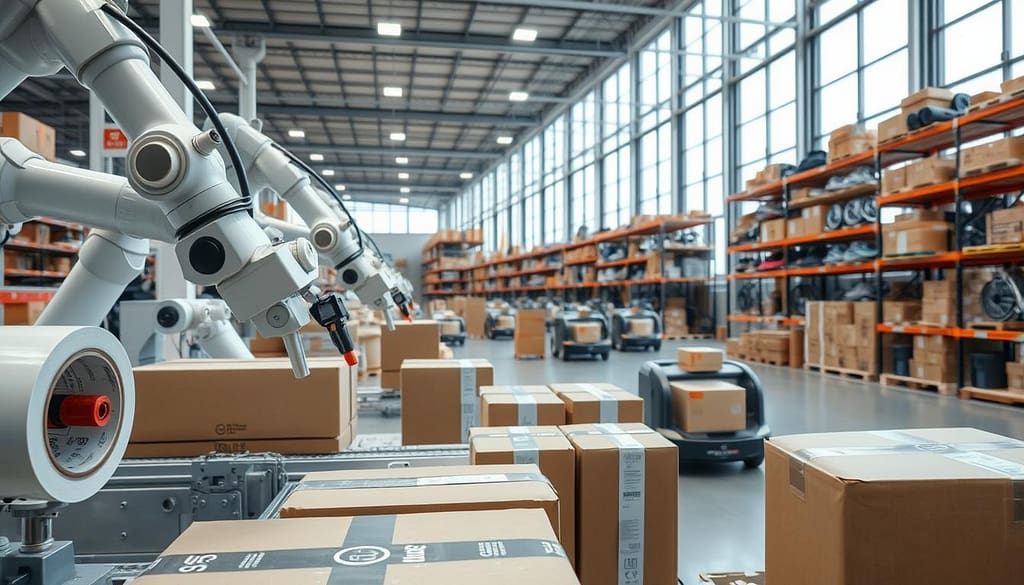
Freight modeling is key to reducing carbon emissions. The transport sector is huge, with 8.7 GtCO2-eq emissions in 2019. Road transport is the biggest culprit, with 70% of emissions. Rail transport is tiny, with just 1%.
With emissions growing 1.8% yearly, we must cut transport CO2 by 59% by 2050. This is to keep global warming under 1.5°C.
Trade-offs are important. Switching from air to road can cut emissions by 80%. Yet, many choose fast air freight. It’s time to rethink our choices.
The 48-Hour Lie: Why Air Freight Is a Carbon Bomb We Keep Igniting
Air freight seems convenient but is actually harmful. Next-day delivery is expensive for our planet. Each flight is very carbon-intensive.
Can we convince people to wait longer for deliveries? Longer lead times could save a lot of carbon.
Slow Steaming and Steel Wheels: The Modal Shift Manifesto
Slow steaming and rail transport have big benefits. Switching from road to rail cuts emissions even more. A multi-modal strategy saves money and helps the environment.
This isn’t just about saving money. It’s about survival in a world where time is running out on our carbon footprint.
3PL and warehouse energy packing automation and heat seal vs tape
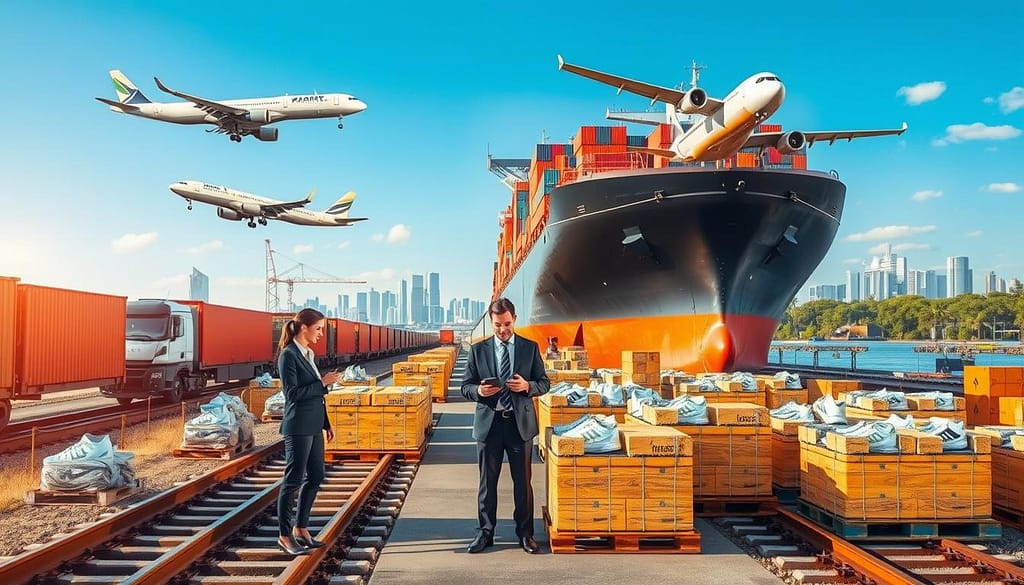
In the world of 3PL, things are buzzing even when the lights are off. Dark warehouses are leading the way with automation and big energy savings. Robots zip around in the dark, focusing on saving energy.
These dark warehouses cut costs and boost productivity. They use less energy, thanks to smart systems. But, there’s a big debate about how to pack things.
Robots Don’t Need the Lights On: The Dark Warehouse Revolution
Automated packaging is changing the game. These machines can scan, cut, and seal boxes quickly. But, how they seal things matters a lot.
The Tape vs. Heat Seal Cage Match: A Battle of Joules and Grams
Let’s look at the main contenders:
| Sealing Method | Energy Consumption (Joules) | Material Weight (Grams) | Environmental Impact |
|---|---|---|---|
| Water-Activated Tape (WAT) | 5 | 10 | Biodegradable |
| Heat Sealing | 15 | 5 | Plastic Waste |
| Hybrid Approach | 10 | 7 | Reduced Waste |
Water-activated tape is a winner for recyclers, sticking well to boxes. Heat sealing is fast but uses plastic. Saving a gram or watt-hour adds up, making a big difference.
Carbon accounting Scope 3 category 9 and insetting vs offsetting
Welcome to the world of carbon accounting, where Scope 3, Category 9 reveals your supply chain’s secrets. This part, about downstream transportation and distribution, is often missed. But it’s key to knowing your real carbon impact.
The Paris Agreement left shipping and aviation in a tricky spot. Many ignore these emissions, but we won’t. It’s time to face the truth of the GHG Protocol. We must tell the difference between fuel-based and distance-based estimates.
The Phantom Emissions: Why Category 9 Is Your Biggest Liability
In this complex world, Category 9 is your biggest problem. Why? Because it’s where hidden emissions hide. Ignoring them makes your carbon footprint seem smaller than it is. This isn’t just creative accounting; it’s a disaster waiting to happen.
Offsetting is seen as a quick solution. It’s like buying indulgences for your CO2 sins. But what if we focused on insetting? This means making your supply chain greener.
Insetting: Stop Paying for Guilt, Start Fixing Your Own Backyard
Insetting is the tough, but rewarding path. It means making real changes, like using electric vehicles for last-mile delivery. You could also fund a rail spur near your center or buy sustainable aviation fuel (SAF) certificates.
If your carbon accounting is just a creative writing exercise, you’re not making a change. Let’s stop paying for guilt and start fixing our own problems. The real path to sustainability is through taking responsibility and acting.
Supplier scorecards SLAs kitting and pack audits with fines or bonuses
In logistics, numbers matter a lot, like carbon footprints. It’s time to use the procurement department for good. Imagine a system where suppliers are judged on their environmental impact, not just delivery times. Welcome to the era of supplier scorecards!
These scorecards rank 3PLs and packaging vendors by their CO2e emissions per shipment. It’s not just about getting goods from A to B anymore. It’s about how you do it. If a vendor uses too much void fill, they get fined. But if they find a new way to pack, like bundling items together, they get a bonus. It’s all about matching incentives.
The Carrot and the Stick: Why Your SLA Needs a Carbon Clause
Adding a carbon clause to SLAs is key. Imagine if your SLAs required recycled content and banned single-use plastics. Suppliers would be motivated to find ways to reduce waste. It’s a game theory approach to sustainability, linking financial incentives with climate goals. If their bonus depends on using less corrugate, they’ll act fast.
Kitting for the Climate: Bundling Products to Kill the Void
Kitting is essential for reducing waste. By bundling products, we can cut down on packaging and emissions. One box instead of three means less material and fewer emissions. It’s good for your wallet and the planet.
| Supplier | CO2e Emissions (kg) | Void Fill (%) | Bonus/Penalty |
|---|---|---|---|
| Supplier A | 150 | 40 | Penalty |
| Supplier B | 100 | 20 | Bonus |
| Supplier C | 80 | 10 | Bonus |
In conclusion, adding sustainability metrics to supplier scorecards is a must. It’s not just a good idea; it’s essential. By doing this, you’re helping the planet and setting your business up for success. Let’s make procurement a force for good!
Field validation damage returns NPS and CO2e per shipment dashboard
We’ve worked hard to make our packaging more eco-friendly. But, if a product arrives damaged, it’s all for nothing. The Net Promoter Score (NPS) tells us if our green efforts are working or if they’re causing more returns.
The Unboxing Apocalypse: When Sustainability Kills the Customer Experience
Imagine a customer opening a package, only to find it broken inside. It’s a moment that can break their trust. Finding the right balance between being eco-friendly and protecting the product is key. We must ask: Are those eco-friendly inserts really helping, or are they just a passing trend?
The Holy Grail Metric: Visualizing CO2e Per Shipment in Real Time
Picture having a dashboard that shows CO2e per shipment, damage rates, and NPS in real time. This tool changes how we see sustainability. It gives a clear view for both operations managers and CMOs. If data shows a simple kraft box with water-based ink makes customers happier, we’ve found a winner.
This journey is not just about saving the planet. It’s about showing that being green can also make business sense. By checking each shipment, we show that doing good is also good for business.