
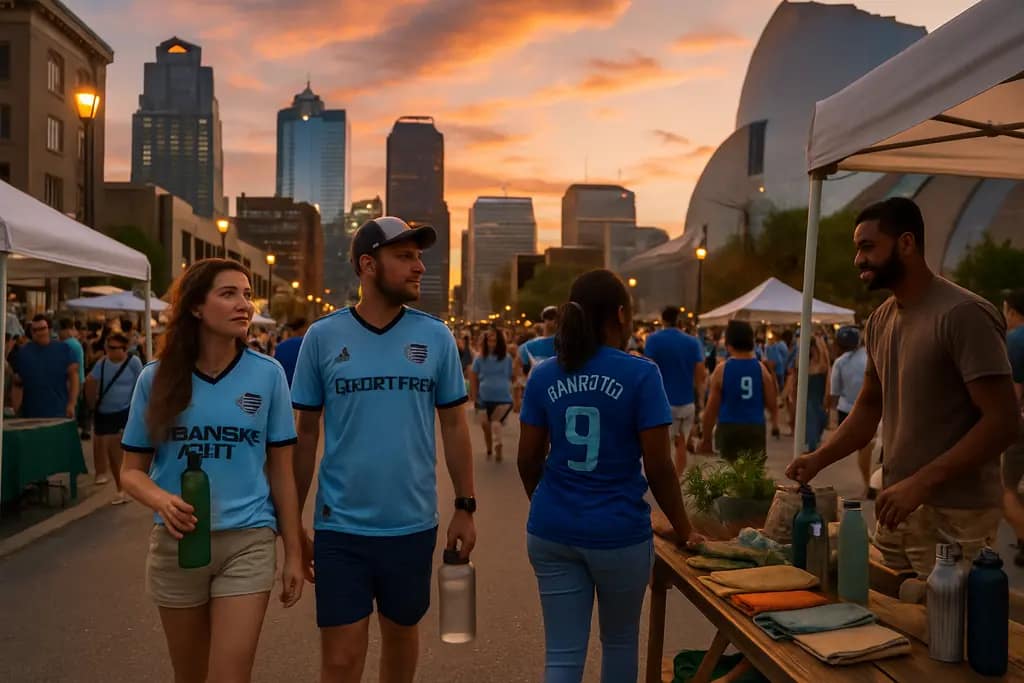
Kansas City venues are being positioned for a bigger role in women’s soccer, baseball, football, and sports tourism before the 2031 FIFA Women’s World Cup cycle. The sustainability question is not whether the city can build or renovate enough seats. It is whether those seats can be tied to lower-waste operations, credible public finance, better fan movement, and long-term civic use after the tournament window passes.
As of September 28, 2026, the clearest thread is strategic expansion. CPKC Stadium is planned to grow from 11,500 seats to 18,000, with room for about 2,000 temporary seats. Arrowhead Stadium has already posted operational sustainability gains, including LEED v4.1 Gold certification in May 2026 according to the research notes. The Royals’ planned Crown Center ballpark district adds another layer: a baseball-led development that could reshape downtown land use before 2031.
That gives Kansas City a rare sports-infrastructure test. The city is not only preparing one stadium for one tournament. It is trying to align a riverfront soccer venue, an NFL stadium, a future MLB district, and existing soccer infrastructure into a higher-capacity host network. For sustainability advocates, including me, that is where ambition needs to meet measurement.
Why Kansas City venues Are A Sustainability Test
Kansas City venues And The 2031 Deadline
The 2031 Women’s World Cup has not simply created a capacity issue. It has exposed how host cities define readiness. A bid-stage venue plan can look strong on paper if it lists large stadiums and hotel supply, but sustainability depends on what happens between now and the event: construction phasing, transit links, waste systems, energy use, water use, and whether surrounding districts reduce car dependency or deepen it.
The Current’s CPKC Stadium plan is central because it places women’s soccer infrastructure at the front of the conversation rather than treating it as a borrowed-stadium exercise. The proposed expansion to 18,000 seats would still be modest compared with Arrowhead, but it matters because it could give Kansas City a purpose-built women’s soccer venue with more flexibility for league matches, tournament training activity, sponsor events, and community programming.
For Kansas City venues, the risk is that each project gets assessed in isolation. A bigger CPKC Stadium may improve matchday demand management for the Current. Arrowhead may serve the largest international fixtures. Children’s Mercy Park already has soccer-specific operations experience. The Royals’ Crown Center plan may draw attention to mixed-use development. Yet climate and community outcomes depend on the system: how fans move between hotels, districts, riverfront trails, transit stops, parking garages, and stadium gates.
A Cautious Standard For Claims
The most credible sustainability claims are specific and auditable. Compostable serviceware is useful only if organics collection is in place. Reusable cups reduce single-use waste only if return rates, washing logistics, and loss rates are tracked. LEED certification is valuable, but it does not erase the embodied carbon of large construction projects. Public funding can support shared infrastructure, but only if the public benefits are defined before costs rise.
That is why Kansas City’s venue expansion should be judged by verified indicators rather than promotional language. Seat counts, completion dates, and capital costs are not enough. The better question is whether each project reduces per-fan environmental impact while improving access for residents who live near the venues.
Riverfront Soccer Capacity And Low-Carbon Access
CPKC Stadium Expansion Signals Demand
CPKC Stadium is the most direct women’s soccer piece in the plan. The research notes indicate that construction on the expansion is expected to begin in fall 2027, largely outside the NWSL season, with a target of being ready before the 2031 Women’s World Cup. That schedule is sensible from a sporting standpoint because it reduces the chance of major disruption to Current home dates, though construction sequencing still needs careful public communication.
The proposed $1.4 billion riverfront development package, which includes the stadium expansion, parking, and mixed-use elements, raises a larger sustainability issue. A riverfront project can repair land-use gaps and improve public access, especially if trails and pedestrian routes are treated as core infrastructure rather than decorative edges. The research notes also describe the original stadium as part of a broader riverfront reclamation story in an area previously associated with industrial dumping.
Transit Is The Hard Part
Venue sustainability often rises or falls on transportation. Even a well-run stadium can produce a heavy event footprint if most fans arrive in single-occupancy vehicles. The riverfront has potential because trail connections, streetcar planning, and mixed-use development can shorten trips and make walking more realistic for some visitors. That potential should not be overstated. A parking garage in the same development package shows that car access remains part of the model.
The practical target should be mode shift, not purity. Kansas City should publish event-day travel data before and after expansion: transit ridership, bike and scooter parking use, pedestrian counts, rideshare zones, parking occupancy, and post-match clearance times. Those numbers would show whether the riverfront is becoming a lower-carbon sports district or simply a larger destination with greener language.
Arrowhead, Royals, And The Multi-Venue Model
Certified Operations Versus Construction Emissions
Arrowhead Stadium gives Kansas City a different kind of asset: an existing large-capacity venue with recent operational sustainability gains. The research notes say GEHA Field at Arrowhead Stadium earned LEED v4.1 Gold certification in May 2026, with reported reductions in energy and water use and improved waste diversion through composting and recycling. The reusable cup system introduced on September 14, 2025, also matters because it tests fan behavior at scale.
That is why Kansas City venues should not be judged only by new construction. Renovation and operational upgrades can be less carbon-intensive than building from scratch, though the actual comparison depends on project scope, materials, and energy systems. Arrowhead’s planned renovation timeline, with major work set to begin by February 1, 2028 and substantial completion anticipated by August 1, 2031 in the research notes, places delivery risk near the tournament horizon. If Arrowhead is used in the 2031 bid plan, contingency planning will matter.
Baseball District Spending Sets A Governance Test
The Royals’ planned move from Kauffman Stadium to a Crown Center ballpark district adds a major sports-business dimension. AP reported that the Royals plan a downtown Kansas City ballpark as part of a $3 billion mixed-use development with Hallmark Cards, with the ballpark itself estimated at $1.9 billion AP reported. Kansas City’s official release said the City Council approved the project framework in August 2026 and identified a $600 million city commitment the city framework.
For a sustainability advocate, the Royals project is not separate from the Women’s World Cup conversation. It affects downtown mobility, hotel patterns, construction capacity, and public tolerance for stadium spending. A greener district would need measurable energy standards, water targets, heat mitigation, waste systems, and public-space value beyond baseball dates. A related analysis of the Royals stadium impact raised similar questions about land use, public costs, and downtown outcomes.
Public Cost, Fan Movement, And Measurable Outcomes
What Should Be Measured Before 2031
Public financing changes the accountability standard. The research notes point to $185 million in public funding approved in September 2026 for Berkley Riverfront development and the CPKC Stadium expansion. Supporters may argue that shared infrastructure, tourism demand, and civic visibility justify investment. Skeptics are right to ask what residents receive in return, especially if construction costs, operating subsidies, or district maintenance costs rise.
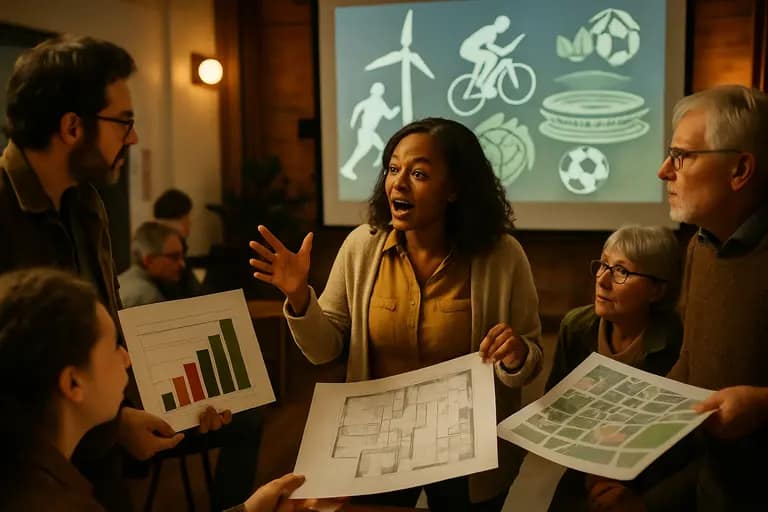
Kansas City venues cannot be judged as sustainable if the only verified results are larger crowds and new buildings. A more credible scorecard would track the outcomes that residents, teams, and tournament organizers can inspect:
- Transport: event-day mode share, transit ridership, parking demand, bike access, and pedestrian safety data.
- Waste: landfill diversion, reusable cup return rates, contamination rates, and food-service packaging performance.
- Energy and water: annual use intensity, renewable procurement, irrigation demand, and matchday peak loads.
- Community benefit: local hiring, public-space access, small-business participation, and neighborhood disruption reports.
- Post-event use: non-tournament programming, youth soccer access, and maintenance funding after 2031.
Children’s Mercy Park is relevant here because Sporting Kansas City’s sustainability operations, according to the research notes, included recycling more than 35 tons of plastics, cardboard, and other materials in 2023, equal to about 17% of waste output. That figure is not a final answer, but it is the kind of baseline that makes progress visible. Other venues should publish comparable numbers in the same format.
Sports fans are not passive in this. Reusable systems work only if cup returns are convenient. Transit works only if service is frequent after the final whistle. Composting works only if signs, staffing, and vendor materials match the collection system. For broader sports context across the same network, a related site in the same network tracks how venue decisions shape fan experience as well as business outcomes.
Kansas City’s 2031 Venue Plan Must Prove Its Claims
If Kansas City venues become part of the 2031 Women’s World Cup, the city will have a chance to show that women’s soccer growth, downtown development, and lower-impact operations can reinforce each other. That case is plausible, but not automatic. Bigger capacity can support the tournament. It can also produce more traffic, more material use, and higher public exposure if the plan is not managed tightly.
The strongest version of Kansas City’s strategy would be practical rather than flashy: complete the CPKC expansion without weakening NWSL operations, keep Arrowhead’s renovation schedule transparent, tie the Royals district to enforceable sustainability standards, and publish annual venue performance data before 2031. That would give fans, residents, and tournament organizers a way to judge progress before kickoff, not years after the bills arrive.