
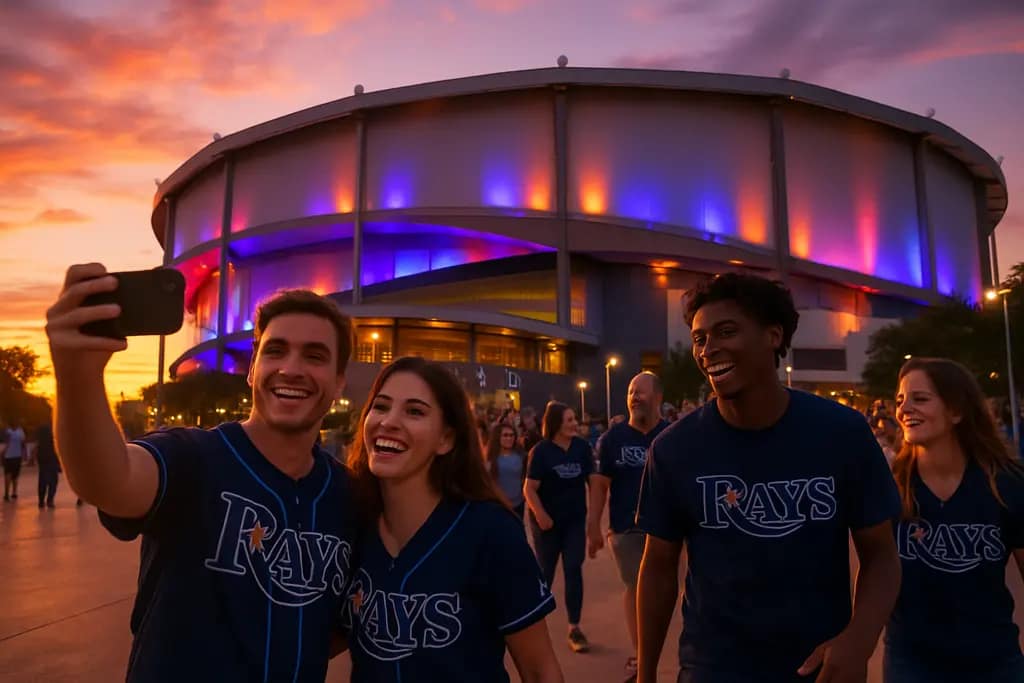
As of September 22, 2026, the Rays Stadium Deal has moved from debate to execution risk. The votes have passed, the planned Tampa site has been identified, and the public-private funding split is now central to any serious reading of regional sports tourism. For a performance analyst, the question is not only whether a new venue can draw more visitors. It is whether the building, schedule, event mix, and funding structure can support athlete conditions, fan movement, and sustainable year-round use without relying on best-case tourism assumptions.
The Hillsborough County Board of County Commissioners approved the agreement on August 28, 2026, in a 5-2 vote after a 4-3 Tampa City Council vote; the plan calls for a fixed-roof stadium with at least 28,000 seats on Hillsborough College’s Dale Mabry campus, county ownership, and $4 million in annual rent from the Rays according to MLB.com. That gives Tampa a defined baseball venue plan, but it also sets a high bar for operations. Sports tourism rarely grows from a building alone. It depends on event density, transport access, hotel demand, pricing, safety, and whether visitors find enough reasons to stay in the region before and after games.
Rays Stadium Deal And Tourism Assumptions
Attendance Lift Versus Repeat Demand
The tourism case begins with attendance. The research notes project average game attendance of about 20,500 in the first three years after opening, roughly 20% to 25% higher than 2023-2024 levels, with the increase expected to taper after the opening period. That pattern is realistic enough to deserve attention. New venues often bring first-look demand, but repeat visits depend on team performance, ticket affordability, opponent draw, access, and the comfort of the game-day routine.
From a performance and fan-experience viewpoint, the fixed roof matters because it can reduce weather exposure for baseball and non-baseball events. Still, a roof does not guarantee tourism gains. If the building is easier to schedule but harder to reach, or if ancillary costs rise too sharply, the attendance lift could be less durable. For regional tourism, the stronger metric is not opening-year curiosity. It is how many out-of-area visitors return once the novelty fades.
District Value And Visitor Spending
The broader stadium district is expected to carry much of the long-run economic argument. Research notes cite an AECOM estimate that the proposed stadium district and mixed-use development could generate $75 billion in total output over 30 years, $24 billion in wage earnings, and support an average of 9,750 jobs annually, including direct and indirect effects. Those are large figures, and they should be read as projections rather than guaranteed results.
Property value assumptions are also central. Phase 1 assessed value in the district was projected at $1.4 billion by 2034 and $4.8 billion by 2058, excluding the stadium and Hillsborough College because both would be tax-exempt. This is where sports tourism and real estate strategy meet. Hotels, restaurants, retail, and offices can extend a fan trip into a weekend, but only if market demand appears at the pace assumed in the financing model.
Public Funding, Sustainability, And Event Use
Rays Stadium Deal Revenue Risks
The total project cost is listed at $2.361 billion, with the Rays committing $1.37 billion, including all cost overruns, and public entities contributing $876 million, about 37% of the total as WUSF reported. That split is meaningful because cost-overrun responsibility sits with the team, while public revenues still depend on tax performance and policy execution.
Hillsborough County’s contribution is tied to several sources in the research notes: $360 million from the Community Investment Tax, $303 million from Tourist Development Taxes, $103 million from other county sources, and $30 million in federal disaster recovery funds. Tampa’s $80 million contribution was structured as a four-year advance intended to be recovered through property-tax growth in a new Community Development District overlaying the stadium district. The risk is clear: if tourism, taxable development, or district growth underperform, the public side has less room for error.
The sustainability issue is just as important as the balance sheet. A fixed-roof venue can be used for more event types, but the research provided does not include energy-use targets, materials standards, waste diversion goals, transit mode-share targets, or water metrics. Without those benchmarks, no one should treat the project as a confirmed sustainability win. A sports venue with 81 regular-season MLB games plus special events can spread embodied impacts across more use days, but only if the building is booked consistently and operated with measurable environmental controls.
Beyond Baseball Programming
The Rays released renderings in July 2026 showing possible non-baseball uses, including concerts, graduations, youth sports tournaments, wrestling, MMA, and boxing. That event mix is sensible from a tourism standpoint because it broadens the visitor base. Youth tournaments can draw families, combat sports can attract weekend travelers, and graduations can create predictable civic use.
The challenge is competition. Tampa Bay already has other venues serving concerts and indoor sports. The Rays’ building will need to fit into that calendar without cannibalizing existing demand. For readers comparing regional sports infrastructure coverage across our network, our partner site Banat Zayed provides complementary insights, highlighting why venue plans should be assessed as civic assets, not only team assets.
Construction Timing And Fan Demand
Schedule Discipline Before Opening Day 2029
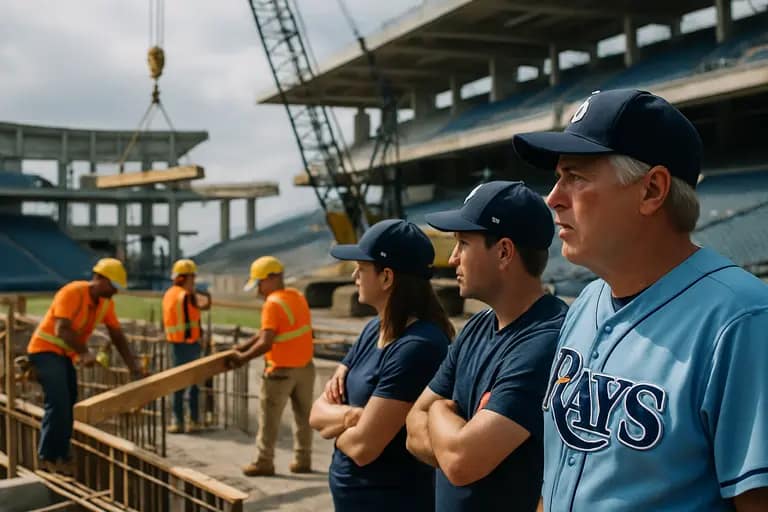
The planned timeline is tight enough to watch closely. The Rays aimed to open the new ballpark by Opening Day 2029, with demolition planned for December 2026 and foundation and bowl work expected around March 2027. Any delay in legal review, community benefits agreements, redevelopment-area adjustments, permitting, or construction sequencing could put pressure on that target.
Timing matters for sports tourism because event planners need certainty. Tournament organizers, concert promoters, college partners, and regional tourism officials work with long lead times. If the 2029 target slips, the effect would not be limited to baseball scheduling. It could also affect hotel planning, convention tie-ins, staffing, and sponsorship packages built around the district’s first full year of operations.
Performance Conditions Inside The Building
A performance lens asks how the facility supports the athletes who use it and the spectators whose spending supports the model. The research does not provide field-surface specifications, training-room plans, wearable-data infrastructure, locker-room standards, or athlete-recovery features. Those details matter. A modern sports building can host more events only if conversions protect playing conditions and keep setup times under control.
The same caution applies to youth sports tournaments and ring sports. Different event types require different flooring, lighting, rigging, broadcast layouts, and recovery spaces. If the facility handles these transitions well, it can improve event reliability. If not, operating costs and scheduling conflicts could reduce the number of profitable dates. For a related funding breakdown, our earlier analysis of Tampa Bay’s $2.361B stadium project tracks why public exposure and private overrun responsibility remain central to the debate.
- Tourism-tax exposure: Tourist Development Tax revenue depends on visitor activity, which can weaken during economic downturns or climate-related disruptions.
- Market absorption: Hotels, retail, office, and restaurant demand must match district projections for the long-term value case to hold.
- Event-booking pressure: Non-baseball programming must be frequent enough to justify year-round operations without overstating demand.
- Sustainability transparency: Public reporting on energy, water, waste, and transport would help assess whether the venue performs beyond revenue metrics.
Rays Stadium Deal Tourism Scorecard
What Should Be Measured Next
The strongest case for the project is that Tampa has now moved toward a defined, multipurpose sports venue with a clear baseball tenant, a fixed roof, and a location intended to support district development. The weakest case is that many benefits depend on projections: attendance lift, property growth, visitor spending, special-event booking, and tax receipts. None of those outcomes is automatic.
For the Rays Stadium Deal, the next useful scorecard should include annual attendance by visitor origin, hotel-night estimates tied to events, non-baseball event count, public revenue performance, construction milestones, and venue sustainability metrics. That would give fans, taxpayers, and sports-business analysts a cleaner way to judge whether the deal is producing durable regional tourism rather than a short opening surge. The stadium plan has cleared major political hurdles; its harder test is whether it can turn scheduled events into repeat regional demand while managing public risk and environmental accountability.